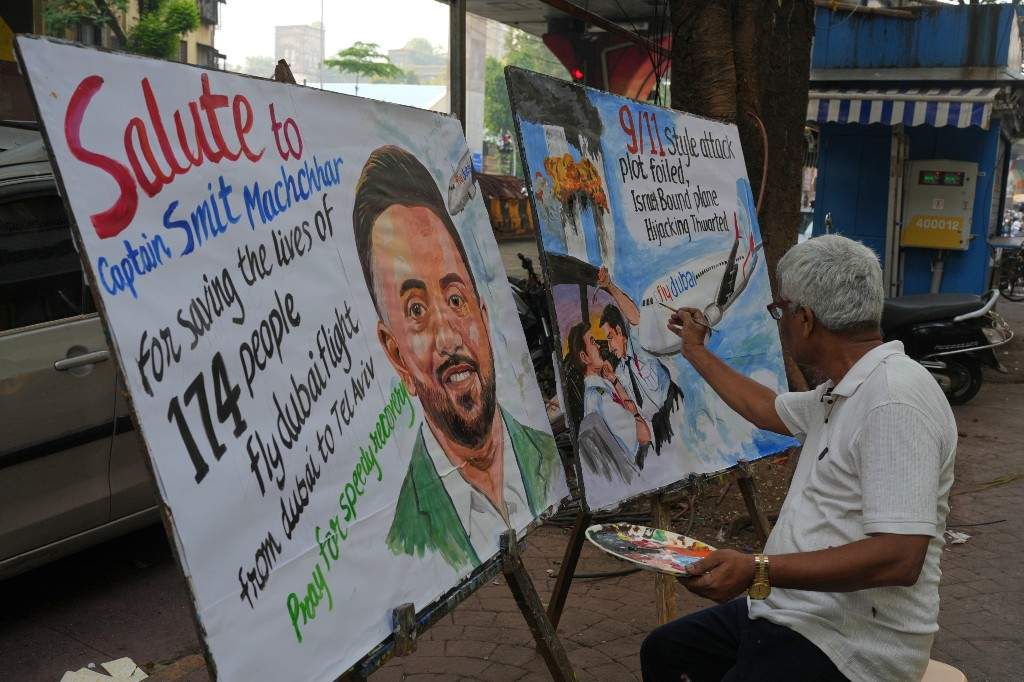
We love the hero narrative. It is cheap, it is comforting, and it keeps us from looking at the broken mechanics running the commercial aviation system.
When media outlets rush to crown an Indian airline captain as a savior after a violent cockpit intrusion on a FlyDubai flight, they are selling you a fairy tale. They want you to believe that cockpit security is maintained by a lone protagonist with iron nerves and a steely jaw.
It is a comforting lie. And it is actively dangerous.
Let us strip away the melodrama. A cockpit door was breached or threatened, a pilot intervened, and catastrophe was avoided. The public breathes a sigh of relief and praises the individual's reflexes. Meanwhile, aviation safety experts quietly shake their heads because the entire incident exposes a systemic failure of layered defense protocols. If your security architecture relies on a captain doubling as an amateur brawler inside a cramped flight deck during a climb or descent, your security architecture has already failed.
The lazy consensus in aviation journalism is that human heroism compensates for structural vulnerabilities. I have spent two decades analyzing flight deck human factors and security redundancies across major carriers. I have watched airlines trim training budgets for situational threat assessment while spending millions on PR campaigns celebrating individual crew heroics.
We need to stop praising the pilot who fights off an intruder and start interrogating why the intruder got within arm's reach of the controls in the first place.
The Myth of the Fortress Cockpit
Ever since the regulatory overhauls following the turn of the century, the commercial flight deck has been marketed as an impenetrable fortress. Reinforced doors, electronic locking systems, and strict access protocols were supposed to render the cockpit immune to unauthorized entry.
Except they are not.
The physical door is only as secure as the human procedural discipline surrounding it. When flight attendants need to deliver meals or beverages, or when crew members cycle in and out for physiological breaks, the fortress door opens. That transition window is the vulnerability vector.
In the FlyDubai incident and similar close-call events across various international carriers, the breakdown occurs right at this operational seam. The lazy consensus assumes that cockpit crew members can multitask as tactical security operators while simultaneously managing an aircraft hurtling through the stratosphere at Mach 0.8.
Here is what the cheerleaders miss: a pilot’s primary duty in a high-stress emergency is flying the airplane. Aviate, navigate, communicate. Physical combat does not appear on the QRH, the Quick Reference Handbook. When a pilot is physically engaged in subduing a threat inside the flight deck, the primary flight controls are effectively abandoned or, worse, compromised by erratic physical struggle in a confined space packed with switches, yokes, and avionics.
Calling that heroics disguises a terrifying operational hazard as a triumph.
Systemic Vulnerabilities No One Wants to Discuss
Let us look at the actual data regarding flight deck intrusions and crew resource management breakdowns.
Airlines operate on razor-thin margins. Security compliance costs money. Training hours cost money. Installing secondary physical barriers—such as lightweight mesh gates that deploy inside the cockpit door threshold during meal service—costs money and adds weight, which burns extra fuel.
So, what do airline executives prefer? They prefer the status quo. They prefer relying on the psychological profile and physical resilience of their captains. If an incident happens and the captain fights off the attacker, the airline gets free marketing about their elite, fearless flight crews. If the incident goes the other way, insurance covers the hull loss and the PR machine pivots to crisis management.
This is an unacceptable transfer of risk from the boardroom to the flight deck.
When we dissect the mechanics of how cockpit security is handled globally, stark disparities emerge. While carriers in certain jurisdictions mandate rigorous two-person-always-in-the-cockpit rules and secondary physical barriers, others rely on voluntary compliance and outdated cabin crew communication protocols.
The FlyDubai event is not an isolated anomaly. It is a symptom of an industry that treats cabin-to-cockpit security as an operational afterthought rather than a dynamic threat surface.
The Uncomfortable Truth About Crew Training
Ask any line captain about their annual recurrent security training, and watch them roll their eyes.
For most commercial pilots, security training consists of a mandatory, checkbox CBT (computer-based training) module completed while clicking through slides at double speed in a crew lounge, followed by a generic verbal briefing. They are taught how to lock a door and how to press a panic button. They are rarely given realistic, physical de-escalation training or scenario-based simulations for handling an aggressive, non-compliant individual inside a space measuring roughly six feet by six feet.
Expecting a captain trained in aerodynamics, meteorology, and systems management to execute martial arts maneuvers against an adrenaline-fueled intruder is absurd.
Worse still, the legal liability placed on flight crews is staggering. If a pilot uses excessive force to neutralize a threat, they face international tribunals, certificate revocation, and civil litigation. If they use insufficient force, the aircraft goes down. We have trapped our pilots in a regulatory no-man's-land and then slapped a superhero cape on them when they survive the gauntlet.
Dismantling the Hero Narrative
If we want actual safety, we have to dismantle the hero narrative completely.
Heroes are necessary only when systems fail. In a truly robust aviation safety ecosystem, the need for a pilot to brawl in the cockpit should be as obsolete as the wooden propeller.
What does a real fix look like?
First, mandatory secondary physical barriers across all international commercial fleets. These barriers must prevent unauthorized access even when the primary cockpit door is unlatched for service transitions. No exceptions, no exemptions for regional carriers trying to save capital expenditure.
Second, redefining cabin crew operational boundaries. The psychological distance between the cabin and the flight deck needs to be reinforced with rigid communication protocols that do not rely on visual recognition through a peephole or a fuzzy camera feed that can be obstructed or manipulated.
Third, removing the burden of physical security from the pilots entirely. Their office is the flight deck controls, not the forward galley.
Stop writing the hagiographies. Stop calling men and women doing their jobs under broken systems "heroes" as a cheap substitute for fixing the infrastructure.
The next time a flight deck is breached, the outcome won't depend on the captain's reflexes. It will depend on whether we finally had the courage to build a system that doesn't require them to fight for their lives just to land the plane.


