People don't die in a festival crowd crush because everyone suddenly loses their mind and runs wild. They die standing up because physics runs out of room.
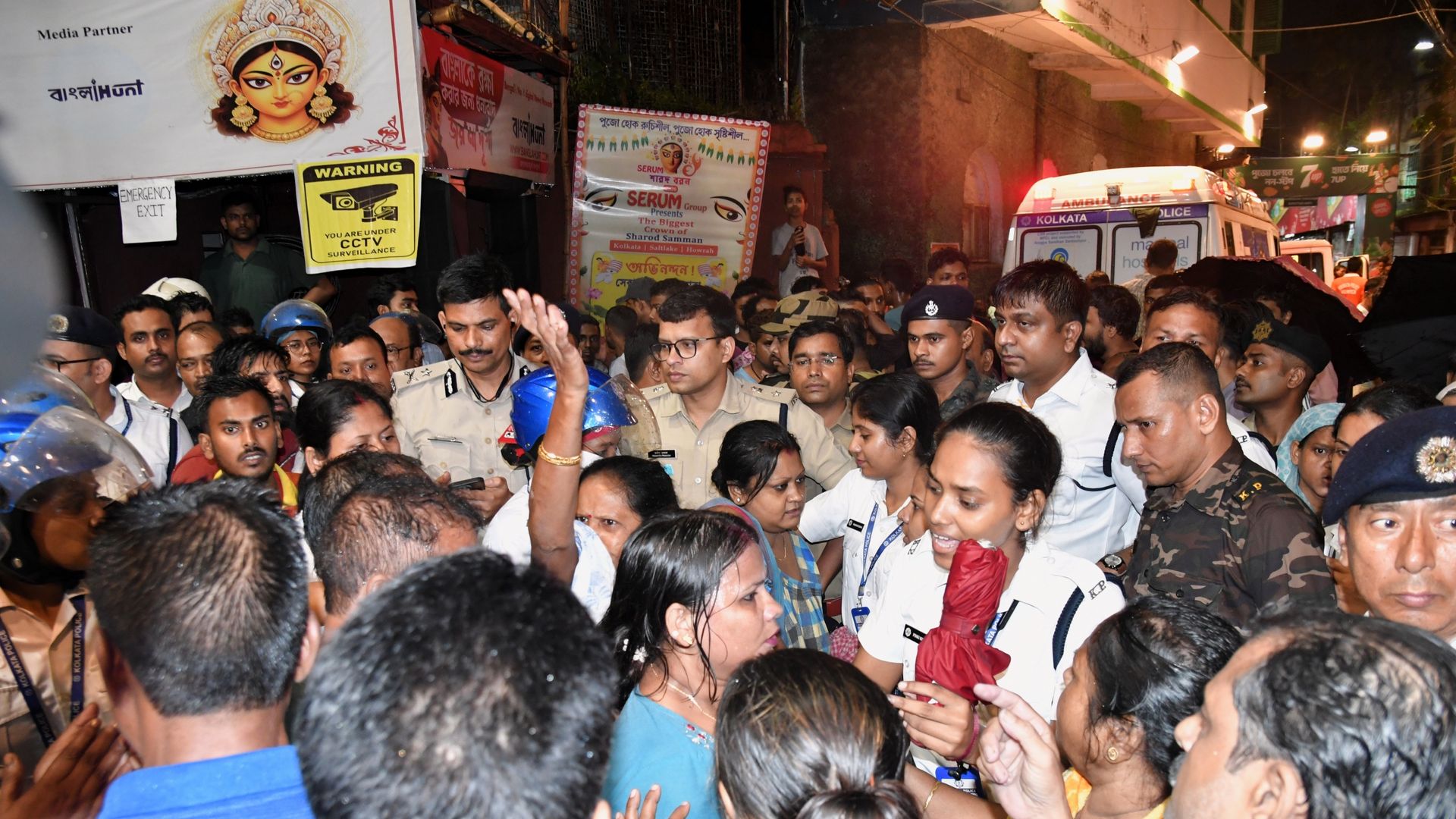
Look at what happened in Kolkata on October 17, 2026, during Durga Puja celebrations in the Girish Park area. Sudden heavy rain hit while thousands of devotees were trying to leave a temporary worship venue. Initial reports pointed to at least 17 fatalities and dozens injured at an exit bottleneck, and subsequent reporting raised the confirmed death toll to 19 with 25 hurt, including a seven-year-old girl.
Call it a "stampede" if you want, because that's the word headlines reach for first. Honestly, though, that word distorts what actually happens inside a packed festival corridor and lets bad crowd design off the hook.
Why a festival crowd crush is a physics problem first
When people hear "stampede," they picture a chaotic mob bolting in terror, knocking people down and trampling them underfoot. Sometimes that happens. Usually, in tight festival lanes, stairs, and exit gates, people can't even lift their feet to run.
Crowd science researchers like Prof. G. Keith Still and physicist Dirk Helbing have spent years mapping what happens when human density climbs past a critical threshold—roughly five to seven people per square meter. At that point, a crowd stops behaving like individuals making choices and starts acting like a dense fluid under pressure. Shockwaves ripple through the mass. People get pushed sideways and forward by forces strong enough to bend metal railings.
The main killer in these events is compressive asphyxia. Your chest simply can't expand enough to pull in air. You can stay upright the entire time and still suffocate in just a few minutes while dozens of people press against you from every side.
Blaming "panic" makes it sound like the crowd caused its own fate. Panic is often a reaction to not being able to breathe, not the spark that packed 10,000 people into a space built for a fraction of that flow.
What turns a sacred celebration into a choke point
India's religious festivals—from neighborhood pandals during Durga Puja to massive pilgrimages like the Kumbh Mela—carry an extraordinary scale of devotion. Millions of people travel, wait, and move together out of faith, family tradition, and shared joy. That sheer scale creates challenges that no casual event planner should underestimate.
A few recurring traps show up over and over again in disaster reviews and National Disaster Management Authority (NDMA) guidance:
- Sudden weather shifts and rush hours: Rain starts pouring, heat builds inside a tent or lane, or an evening ceremony wraps up, and everyone tries to move at once.
- Narrow or shared exits: When people leaving collide with people trying to get in—or funnel into a tight gate blocked by stalls, barricades, or steps—flow grinds to a halt.
- Unchecked volume vs. holding space: Organizers often estimate attendance optimistically or lack real-time density counts at pinch points. Once a bottleneck locks up, extra bodies arriving from behind keep adding pressure.
- Reactive pushing: When crowd control relies only on shouting or shoving people backward into a packed mass, compression gets worse instead of better.
There's also a debate worth being candid about. Enforcing strict entry caps or closing popular gates during peak festival hours can spark frustration from devotees who traveled long distances or volunteers who feel traditions are being restricted. Safety engineers and local officials don't always agree on how far to push crowd limits without causing friction, and post-incident figures can shift quickly in the first hours as hospitals verify identities and injuries. Still, pretending a narrow exit can handle an unlimited surge isn't a compromise—it's a gamble with lives.
How to stay safer in a dense crowd and what organizers must fix
If you ever find yourself in a festival crowd that starts tightening up, waiting until you're wedged shoulder-to-shoulder is already too late.
Practical steps if you're in the crowd
- Leave early when conditions shift. If heavy rain rolls in, a bottleneck forms ahead, or the lane slows to a crawl, peel off toward an open side street or wider area before the crush builds.
- Protect your ribcage. Keep your arms bent slightly in front of your chest like a boxer's guard—not pinned flat to your sides—so you preserve a little breathing room if pressure rises.
- Move diagonally toward the edge. Don't fight straight against a moving stream, and don't stop to pick up a dropped bag, phone, or sandal. Angle gradually toward the perimeter or a wider open pocket where you can step clear.
- Watch out for kids and older relatives. Hold children's hands or keep them where you can see them clearly, and avoid tight stairways or enclosed pens when peak surges hit.
What venues and planners need to do differently
Real prevention happens before the first drumbeat or prayer starts. Event organizers, municipal teams, and safety planners should separate entry and exit paths wherever possible, clear obstacles away from gates, create open holding areas before pinch points, and use trained observers or overhead cameras to spot rising density early—then pause incoming flow before a corridor locks solid.
You can read more about crowd density dynamics and safety standards in National Disaster Management Authority crowd management resources and coverage of the Kolkata Durga Puja tragedy.
19 dead, 25 hurt in stampede at India religious gathering provides video context on the October 2026 Kolkata Durga Puja venue barricade and aftermath following the fatal crowd surge.