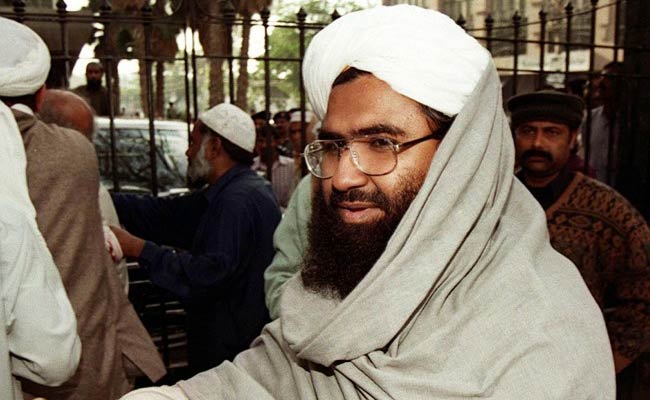
Every major security analyst in New Delhi and Washington is currently suffering from a severe failure of imagination. When Islamabad bumped its price tag on Jaish-e-Mohammed founder Masood Azhar to a meager seven million Pakistani rupees, the consensus reaction was immediate mockery. Editorial boards and television pundits rushed to label it a hollow theater piece, a lazy diplomatic stunt designed purely to dodge scrutiny from the Financial Action Task Force.
They are looking at the headline and missing the weapon.
Dismissing the move as a simple, toothless gimmick comforting as that may be feels satisfying, but it fundamentally misreads the mechanics of modern state-sponsored institutional survival. This is not just a joke or an accidental clerical error. It is a calculated exercise in regulatory compliance arbitrage.
The Arithmetic of Compliance Theater
Let us dispense with the polite fiction that state entities act out of sudden moral clarity. When a cash-strapped government facing immense international financial surveillance needs to check a bureaucratic box, it does not launch an infantry division. It issues a press release.
The lazy consensus says that because the payout amount is paltry roughly equivalent to the cost of a mid-size SUV and because Azhar has historically enjoyed state protection, the entire exercise is meaningless. That logic ignores how international compliance regimes actually operate. Global watchdog bodies like the FATF evaluate sovereign performance based on auditable paperwork, statutory updates, and administrative filings.
By keeping Azhar on the Federal Investigation Agency’s most-wanted list and periodically adjusting the reward index upward, Islamabad constructs a paper trail of due diligence. To a bureaucrat sitting in a plenary session in Paris, a raised bounty translates into a line item in a compliance audit. It provides friendly diplomatic delegations with the exact technical pretext they need to argue that progress is being made, keeping sanctions at bay without a single soldier ever stepping into a hostile compound.
Focusing on the inadequacy of the sum is a trap. The sum was never meant to incentivize a bounty hunter. It was meant to satisfy a spreadsheet.
The Geography of Convenience
Another pillar of the standard commentary is the recurring farce regarding Azhar's physical address. Pakistan routinely whispers to foreign interlocutors that the terrorist mastermind has slipped across the Durand Line to hide in Afghanistan, a claim the Taliban government predictably and flatly rejects.
This ping-pong match of denials is treated by analysts as a diplomatic stalemate. It is not. It is an optimized jurisdictional black hole.
As long as a high-value target occupies a contested gray zone between sovereign states, neither side faces the acute political fallout of an arrest or a trial. Pakistan gets to claim he is out of reach; regional rivals are left shadow-boxing against a ghost. The bounty functions as a perpetual motion machine of plausible deniability. You cannot arrest a man you claim has vanished into a neighboring mountain range, yet you can simultaneously display your commitment to law and order by offering cash for his discovery.
It is a masterpiece of bureaucratic judo. You weaponize your own borders to ensure accountability remains permanently out of reach.
Why the Outrage Industry Benefits Both Sides
There is a symbiotic cynicism at play here that nobody in the mainstream security establishment wants to admit.
For the Pakistani security apparatus, throwing occasional scraps like a revised bounty list provides a pressure valve against international financial strangulation. It keeps the economy functioning just above total collapse by avoiding severe blacklisting.
Conversely, for hardline commentators across the border, these predictable maneuvers are a gift that keeps on giving. Every recycled press release from Islamabad triggers a fresh wave of righteous indignation, validating pre-existing doctrines, fueling prime-time segments, and justifying ongoing defense expenditures.
When both adversaries rely on the same routine of provocation and performative condemnation, the status quo becomes bulletproof. The outrage is real, but the surprise is entirely manufactured.
The Real Threat Is the Distraction
The danger of labeling these announcements as mere phoney gimmicks is that it lulls observers into treating the problem as static. While everyone is busy arguing over whether seven million rupees is insulting, the underlying network architecture of militant financing, regional logistics, and ideological recruitment continues to adapt beneath the surface.
Terrorist infrastructure does not require its figurehead to sit in a luxury compound in Lahore to function; ideological franchises survive through decentralized cellular autonomy. Fixating on the visibility of a designated individual allows secondary networks to operate unmolested while diplomats bicker over semantic definitions.
Stop treating these developments as bad theater. Start treating them as what they are: a finely tuned masterclass in evading consequence through administrative compliance. Until the international community ties financial relief strictly to verifiable extraditions and asset seizures rather than statutory checklists, Islamabad will keep issuing price tags for ghosts, and the world will keep buying tickets to the show.
This video provides direct context on the recent diplomatic exchanges and official reactions surrounding Pakistan's announcement regarding Masood Azhar.