Every time a missile hits a target near the Strait of Hormuz, cable news panels dust off the same tired script. They pull up a map of the Persian Gulf, draw red arrows across the shipping lanes, and declare that the region is sliding toward an unstoppable, all-out war. When reports surfaced of a U.S. strike targeting an Islamic Revolutionary Guard Corps (IRGC) site on Qeshm Island, the conventional media chorus immediately framed it as a perilous flare-up—another match tossed onto a geopolitical powder keg.
That consensus is lazy, predictable, and fundamentally backwards. Don't miss our earlier article on this related article.
Viewing a kinetic strike on Qeshm Island purely as an emotional escalation confuses tactical friction with strategic momentum. In reality, targeted strikes on hardened peripheral infrastructure often function as a pressure-release valve—a deliberate, calibrated method of deterrence designed to prevent a wider war, not start one. To understand why, you have to stop listening to pundits who treat international relations like a bar fight and start looking at the cold mechanics of maritime geography, asymmetric deterrence, and signal theory.
The Geography of Qeshm Is the Strategy
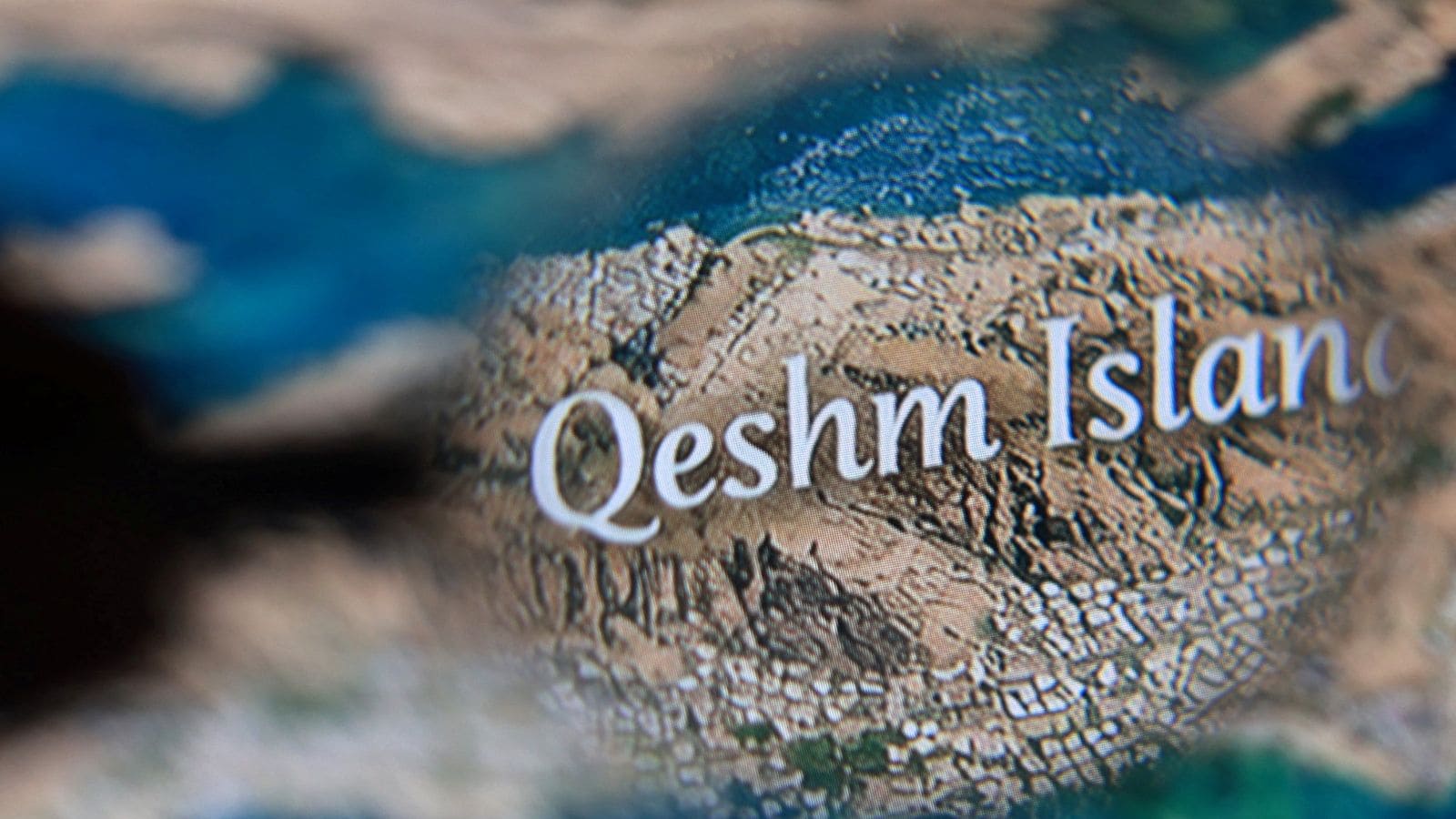
Most commentary treats Qeshm Island as just another dot on the map of southern Iran. It isn't. Stretching roughly 135 kilometers along the northern shore of the Strait of Hormuz, Qeshm is the largest island in the Persian Gulf and sits directly adjacent to the narrowest choke point of global energy transit. To read more about the context of this, TIME offers an excellent breakdown.
If you are looking at the Strait of Hormuz from a naval planning perspective, Qeshm is not merely territory; it is an unsinkable aircraft carrier and radar platform. The IRGC Navy (IRGCN) has spent decades turning the island's rugged terrain and coastal inlets into an integrated anti-access/area denial (A2/AD) network. From Qeshm, coastal defense cruise missiles, fast-attack craft, unmanned aerial vehicles (UAVs), and electronic warfare suites can monitor, harass, or interdict vessels passing through the Traffic Separation Scheme—the designated shipping lanes that carry roughly a fifth of the world's petroleum liquids.
When military analysts look at a strike on Qeshm, they do not see a random act of retaliation. They see surgical geography. By striking specific IRGC assets on the island—whether radar installations, drone staging areas, or coastal missile batteries—Washington is not trying to invade Iran or topple the regime in Tehran. It is degrading a specific operational capability at the exact geographic pinch point where Tehran holds the global economy hostage.
Dismantling the Escalation Ladder Fallacy
The loudest objection to any kinetic action against Iranian territory is the "escalation ladder" argument—the idea that every strike automatically forces the adversary to climb one rung higher until both sides are locked in total war. This theory, popularized during the Cold War by thinkers like Herman Kahn, is routinely misapplied to modern asymmetric conflicts.
In practice, deterrence in the Middle East does not operate like a rigid staircase; it operates like a thermostat.
For years, Tehran perfected the art of "gray zone" warfare—operating just below the threshold that would trigger a massive conventional U.S. response. By utilizing regional proxies, deniable maritime mines, and commercial vessel seizures, the IRGC imposed continuous, low-grade costs on Washington and its partners while keeping Iranian soil completely insulated from risk. As long as the cost of provocation remained zero on Iranian territory, the incentive to keep pushing never stopped.
A direct, limited strike on an IRGC facility on Qeshm Island breaks that insulation without demanding regime survival in response. Think about the calculus in Tehran:
- Cost Imposition: The IRGC loses high-value, difficult-to-replace surveillance or strike hardware right on its home turf.
- Deniability and Face-Saving: Because the strike is localized to military infrastructure on an island rather than civilian centers or major mainland cities like Tehran or Isfahan, Iranian leadership retains the political room to calibrate its response. It does not face an existential crisis that forces an all-in gamble.
- Recalibration of Risk: Commanders in the IRGCN are suddenly reminded that their forward-deployed assets in the Strait are vulnerable, forcing them to disperse, hide, and spend resources on defense rather than offense.
Strategists like Thomas Schelling wrote extensively in Arms and Influence about the diplomacy of violence—the concept that the power to hurt is most effective when held in reserve, demonstrated selectively to shape an adversary's expectations. Striking Qeshm is the textbook application of Schelling’s coercive bargaining: demonstrating reach and precision to compel restraint, rather than unleashing overwhelming force to achieve annihilation.
What Everyone Gets Wrong About Strait of Hormuz Closures
Whenever tensions flare near Qeshm, the immediate panic question is: Will Iran close the Strait of Hormuz?
Asking whether Iran will "close" the Strait misunderstands both naval warfare and Iran's own economic survival. In military terms, completely closing a waterway roughly 21 nautical miles wide at its narrowest point requires sustained sea control—something the IRGC Navy does not possess against a U.S. carrier strike group and allied air power. What Iran can do is make transit prohibitively expensive through insurance spikes, intermittent mine warfare, and drone harassment.
More importantly, closing the Strait is an economic suicide pact for Tehran. Iran relies on those exact same waters to export its own crude oil—primarily to buyers in Asia—and to import essential goods. Shutting down the Strait cuts off Iran's primary financial lifeline and immediately alienates China, the single most important diplomatic and economic backer Tehran has left.
Imagine a scenario where the IRGC actually succeeds in halting all tanker traffic through Hormuz for two weeks. Global oil prices skyrocket, triggering an immediate, unified military response from a coalition of Western and Asian naval powers whose economies depend on Gulf energy. Iran's remaining naval assets are systematically dismantled, its oil terminals at Kharg Island become prime targets, and Beijing—furious over the disruption to its energy imports—withdraws its diplomatic shield at the United Nations.
Tehran knows this. That is why the threat of closing the Strait is far more useful to the IRGC than the act itself. Strikes on Qeshm target the machinery of the threat without triggering the doomsday scenario the pundits fear.
The Real Risk Nobody Talks About
Admitting that targeted strikes can stabilize deterrence does not mean the strategy is free of danger. The real risk isn't that a strike on Qeshm automatically triggers World War III; it is miscalculation through friction and attrition asymmetry.
First, there is the problem of the cost-exchange ratio. Modern asymmetric warfare is brutally expensive for the defender. When the U.S. military uses multi-million-dollar precision munitions or naval interceptors to destroy comparatively cheap drones, radar dishes, or fast-attack boats, Washington wins the tactical exchange while losing the financial one. If the strategy devolves into an endless game of whack-a-mole across the Persian Gulf, the U.S. burns through high-end munitions stockpiles that are desperately needed for deterrence in the Indo-Pacific.
Second, human error in congested waters is a constant threat. The Strait of Hormuz is crowded with commercial tankers, fishing dhows, IRGC patrol boats, and coalition warships operating within minutes of each other. High alert levels compress decision-making timelines. A nervous radar operator or an overzealous local commander on a fast boat can misread a routine maneuver, turning a calibrated standoff into an unintended mass-casualty incident.
Third, limited strikes rarely produce permanent strategic surrender. The IRGC is built for institutional resilience and dispersal. You can crater a runway or destroy a coastal radar array on Qeshm Island today, and within months, mobile launchers and subterranean facilities will absorb the mission. Kinetic strikes buy time and restore temporary deterrence; they do not solve the underlying political hostility.
How to Actually Read the Next Move
If you want to understand what happens next in the Persian Gulf, stop watching the cable news chyrons and start tracking the actual indicators of maritime and military posture:
- Watch the war-risk insurance premiums: Maritime underwriters at Lloyd's of London have far better intelligence than television commentators. If shipping insurance rates for vessels transiting the Persian Gulf spike dramatically, commercial operators see genuine danger. If rates remain steady, the market recognizes the strike as contained signaling.
- Track commercial AIS data: Automatic Identification System (AIS) transponders on oil tankers reveal real-time behavior. Look for vessels altering routes, loitering outside the Gulf of Oman, or turning off transponders—not speculative headlines about "imminent blockades."
- Monitor IRGC dispersal patterns: True preparation for a major conflict involves evacuating high-value naval assets from vulnerable ports like Bandar Abbas and dispersing mobile missile batteries inland. Routine rhetorical threats from Tehran without corresponding force dispersal are designed for domestic consumption, not operational execution.
Conflict in the Strait of Hormuz is governed by cold calculation, geography, and economic self-interest—not the dramatic instincts of headline writers. A strike on Qeshm Island is a sharp, deliberate reminder of military reach at the world's most sensitive maritime choke point, engineered specifically to keep a localized shadow war from ever becoming the main event.