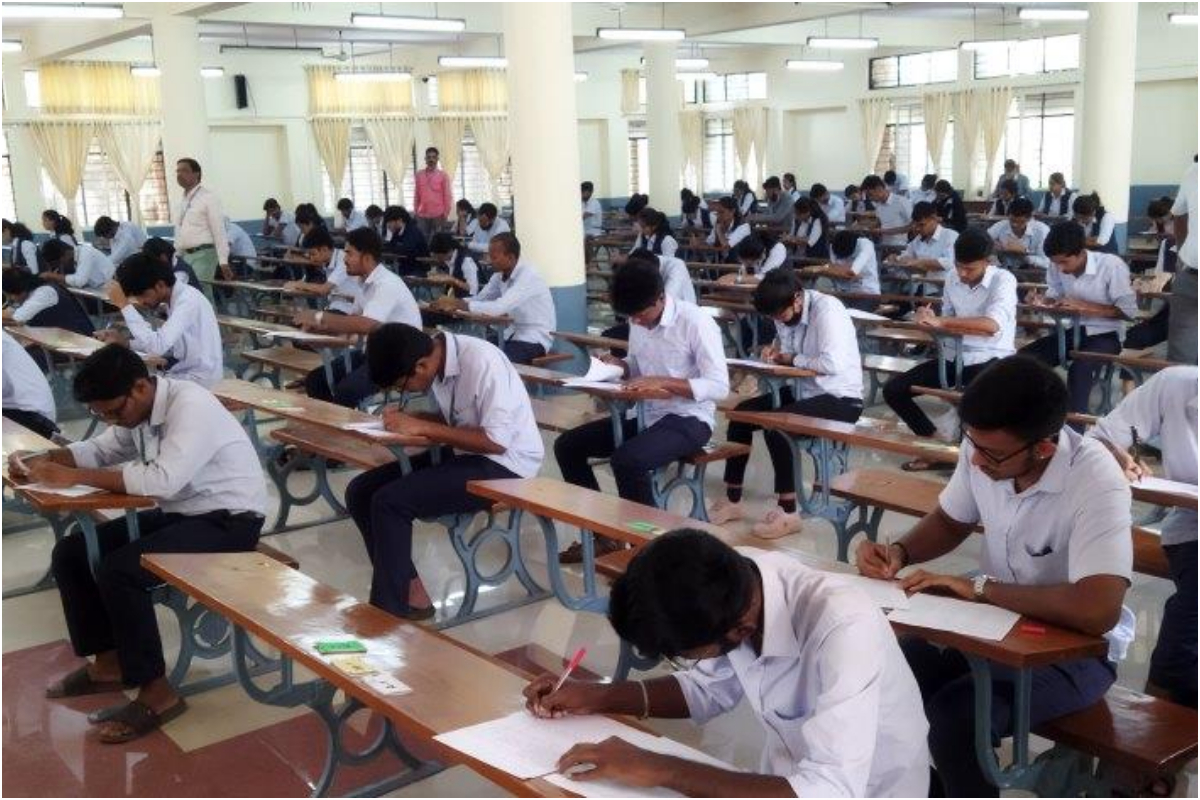
The integrity of the international examination system is currently facing a systemic threat that transcends mere student dishonesty. In early May 2024, reports surfaced that the Cambridge International AS Level Mathematics paper (9709/12) had been compromised in Pakistan, with images of the exam circulating on social media hours before students sat for the test. This was not a localized mishap. It was a failure of the physical and digital safeguards meant to protect the futures of thousands of students.
Cambridge International Education (CIE) responded by launching an investigation, ultimately deciding to award marks based on performance in other components of the qualification. For the students who spent months mastering calculus and trigonometry, this "statistical fix" feels like a hollow substitute for a fair fight. But the real story is not the leak itself; it is the increasingly sophisticated black market for academic materials and the outdated distribution models that allow it to thrive.
The Anatomy of a Modern Exam Breach
Academic leaks used to involve physical theft—a literal break-in at a school safe or a bribed courier. Today, the process is streamlined and dangerously efficient. A single person with a smartphone and a few seconds of unsupervised access can digitize an entire paper. Once that data hits encrypted messaging apps, it spreads with a velocity that no proctor or administrator can contain.
In the case of the Pakistan leak, the compromise likely occurred at the "last mile" of the distribution chain. Cambridge ships physical papers to centers and British Council hubs globally. These papers are meant to remain under lock and key until the moment of the exam. However, the interval between the arrival of the crates and the start of the clock provides a window of opportunity.
The vulnerability is human. Whether through financial coercion or a misguided sense of helping students, individuals within the logistical chain are the weak links. In Pakistan’s hyper-competitive academic environment, where a single grade determines entry into prestigious medical or engineering colleges, the demand for "leaked" content creates a lucrative shadow economy.
The Problem with Statistical Mitigation
When a paper is compromised, exam boards typically use a "special consideration" or evidence-based grading approach. This involves looking at how a student performed on the remaining, uncompromised papers and using that data to estimate what they would have scored on the leaked one.
This method relies on the assumption that student performance is consistent across different topics. It is a flawed premise. A student may excel at pure mathematics but struggle with mechanics or statistics. By discarding the results of the leaked paper, the board essentially punishes those who had focused their preparation on that specific module.
Moreover, this approach does not account for the psychological toll. Imagine sitting in a hall, knowing the person three desks over has seen the questions while you have not. The sense of unfairness persists even if the board cancels the marks, because the integrity of the environment has been permanently stained.
The Digital Solution and Its Own Risks
The recurring nature of these leaks has forced a conversation about moving away from physical paper altogether. Digital examinations, delivered via secure software that unlocks only at a specific GMT timestamp, seem like the obvious fix. If there is no physical paper to photograph, there is no leak.
However, a shift to digital brings a new set of headaches.
- Infrastructure Gaps: Many examination centers in developing regions lack the reliable high-speed internet and hardware required to host thousands of simultaneous digital testers.
- The Screenshot Threat: Even with locked browsers, a student or rogue staff member can still use an external device to capture the screen.
- Cybersecurity: Moving the target from a physical safe to a cloud server simply changes the skillset of the thief. A centralized hack could compromise every paper globally, rather than just those in one region.
The industry is stuck between a prehistoric physical system and a digital future that is not yet ready for the scale of global testing.
Why Pakistan Remains a Hub for Leaks
Pakistan has become a recurring flashpoint for CIE integrity issues. To understand why, one must look at the intersection of extreme academic pressure and a lack of local oversight. The British Council manages the logistics, but they rely on private schools to act as venues.
The incentive for a school to "ensure" high grades is massive. High A-Level results are the primary marketing tool for private institutions. When the gatekeepers of the exam are also the ones whose livelihoods depend on the students’ success, the conflict of interest is staggering.
Furthermore, the legal consequences for academic fraud in Pakistan are often negligible compared to the financial rewards. Without a rigorous legal framework that treats exam theft as a serious white-collar crime, the risk-to-reward ratio remains in favor of the leakers.
The Global Ripple Effect
While the leak was centered in Pakistan, the consequences are felt in London, Dubai, and Singapore. Universities rely on the "Cambridge Standard" as a universal yardstick. When that yardstick becomes unreliable, the value of the qualification drops for everyone.
Admissions officers at top-tier universities are beginning to look at A-Level results from certain regions with a more critical eye. If a specific country consistently produces "perfect" scores followed by reports of leaks, the trust in those grades evaporates. This is a tragedy for the vast majority of Pakistani students who work with immense integrity but find their achievements shadowed by the actions of a few.
Rebuilding the Fortress
To stop the rot, Cambridge and similar bodies must move beyond reactive measures. The "last mile" of distribution must be eliminated.
This means moving toward on-site printing. In this model, encrypted files are sent to centers and printed under heavy surveillance just minutes before the exam begins. This shrinks the window of vulnerability from days to minutes. It requires a significant investment in specialized, secure printing hardware at every center, but the cost of inaction is the total devaluation of the Cambridge brand.
Secondly, there must be a move toward "un-leakable" exams. This involves using large banks of questions where each student receives a randomized set of problems. While difficult to implement for subjects like Mathematics that require specific progression, it is the only way to ensure that knowing five questions in advance doesn't grant an unfair advantage.
The Human Factor
We often blame technology or logistics, but the root is a culture that prioritizes the credential over the knowledge. As long as the grade is seen as a commodity to be bought rather than a reflection of mastery, people will find ways to steal it.
The Cambridge investigation will likely end with a few centers being blacklisted and a new set of "best practices" issued. But until the physical paper is removed from the equation and the legal stakes are raised, the next leak is not a matter of if, but when. The survival of international testing depends on proving that a grade cannot be bought with a WhatsApp message and a few thousand rupees.
The system is currently running on the fumes of its old reputation. If the boards do not modernize their security with the same intensity that students use to bypass it, the "gold standard" of education will soon be worth nothing more than the paper it is no longer printed on.