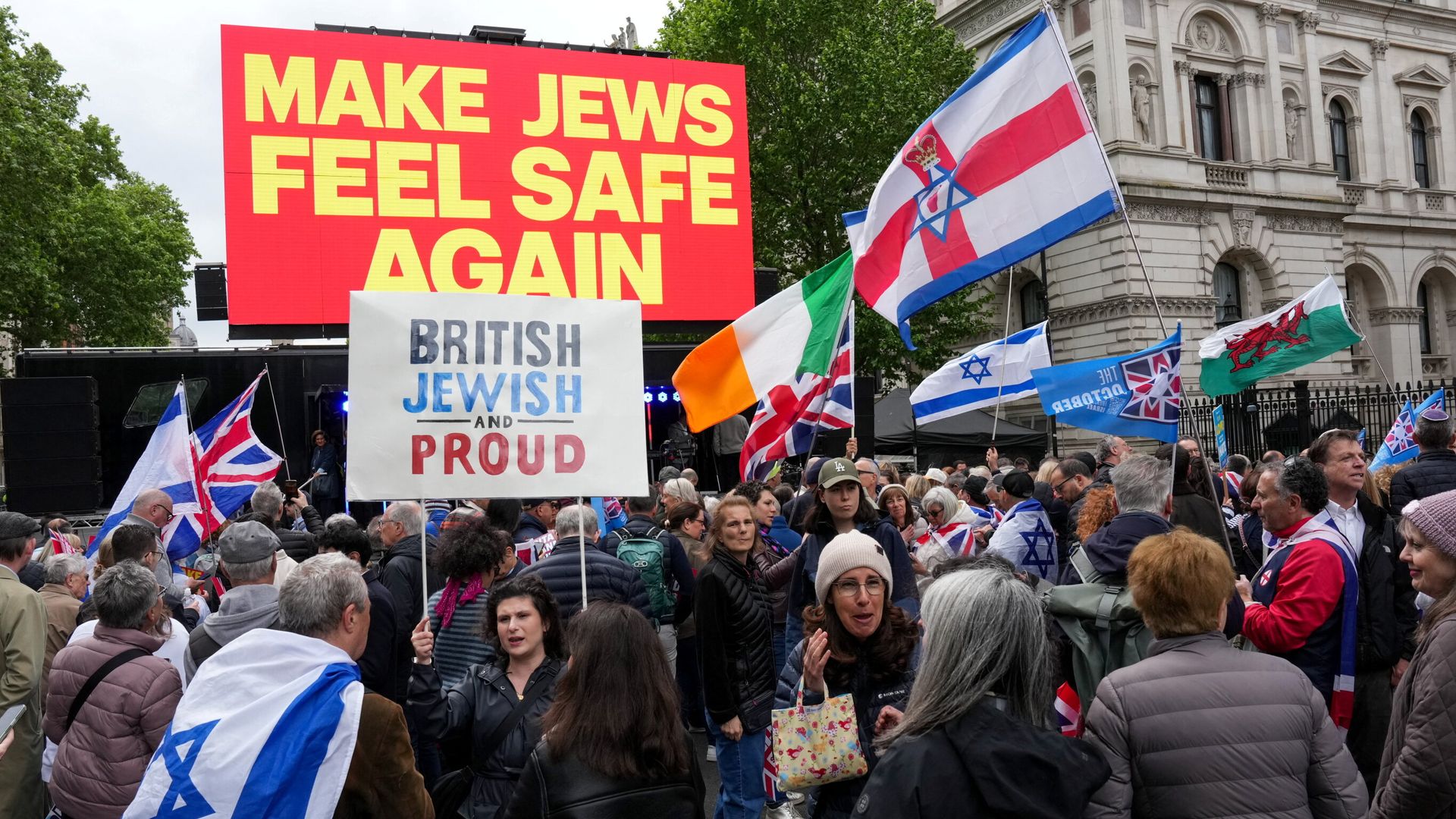
Every single headline on university campus antisemitism right now is built on a statistical sleight of hand. The narrative is plastered across every major news outlet with metronomic regularity. Post October seventh, campus antisemitism has supposedly exploded into a raging wildfire, surging by three hundred, four hundred, or five hundred percent depending on which advocacy group bought the last ad space.
Stop. Look at the raw data instead of swallowing the press release. If you enjoyed this piece, you should read: this related article.
I have spent the last decade watching institutional data collection mutate from a rigorous audit of human behavior into a public relations weapon. When you expand the definition of a threat to include any speech that makes someone uncomfortable, any protest that challenges foreign policy, and any anonymous chalking on a quad, your incident counter stops measuring bigotry and starts measuring ambient political friction.
We are misdiagnosing the entire pathology on American and European quads. The catastrophe is not that universities have suddenly transformed into nineteenth-century pogrom zones overnight. The catastrophe is that we have institutionalized a system of panic metrics that obscures actual targeted violence behind a wall of bureaucratic inflation, making real protection harder while turning academic discourse into a courtroom. For another perspective on this story, see the latest update from NPR.
Let us look at how these numbers are actually generated. The primary clearinghouses for campus incident reports rely heavily on self-reported intake forms. If a student feels threatened because a campus organization hangs a banner protesting a military campaign, that gets logged. If a professor uses language in a lecture that offends a student’s political sensibilities, that gets logged. If a student hears a chant at a demonstration that they interpret as menacing, that gets logged.
None of this requires verification of criminal intent, actual physical targeting, or legal thresholds of harassment. It is an index of emotional distress coded as civil rights violations.
When you lower the reporting threshold to zero, your metric becomes a measure of how angry people are, not how unsafe they are. And right now, everybody is incandescently angry.
The lazy consensus among administrators and commentators is that this surge represents a spontaneous, bottom-up eruption of ancient hatred among the student body. The kids are broken, the narrative goes. They have been radicalized by TikTok algorithms and bad ideas in postcolonial studies seminars, reverting to tribalism the second a crisis hit the Middle East.
This explanation is intellectually lazy. It lets the people running these universities completely off the hook.
Students do not radicalize in a vacuum. Campuses have spent fifteen years turning themselves into monocultures of emotional safetyism and grievance-based identity politics. Administrators built bureaucratic apparatuses designed to validate every claim of psychological harm, weaponized bias response teams against unpopular speech, and taught generations of undergraduates that words are violence and safety means never having your worldview challenged.
Then reality intruded. A brutal war broke out, and students who had been conditioned to view every political disagreement through the lens of pure oppressor-versus-oppressed binaries immediately
Why Campus Antisemitism Reports Are Lying to You About Higher Education
news
Every single headline covering university campuses today sings the exact same tired tune. The lazy consensus is absolute, predictable, and entirely divorced from the administrative reality on the ground. The narrative screams that academic quads have transformed into ideological war zones overnight, completely worse than anything witnessed before October 7.
It is a clean story. It makes for compelling cable news segments. And it is fundamentally wrong.
The spike you are reading about on your feeds is not an explosion of novel hatred. It is an explosion of bureaucratic tracking. For decades, universities treated student-on-student harassment, graffiti, and ideological intimidation as background noise—quietly swept under the rug by deans terrified of alumni donors and public relations scandals. When every institution was forced to stand up centralized reporting portals, mandate digital forms, and publicize every grievance to satisfy federal pressure, the metrics naturally skyrocketed.
Measuring the health of a university by its complaint volume is like judging a city's safety entirely by how many new police sirens you hear after installing a 911 app on every citizen's phone. You are tracking the sensitivity of the detector, not the velocity of the sickness.
I have spent the last decade consulting for institutional boards and navigating the labyrinth of higher education risk management. I have watched risk-averse administrators panic at the first sign of student protest, weaponizing compliance committees to chase PR protection rather than institutional integrity. They do not know how to handle ideological conflict because they spent thirty years outsourcing campus culture to HR-style risk aversion.
Let us be precise about the terminology. Antisemitism on campus is real, historical, and vicious. But blurring the lines between structural bigotry, raw political theater, and unhinged online radicalism serves only one master: administrators who want an excuse to crack down on all student speech indiscriminately. When a university lumps a crude protest chant under the exact same data category as a physical assault on a Jewish student, they are not protecting students. They are laundering their own administrative incompetence through a statistical smoke machine.
The lazy consensus tells us that the kids have gone feral and the ivory tower is burning. The truth is much more cynical. The tower was already hollow. The current panic is simply the sound of the drywall finally giving way under the weight of decades of corporate tuition models and cowardice from university presidents who treat free speech as a corporate liability insurance risk.
Look at the mechanics of how student politics actually operate. The average student is not an ideological zealot; they are a stressed-out twenty-year-old paying fifty grand a year to learn how to pass an organic chemistry exam. Yet, a vocal fraction of one percent on both extremes dominate the oxygen, hijacking institutional microphones. Instead of isolating the agitators and enforcing basic conduct rules, administrations cower. They issue ten-page legalistic statements written by high-priced defense attorneys that say absolutely nothing, fueling more paranoia on all sides.
If you want to fix the rot, stop pretending this is just a moral panic over late-night flyers and quad chalking. The real crisis is that the modern university has abandoned its core function—the friction of competing ideas—and replaced it with a hospitality model where students are viewed as fragile consumers who must never be offended, unless offending them protects the brand's endowment.
The downside of my approach is stark: it means admitting that universities are failing because they are run like risk-averse corporations rather than communities of inquiry. It means abandoning the comforting lie that a few speech codes and mandatory sensitivity modules will scrub millennia of hatred out of the human heart.
Stop asking how to police the quads more efficiently. Start asking why we handed the keys of intellectual life to bureaucrats who wouldn't recognize an independent thought if it hit them with a tuition bill.
The next time you see a headline claiming campus hostility has reached unprecedented heights, remember what you are actually looking at. It is not an awakening of ancient hatreds. It is an administrative class terrified that someone might finally notice they have no clothes.