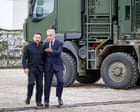
You can't talk about surviving another brutal winter in Kyiv without talking about air defense. Canadian Prime Minister Mark Carney just made that crystal clear. During Ukrainian President Volodymyr Zelenskyy's high-stakes visit to Calgary, Alberta, Ottawa rolled out a massive support package designed to keep the lights on and the missiles out of Ukrainian airspace.
Forget diplomatic small talk. This visit delivered hard financial commitments, a blueprint for a hundred-year alliance, and a drone production pipeline that changes how supplies hit the front lines. If you want to understand how international alliances actually function when a country's survival is on the line, look closely at what just happened in western Canada.
The Calgary Summit and the Air Defense Package
Zelenskyy touched down in Canada facing an aggressive intensification of Russian strikes targeting civilian centers and energy grids ahead of regional escalations. In response, Carney announced a critical air defense interceptor package worth 350 million Canadian dollars.
This funding flows directly through the United States-backed Joint Ukraine Multinational Program, known as Jumpstart. It addresses the acute global shortage of interceptor missiles by rushing stock straight to Ukrainian operators. Beyond the immediate interceptors, Canada signaled its readiness to integrate with European anti-ballistic initiatives, specifically linking technological capabilities to programs like the European FREYJA anti-ballistic missile framework.
Canada isn't just sending surplus gear from dusty warehouses. They are reshaping domestic production lines to prioritize Ukraine's defense needs.
Drones Straight to the Battlefield
Munitions alone won't win a war of attrition. You need automated aerial systems at scale, and you need them now.
Under the newly struck agreements, 30 percent of fresh Canadian drone production output goes straight to Ukrainian forces. Zelenskyy made it plain during joint press appearances: these units bypass bureaucratic red tape to land immediately in the hands of soldiers.
- Immediate dispatch: Drones move straight from production lines to front-line units.
- Targeted defense: Systems focus on intercepting jet-powered loitering munitions.
- Industrial integration: Canadian manufacturing output adapts directly to wartime demands.
Surviving the Winter Energy Crisis
Air defense represents only half the battle. When temperatures plummet below freezing, energy infrastructure becomes the primary target.
Carney backed up the military aid with 450 million Canadian dollars in loan guarantees explicitly earmarked for the Ukrainian energy sector. Hospitals, heating plants, and power storage facilities require urgent reinforcement. Without stable power grids, civilian life in major urban centers becomes completely untenable.
Canada's historical ties to Ukraine run deep, rooted in waves of migration that started back in the late nineteenth century. Alberta alone hosts roughly 350,000 citizens of Ukrainian descent. That diaspora creates a cultural bridge that turns abstract foreign policy into domestic urgency.
Looking Toward New York and Beyond
While bilateral ties between Ottawa and Kyiv solidify through a declared hundred-year partnership spanning defense and critical minerals, the broader geopolitical clock keeps ticking. Zelenskyy pointed toward upcoming diplomatic touchpoints in New York, where Ukrainian delegations will coordinate further strategy with American leadership.
Diplomacy requires leverage. Canada just handed Kyiv a stronger hand by securing the skies and safeguarding the heat before the snow falls. Check the updates out of New York later this month to see how Washington responds to these European and Canadian hardening efforts.


