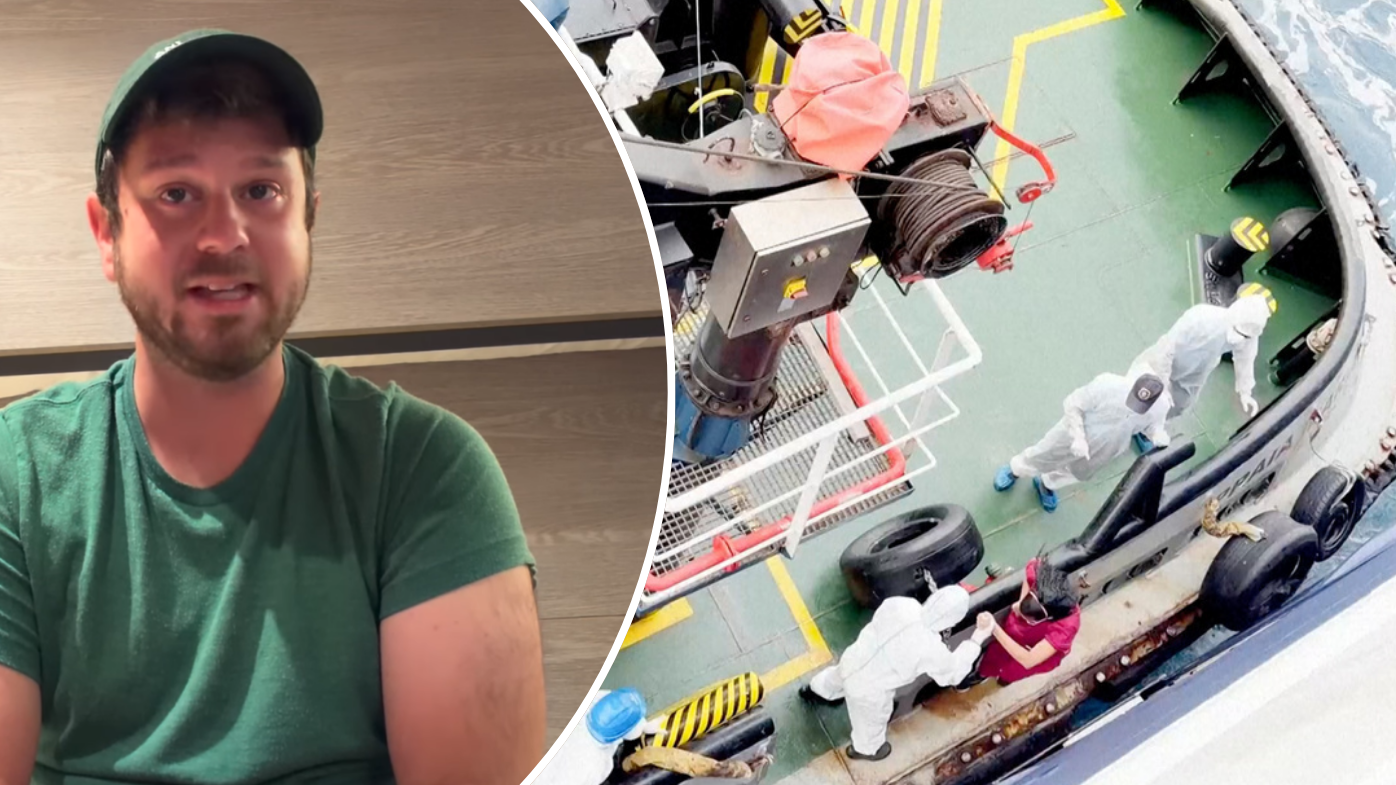
The maritime industry is currently facing a nightmare scenario as a cruise ship carrying confirmed cases of Hantavirus has finally secured permission to dock in the Canary Islands before making its way to mainland Spain. While the immediate focus remains on the medical evacuation of those infected, the deeper story lies in the staggering lapse of biosafety protocols that allowed a rodent-borne pathogen to take hold in a multi-million dollar vessel. This is not a simple case of bad luck. It is a systemic failure of sanitation oversight in an industry that promised it had learned its lessons after the 2020 global health crisis.
Hantaviruses are not typical cruise ship fare. Unlike the ubiquitous Norovirus, which spreads through contaminated surfaces and human contact, Hantavirus requires a specific vector: the excreta of infected rodents. For a ship to become a breeding ground for this virus, there must be a significant and sustained breach in Integrated Pest Management (IPM). The fact that passengers and crew were exposed suggests that the ship’s internal "envelope"—the barrier between the sterile passenger environment and the industrial workings of the hull—was compromised long before the first fever spiked.
The Logistics of a Floating Hot Zone
When the vessel first signaled its distress, several ports initially balked. The hesitation from local authorities was not merely bureaucratic cruelty; it was a cold calculation of risk. Hantavirus Pulmonary Syndrome (HPS) carries a mortality rate of roughly 38%, a terrifying figure compared to standard seasonal illnesses. By the time the Spanish authorities in the Canary Islands granted permission to dock, the ship had become a pariah at sea, highlighting the fragile legal framework that governs international waters during a localized outbreak.
The ship is now undergoing a process known as pratique, where health officials board the vessel to determine if it is "cleared" of contagious disease. However, clearing a ship of Hantavirus is significantly more complex than spraying down a buffet line with bleach. Because the virus is often aerosolized when dried rodent urine or droppings are disturbed, the ship’s entire HVAC system must be treated as a potential delivery mechanism for the pathogen.
Why Current Maritime Sanitation Failed
Maritime experts have long warned that the "quick turn" culture of modern cruising leaves little room for deep-tissue inspections. Ships are incentivized to keep their engines running and their cabins full. A three-hour window between one group of 3,000 passengers leaving and the next 3,000 arriving is the industry standard. Within that window, it is impossible to conduct the level of vector surveillance required to spot a budding rodent infestation in the sub-decks or food storage lockers.
The presence of Hantavirus suggests a failure at the loading dock level. Rodents typically enter ships through mooring lines or tucked inside palletized food shipments. High-end journalism often misses the gritty reality of the "gray water" and "black water" management systems on these ships, where humidity and warmth create an ideal sanctuary for pests. If a ship’s crew is overworked and understaffed—a chronic issue in the post-pandemic labor market—the small signs of an infestation, like chewed wiring or droppings in a dry-store corner, are easily ignored.
The Mechanics of Infection at Sea
To understand the severity, one must look at the biology of the virus. Hantavirus does not jump from person to person easily; it is an environmental hazard. This means the ship itself became the primary source of the "attack."
- Aerosolization: As cleaners or maintenance workers move through restricted areas, they kick up dust. If that dust contains dried droppings, the virus enters the air.
- HVAC Circulation: On older vessels, the air scrubbers may not be equipped with HEPA-grade filtration capable of catching viral particles, allowing them to migrate from the lower decks to passenger cabins.
- Food Contamination: While less common, the ingestion of food contaminated by rodent waste is a documented pathway for certain strains of the virus.
The Economic Fallout and the Canary Islands Gambit
Spain’s decision to allow the ship to dock in the Canary Islands was a calculated move. The islands have the medical infrastructure to handle high-level isolation, but the decision has sparked a fierce debate regarding the "dumping" of maritime liabilities onto tourist-heavy regions. Spain is essentially betting that its Sanidad Exterior (Foreign Health) department can contain the situation before the vessel moves on to the mainland.
The financial cost for the cruise line will be astronomical. Beyond the immediate medical bills and potential lawsuits, the ship will likely require a "Level 4" decontamination. This involves stripping out porous materials—carpeting, curtains, and upholstery—in any area where the virus was detected. The loss of revenue from canceled future voyages, combined with the "stigma" of being the "Hantavirus Ship," could sink the parent company's quarterly earnings.
The Myth of the Sterile Cruise
For decades, the cruise industry has marketed the idea of a sterile, controlled environment. They sell the illusion of a bubble. This Hantavirus outbreak shatters that illusion. It reminds us that a cruise ship is not a luxury hotel; it is a massive, floating piece of industrial equipment that operates in some of the harshest and least-regulated environments on Earth.
The oversight of these vessels is often left to "flag of convenience" states like Panama or the Bahamas, which lack the resources to conduct the rigorous, unannounced health inspections that a land-based hospital or restaurant would face. When a ship enters Spanish waters, it finally hits a wall of European Union regulations, which is why the drama is unfolding so publicly now. The "permission to dock" is not a sign of the crisis ending; it is the beginning of a forensic investigation that will likely reveal years of corner-cutting in the ship's maintenance logs.
The Hidden Vector in the Supply Chain
We must look at the ports of origin. This vessel didn't pick up Hantavirus in the middle of the Atlantic. It brought it from a port where the loading facilities were likely substandard. Investigating the Sanitary Ship Construction standards reveals that many newer ships have "dead spaces" behind bulkheads that are nearly impossible to inspect or clean. These architectural flaws are a godsend for rodents.
If the industry wants to avoid a repeat of this disaster, it must move away from self-regulation. The current "vessel sanitation programs" are largely performative, focusing on the visibility of cleanliness rather than the structural integrity of pest barriers. We are seeing the result of a "check-the-box" mentality where the boxes being checked don't actually relate to the pathogens being carried.
A New Standard for Maritime Health
The immediate action step for the Spanish authorities is the implementation of a Pathogen Exit Strategy. This involves not just treating the sick, but conducting genetic sequencing on the virus to trace it back to its geographic source. This "molecular fingerprinting" will tell us exactly which port failed in its duty to provide a clean supply chain.
For the passengers currently trapped in their cabins, the reality is a mix of boredom and terror. They are living in a case study for why maritime law needs an overhaul. The "Right to Dock" should be balanced by a "Duty of Care" that is federally or internationally enforced, rather than left to the whims of corporate bean-counters.
The Canary Islands incident is a warning shot. As ships get larger and their systems more complex, the margin for error in sanitation shrinks to zero. A single mouse in a grain locker in a distant port can now trigger an international health crisis and a multi-billion dollar liability. The industry cannot afford to treat this as an isolated fluke. It is a predictable outcome of a system that prioritizes the "quick turn" over the deep clean.
If you are a traveler, the takeaway is clear: the most dangerous part of a ship isn't the engine room or the open sea. It's the invisible air being pumped into your cabin from a ventilation shaft that might haven't seen a real inspection in years. Demand to see the Vessel Sanitation Program (VSP) scores before you book. If a ship hasn't been audited by a third party in the last six months, you are essentially gambling with your respiratory health. This is the new reality of travel in an interconnected, yet poorly inspected, world. Stop looking at the buffet and start looking at the vents.