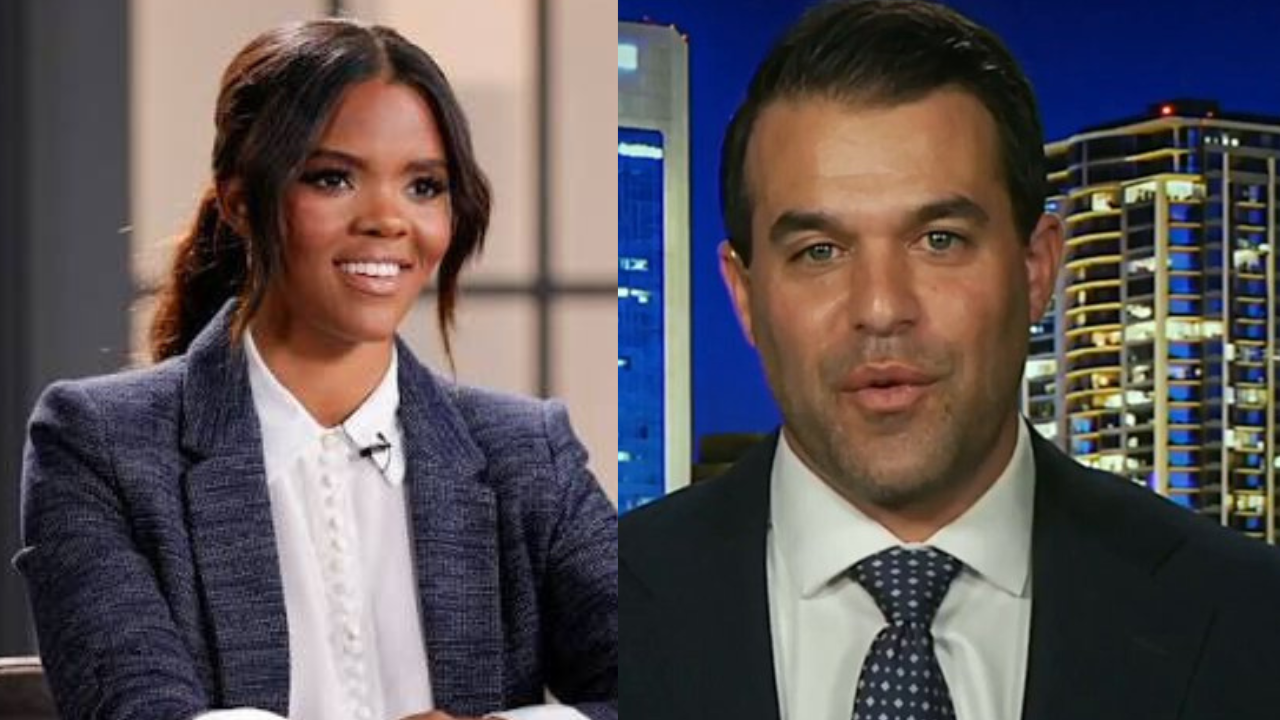
The internet is currently obsessed with the public mudslinging between Candace Owens and Andrew Kolvet. Publicists and commentators are hyper-focusing on the insult comedy—specifically Owens calling Kolvet a "clown" in a leaked dispute over the future of Turning Point USA and Charlie Kirk’s legacy. Mainstream media covered it as a petty clash of egos. Conservative commentators framed it as a temporary family squabble.
They are both completely wrong.
This isn't a simple personality clash. It is a structural fire in the basement of independent media. The public trading of barbs exposes a fatal flaw in how modern political media empires are built, funded, and sustained. I have watched digital media networks blow through tens of millions of dollars of venture and donor capital on the exact same mistake: building an empire on the volatile sand of individual creator brands rather than institutional infrastructure.
When your entire business model relies on the daily emotional stability and ideological alignment of hyper-individualistic influencers, your liquidation event isn't an acquisition. It is a public meltdown.
The Mirage of the Influencer Cartel
The lazy consensus among media analysts is that Turning Point USA and its offshoots represent a "new paradigm" of political organizing—one that bypasses old-guard institutions via raw digital reach. They point to millions of impressions, high-production conferences, and viral clips as proof of a robust alternative ecosystem.
Here is the reality check: impressions do not equal enterprise value.
The feud between Owens and Kolvet over the steering of the movement's narrative highlights the fundamental fragility of decentralized political brands. In traditional media networks, the institution owns the IP. If an anchor leaves, the desk remains. In the creator economy model currently dominating right-wing media, the individual is the IP.
Consider the mechanics of the Owens-Kolvet fallout. It isn't a disagreement over policy or strategy. It is a turf war over who controls the legacy and direction of a platform that was built to service a specific personality. When an organization behaves less like a media company and more like a loose cartel of talent, fractionalization is inevitable. The moment incentives diverge—whether through monetization changes on platforms like X and YouTube or shifting personal alliances—the entire structure fractures.
Why the "Alternative Media" Ecosystem Is Economically Unstable
Let's dissect the financial vulnerability that nobody in these circles wants to admit.
- The Donor Dependency Trap: Unlike standard media companies that rely on diversified revenue streams (subscription, programmatic advertising, B2B licensing), ideological media networks remain heavily subsidized by high-net-worth donors. This creates an environment where optics matter more than operational efficiency.
- The Churn of Outrage: To keep donor checks coming and algorithmic engagement high, talent must constantly escalate their rhetoric. This works beautifully for short-term customer acquisition but destroys long-term brand equity and enterprise stability.
- Zero Retention Capital: When an audience attaches itself strictly to a personality (like Owens) rather than a platform (like TPUSA), that audience is entirely non-transferable. If the personality walks, or turns on the platform, the platform's valuation plummets instantly.
I have advised media startups trying to scale using this exact influencer-first playbook. The thesis is always the same: “We will aggregate the biggest voices, cross-pollinate their audiences, and dominate the cultural conversation.” It fails every single time. Why? Because creators are inherently unmanageable assets. They are incentivized by the algorithms to prioritize their personal brand over the collective entity. The Owens-Kolvet fight is simply the natural conclusion of this design flaw. You cannot build a stable house when the bricks are actively trying to escape the wall to build their own smaller houses.
Dismantling the "People Also Ask" Delusions
If you look at the public curiosity surrounding this feud, the questions being asked show just how fundamentally people misunderstand the media landscape.
"Who won the feud between Candace Owens and Andrew Kolvet?"
This is a fundamentally flawed question. Nobody wins a public execution of operational dysfunction. Owens may retain her core, fiercely loyal audience, but she further isolates herself from the broader institutional funding mechanisms that sustain large-scale media plays. Kolvet and the institutional side may retain the physical branding and infrastructure, but they lose the raw, unhinged engagement that drives modern digital political movements. It is a mutually assured destruction of credibility.
"Will this split damage Charlie Kirk’s legacy?"
The premise here assumes that these legacies are built on durable institutional foundations. They aren't. They are built on hyper-current algorithmic relevance. The feud doesn't tarnish the legacy; it reveals that the legacy itself is an illusion kept alive by continuous controversy. The moment the controversy becomes inward-facing rather than outward-facing, the audience interest shifts from political alignment to pure schadenfreude.
The High Cost of the Contrarian Approach
To be fair, there is an alternative view. Proponents of the creator-led model argue that traditional, institution-first media is dead. They will point to the declining ratings of cable news networks and the bankruptcy of legacy digital media giants as proof that the individual influencer model is the only viable path forward.
There is some truth to that. Institutional media is slow, expensive, and widely distrusted.
But the solution isn't to swing entirely to the other extreme. The downside of the pure creator model—as evidenced by this feud—is a total lack of governance, extreme key-man risk, and an inability to build anything that outlasts the current news cycle. If your media apparatus can be thrown into a tailspin because two executives or creators start screaming at each other on text threads and leaking them to the press, you don't own a media empire. You own a high-stakes soap opera.
The real winners of the next decade won't be the loudest voices in the room, nor will they be the ancient legacy institutions trying to play catch-up. The winners will be the boring, disciplined operators who figure out how to institutionalize the creator economy—building platforms where the brand is bigger than any single individual, while still allowing for authentic, unfiltered voices to cut through the noise.
Stop tracking who called whom a clown. Start looking at the balance sheets of the organizations trying to manage them. The circus isn't leaving town; it's just running out of tent poles.