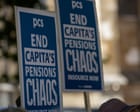
When an outsourcing giant fumbles a major government contract, the fallout usually registers as a dry, data-heavy blip on a stock ticker. Not this time. The unfolding disaster at Capita involving the UK Civil Service pension scheme has crossed the line from corporate underperformance into a full-blown human crisis. It's hurting real people, and now it's heavily bleeding Capita's bottom line.
The numbers are stark. Capita issued a major profit warning, admitting that the chaos will wipe between £25 million and £40 million off its 2026 underlying operating profits. Free cash flow is taking an even harder hit, with an expected drain of £35 million to £50 million this year alone. Investors reacted predictably, dumping shares and knocking the stock down around 16% in a single morning. But to understand why this happened, you have to look past the boardroom math. Discover more on a connected issue: this related article.
The Human Cost of a Sinking System
This contract covers 1.7 million members. It's one of the largest public sector pension schemes in the country. When Capita took over the £239 million contract, the promise was efficiency. The reality has been thousands of retired civil servants left stranded without an income.
Some people couldn't buy food. Others couldn't pay their utility bills. The Cabinet Office revealed that over 6,700 retirement quotes and 4,100 bereavement cases were completely stalled. Think about that for a second. Spouses grieving a loss are being forced to wait months just to find out what financial support they have left, all because of an administration backlog. Further journalism by Forbes explores related perspectives on this issue.
At a recent Commons Public Accounts Committee hearing, MPs didn't hold back. Labour MP Catherine McKinnell shared the devastating story of a terminally ill pensioner who had been waiting for a retirement quote since January. That person died without ever receiving it.
When you run a critical public service, delays aren't just a missed milestone on a spreadsheet. They disrupt lives.
Missing Deadlines and Government Sanctions
The government has completely lost patience. Paymaster General Nick Thomas-Symonds made it clear that the state is sanctioning Capita every single month the failures continue. The government has already withheld nearly £10 million in payments due to the firm missing its critical June 30 deadline to fully deliver the contract terms.
To keep the system from totally collapsing, Whitehall had to parachute in a 140-strong team of civil servants to handle the backlog. The bill for that emergency rescue team sits at £12.5m, and Thomas-Symonds has vowed to claw back every single penny from Capita. The state has also had to hand out £15.6 million in interest-free hardship loans to 2,700 desperate retirees who were left with nothing.
The Public Accounts Committee openly questioned whether Capita viewed the state as a cash cow to be milked until exhaustion. It's a harsh critique, but it reflects the deep anger brewing in Parliament.
Why Did the Transition Fail So Badly
Capita executives claim the civil service pension scheme is extraordinarily complex, plagued by missing data and Byzantine rules. While that's likely true, unions like Unite and the Public Commercial Services Union (PCS) point out that the warning signs were everywhere.
Unite had previously warned the Cabinet Office about Capita’s past performance with smaller pension setups, including a messy transition for Ministry of Defence firefighters. When Capita took over the main civil service contract, the online portal reportedly crashed almost immediately. Couple that with a massive £14 million fine Capita suffered following a cyberattack and data breach, and you have a recipe for disaster.
The current strategy involves throwing cash at the problem. Capita is ramping up temporary staffing and diverting resources from other areas, including its higher-margin pension consulting arm. Richard Holroyd, chief executive of Capita's public service division, admitted the company is now losing money on this specific contract. He noted that the focus right now has to be on fixing the service and rebuilding broken trust, not profit margins.
The Bigger Problem for the Outsourcing Model
This situation shines a bright light on the structural flaws of mega-outsourcing contracts. Governments sign these massive deals hoping to shift risk and cut costs through private sector technology. Instead, when the provider fails, the government has to step back in with emergency funds and personnel anyway. The risk never truly leaves the public sector.
Unions are aggressively calling for the contract to be stripped entirely and brought back in-house. They argue that critical infrastructure like pensions shouldn't be run for corporate profit. With Capita pushed to delay its positive free cash flow targets to 2027, the financial strain on the company will linger for years.
If you're a business leader or a public sector manager, the takeaway here is obvious. Complex legacy systems cannot be fixed by simply handing them over to a third party with a mandate for quick cost-cutting. Without immaculate data migration, intense stress-testing, and absolute transparency during the transition phase, you're just outsourcing a time bomb.
Capita now faces an uphill battle to clear thousands of backlogged cases while under constant political and financial fire. For the thousands of retirees still waiting on their money, the resolution can't come fast enough.


