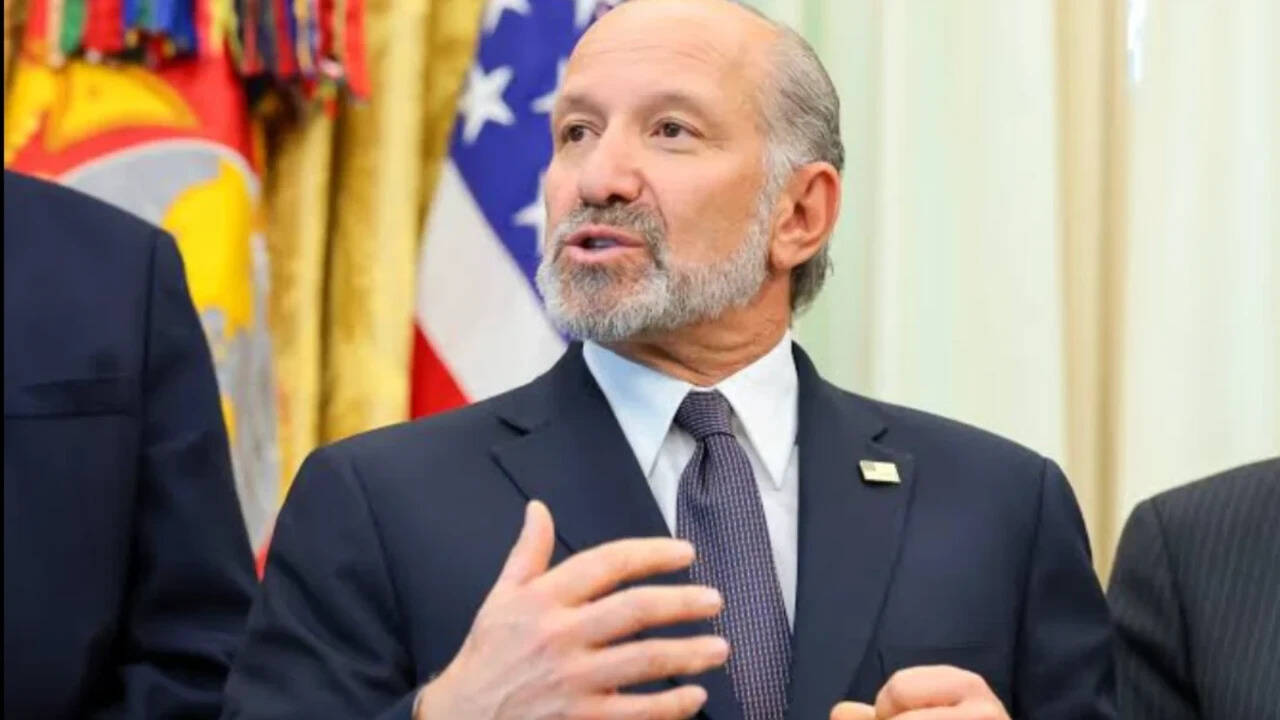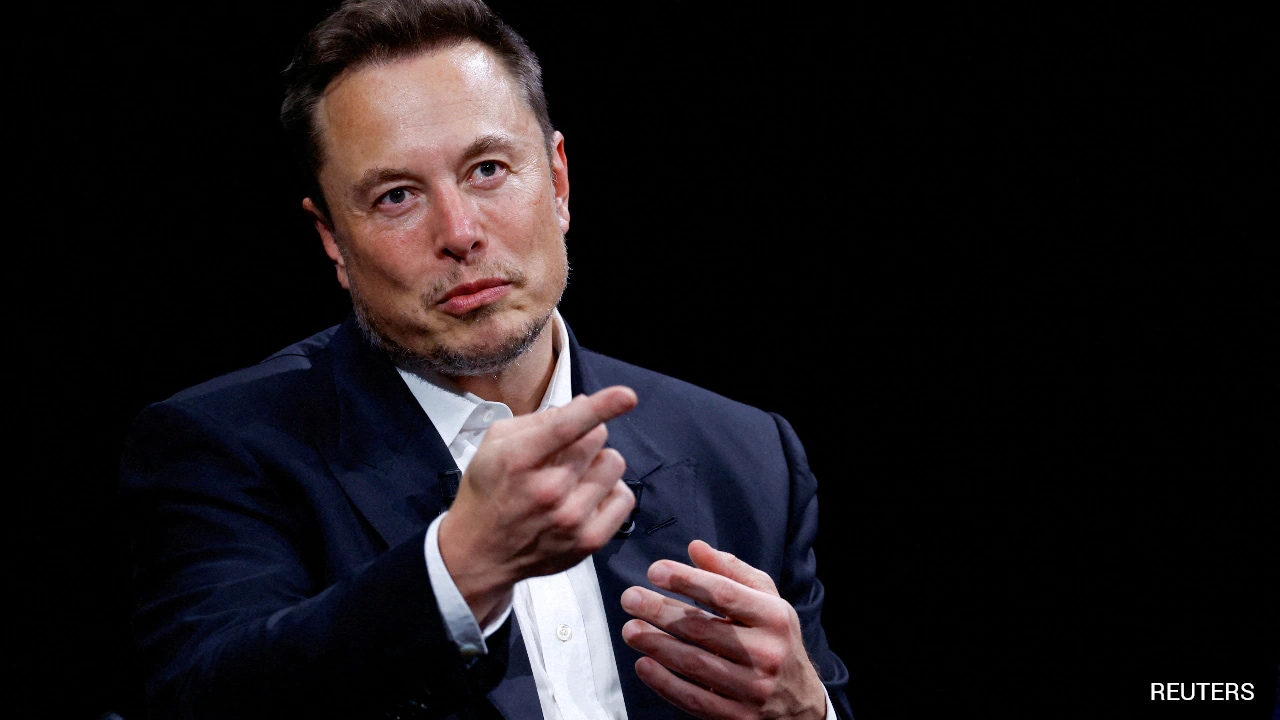
Deploying Rs 4,700 crore—roughly $560 million—into a political cycle only to publicly label the expenditure "pretty foolish" exposes a structural flaw in how ultra-high-net-worth operators translate corporate capital allocation into political influence. In commercial markets, capital buys equity, intellectual property, or cash flow; in electoral markets, capital buys only the probability of a favorable regulatory environment, with zero contractual recourse if the asset underperforms or defects. When an operator accustomed to vertical integration attempts to acquire political outcomes through sheer liquidity, the resulting friction reveals the fundamental incompatibility between engineering-driven business models and coalition-based governance.
The Structural Mismatch Between Commercial and Political Capital
To understand why a half-billion-dollar outlay yields negative perceived utility, one must dissect the mechanics of political return on investment (ROI). Unlike a capital expenditure in manufacturing or software infrastructure, political spending operates under extreme information asymmetry and non-binding agreements.
The Non-Enforceability of Political Contracts
In private enterprise, a $560 million investment is governed by covenants, board seats, liquidation preferences, and fiduciary duties. If a management team deviates from the agreed operational roadmap, the capital allocator replaces the executives or liquidates the assets.
Political contributions, particularly those routed through independent expenditure-only committees (Super PACs), operate under the exact opposite premise. Legal firewalls strictly prohibit coordination between the donor's vehicle and the candidate's campaign. Once the capital clears the escrow of a political action committee, the donor surrenders operational control. The recipient owes no legally enforceable fiduciary duty to the financier. Instead, the politician's primary survival mechanism shifts immediately from securing the donor's capital to maintaining a broad electoral coalition—a coalition whose policy preferences frequently collide with the donor's commercial interests.
Diminishing Marginal Utility in Saturated Media Markets
The second failure point lies in the physics of modern political advertising. Electoral cycles are zero-sum auctions for finite human attention. Because major elections already attract billions in baseline spending from party apparatuses and institutional lobbying groups, injecting an additional Rs 4,700 crore does not open uncontested market space; it merely bids up the cost per thousand impressions (CPM) in a handful of swing districts.
- Ad Saturation: Voters in contested jurisdictions face dozens of political touchpoints daily, driving cognitive fatigue and plummeting conversion rates per dollar spent.
- Counter-Mobilization: Massive, publicized capital injections from a single polarizing figure act as a fundraising catalyst for the opposition, neutralizing the initial financial advantage by triggering symmetrical small-dollar donations from rival voter bases.
- Brand Contamination: When a corporate executive becomes the primary financier of a partisan apparatus, their commercial brands absorb the negative partisanship of the opposing electorate, alienating roughly half of their potential consumer base.
Deconstructing the Cost Function of Rs 4,700 Crore
Evaluating a Rs 4,700 crore political expenditure requires analyzing both the direct cash outflow and the hidden balance-sheet liabilities incurred by the donor's operating companies. The true cost extends far beyond the wire transfers to campaign committees.
Direct Opportunity Cost of Liquid Capital
Allocating $560 million to political advocacy removes that liquidity from high-compounding industrial sectors. In capital-intensive industries—such as aerospace, autonomous robotics, artificial intelligence infrastructure, and energy storage—$560 million represents the exact scale of capital required to fund a next-generation manufacturing line, acquire a mid-sized semiconductor design firm, or underwrite multi-year compute clusters.
Whereas R&D expenditure builds proprietary assets that appreciate or generate defensible moats over a decade, political spending depreciates to zero the morning after election day. The asset has no salvage value.
Reputation Tax and Customer Acquisition Friction
For executives whose personal brands are inextricably linked to consumer-facing products, partisan capital allocation introduces an immediate customer acquisition cost (CAC) penalty. Market share in competitive sectors like electric vehicles or social media platforms relies on mass-market adoption across the ideological spectrum.
When a CEO publicly underwrites a specific political faction, consumers on the opposing side treat purchasing decisions as political statements. This dynamic forces the operating companies to spend incremental marketing dollars or cut product margins simply to defend baseline market share that was previously organic. The Rs 4,700 crore outlay effectively subsidizes the political campaign while taxing the donor's own balance sheet.
Regulatory Whiplash and Counterparty Risk
The strategic objective behind corporate political spending is almost universally regulatory de-risking—securing favorable tax treatment, streamlining permitting processes, or neutralizing hostile agency oversight. However, relying on electoral victories to achieve regulatory stability introduces severe cyclical volatility.
If the backed faction underperforms in midterm elections, the opposing party gains subpoena power, committee chairmanships, and legislative veto points. Rather than securing a shield, the mega-donor paints a high-visibility target on their enterprises, inviting targeted congressional inquiries, delays in federal contracting, and heightened antitrust scrutiny. Even when the backed faction wins, internal party fractures often stall the specific legislative reforms the donor sought, leaving the financier with the reputational liability of partisanship without the legislative payoff.
The Agency Problem in Political Vehicles
When an entrepreneur injects massive capital into a political operation, they rarely manage the day-to-day execution. Instead, they rely on a class of professional political consultants, media buyers, and field operatives. This creates a classic principal-agent problem where the incentives of the operators diverge sharply from the goals of the financier.
Misaligned Fee Structures
Political consultancies typically generate revenue through a percentage of ad buys, retainer fees, and production markups. Their financial metric for success is the volume of capital deployed, not the efficiency of the electoral outcome. A consultant managing a Rs 4,700 crore war chest maximizes their own firm's profitability by recommending maximum spend across expensive television and digital inventory, regardless of whether marginal dollars are shifting voter intent.
The Illusion of Data-Driven Field Operations
Corporate leaders accustomed to telemetry, A/B testing, and real-time conversion tracking often assume political organizations possess equivalent analytical rigor. In practice, voter turnout modeling relies on noisy historical proxies, self-reported polling data, and coarse demographic assumptions.
- Attribution Blindness: Unlike e-commerce, where a click-through leads directly to a verifiable transaction, secret ballots make it impossible to verify whether a specific door-knock or digital ad converted a voter.
- Operational Bloat: Rapidly scaling a field operation with hundreds of millions of dollars within a compressed six-month window inevitably leads to hiring bottlenecks, quality control failures, and fraudulent canvassing metrics—issues that corporate leaders only discover after the capital is burned.
Historical Precedents of Failed Mega-Donor Interventions
The admission that massive electoral spending was "pretty foolish" aligns with a well-documented pattern in modern political economy. Repeatedly, founders who achieved historic efficiency in private markets have suffered catastrophic capital destruction when attempting to buy political outcomes.
The Self-Funding Fallacy
Consider the trajectory of corporate titans who attempted to bypass traditional party structures by funding their own campaigns or independent vehicles at unprecedented scale. In multiple primary and general election cycles, billionaires have spent between $500 million and $1 billion of personal liquidity only to secure negligible delegate counts or fail to flip targeted legislative chambers.
The mechanism of failure remains constant: voters do not evaluate candidates or ballot measures the way consumers evaluate superior technology. In commercial markets, a 10x better product built with superior capital efficiency captures the market regardless of incumbency. In electoral markets, cultural identity, historical party affiliation, and local tribal loyalties create inelastic demand curves that brute-force capital cannot bend.
The Shift from Direct Electoral Spend to Institutional Lobbying
Seasoned corporate strategists eventually abandon broad electoral financing in favor of targeted institutional lobbying and regulatory litigation. The math favors precision over volume. Spending $50 million on specialized legal teams, technical policy white papers, and targeted trade associations consistently yields higher regulatory durability than spending $500 million on mass-market midterm attack ads.
The Strategic Pivot for Capital Allocators
For executives and institutional allocators evaluating political risk, the lesson from a Rs 4,700 crore misfire is clear: never deploy equity-scale capital into non-contractual electoral markets. To protect enterprise value and shape regulatory environments without incurring balance-sheet destruction, leaders must execute a disciplined reallocation strategy.
1. Reallocate from Partisan Campaigns to Issue-Specific Infrastructure
Withdraw capital from broad candidate-focused Super PACs and redirect a fraction of that budget into non-partisan policy institutes, technical standard-setting bodies, and academic research grants. By shaping the underlying technical consensus that regulators rely on to draft rules, an enterprise influences policy outcomes durably without triggering partisan backlash.
2. Build Direct-to-Public Narrative Channels
Instead of paying inflated intermediaries to broadcast political advertisements during peak election windows, invest in owned media ecosystems and transparent public engineering demonstrations. When an organization controls its own distribution channels, it can mobilize consumer and voter sentiment around specific regulatory bottlenecks—such as permitting delays or outdated safety frameworks—on demand, at near-zero marginal cost.
3. Hedge Regulatory Risk Through Geographic Diversification
Treat regulatory hostility as an operational supply-chain risk rather than a political problem to be solved via elections. Distribute manufacturing footprints, R&D hubs, and capital investments across multiple competing jurisdictions—both domestically across different states and internationally across distinct regulatory blocs. When an enterprise possesses credible exit optionality, local policymakers compete to offer favorable regulatory terms to retain tax base and employment, eliminating the need to buy their favor at the ballot box.
4. Enforce Strict Capital Caps on Political Outlays
Establish an internal governance rule capping total political and advocacy spending at less than 0.05% of enterprise value or free cash flow. Treat this allocation strictly as a sunk compliance expense rather than a growth investment. By starving political consultants of excess liquidity, leadership forces advocacy teams to rely on surgical legal arguments and empirical data rather than brute-force media saturation.