The operational failure of public utilities in Puerto Rico is not an issue of temporary capacity shortfalls or isolated weather events; it is a systemic, structural collapse caused by the tight coupling of two distinct infrastructure networks: the electrical grid and the hydraulic distribution system. When an electrical grid suffers chronic instability, the downstream impact on water treatment, pressurization, and delivery is immediate and compounding. This interdependency creates a continuous failure loop that defies conventional, single-vertical remediation strategies.
Understanding the operational crisis requires moving past public frustration to analyze the specific economic, mechanical, and regulatory bottlenecks dictating the island's infrastructure.
The Co-Dependency Matrix: How Power Underpins Water
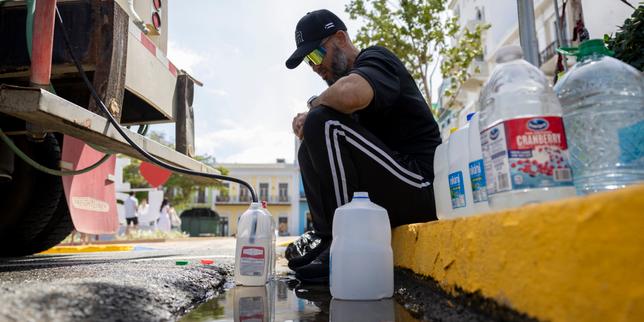
The primary driver of the current water scarcity across Puerto Rico's municipalities is the mechanical reliance of the Autoridad de Acueductos y Alcantarillados (AAA) on the transmission and distribution grid managed by LUMA Energy. Water infrastructure requires uninterrupted electrical inputs at three critical junctions:
- Extraction and Intake: Submersible pumps at raw water reservoirs, rivers, and underground aquifers require consistent voltage to draw volumetric flows into treatment facilities.
- Purification and Filtration: Water treatment plants rely on automated chemical dosing, mechanical filtration systems, and monitoring telemetry that cycle off during power fluctuations, triggering mandatory system resets and sanitation delays.
- Topographical Distribution: Due to the mountainous terrain of the Cordillera Central, gravity alone cannot distribute water to northern urban centers like San Juan or isolated inland communities. AAA operates a vast network of booster pumping stations to maintain hydraulic pressure.
When LUMA’s grid experiences a transient fault or a localized blackout, these booster stations lose power instantly. The immediate consequence is a loss of hydraulic head (pressure) throughout the pipeline network.
[LUMA Grid Failure] ──> [Booster Pumps Offline] ──> [Loss of Hydraulic Head] ──> [Air Pockets / Cavitation] ──> [Pipe Ruptures on Restart]
This loss of pressure creates a secondary physical crisis. When a distribution system depressurizes, gravity-fed backflow can draw groundwater contaminants into empty mains through micro-fissures, requiring extended boiling advisories upon restoration. Furthermore, the re-pressurization process introduces severe mechanical stress. Air pockets trapped in the pipelines shift rapidly when pumps reboot, causing water hammer phenomena that rupture aged asbestos-cement and cast-iron mains, leading to localized net water losses.
Generation Age and Transmission Asymmetry: The Power Bottleneck
The electrical grid's instability is governed by two unyielding physical realities: an antiquated generation fleet and a severe geographic mismatch between supply and demand.
The Thermal Generation Deficit
The generation portfolio managed by the Puerto Rico Electric Power Authority (PREPA) and private operators features a median plant age exceeding 50 years—more than double the United States mainland industry average. These thermal units operate at low thermodynamic efficiency, frequently below 30%. Because these plants have suffered from decades of deferred maintenance due to PREPA’s unresolved $9 billion bankruptcy, they are highly prone to unplanned outages caused by mechanical component failures, boiler tube leaks, and inadequate filtration systems.
Geographic Asymmetry and Transmission Chokepoints
Approximately 80% of Puerto Rico's generation capacity is concentrated on the southern coast (e.g., Costa Sur, Central Aguirre, and AES). Conversely, the primary demand center is the San Juan metropolitan area on the northern coast, which accounts for roughly 40% of total consumption.
This spatial decoupling requires electricity to travel across 2,478 miles of high-voltage transmission lines traversing the rugged 4,000-foot peaks of the Cordillera Central. This configuration yields two core structural vulnerabilities:
- Thermal Overloading: The single, high-capacity transmission corridor operates near its maximum thermal thresholds, leaving zero redundancy for load balancing if a line trips.
- Topographical Exposure: Overhead lines supported by concrete and wooden poles are exposed to high winds, vegetation encroachment, and landslides. Historically, only 15% of these transmission structures were engineered to withstand sustained winds exceeding a Category 4 threshold.
The Economics of Solvency: Capital Allocation Bottlenecks
The slow pace of physical grid modernization is fundamentally an execution bottleneck rather than a lack of capital availability. Following Hurricanes Maria and Fiona, the Federal Emergency Management Agency (FEMA) allocated approximately $55 billion in disaster recovery funding to Puerto Rico. However, by mid-decade, less than half of these funds had transitioned from allocation to active, on-site construction expenditures.
The deployment velocity is constrained by regulatory and legal friction. Every major infrastructure investment must pass a multi-tiered approval process involving FEMA, the Central Office for Recovery, Reconstruction and Resiliency (COR3), and the Puerto Rico Energy Bureau (PREB). This bureaucratic framework ensures strict compliance but introduces multi-year lead times for procurement and environmental permitting.
+------------------+      +-------------------+      +------------------+      +--------------------+
|  FEMA Allocation  | ---> |   COR3 Planning   | ---> |  PREB Approval   | ---> | Field Deployment   |
|   ($55 Billion)  |      |   and Compliance  |      |   and Tariffs    |      | (Capital Velocity) |
+------------------+      +-------------------+      +------------------+      +--------------------+
This capital delays occurs against a backdrop of deep institutional instability. The decision by the government of Puerto Rico to initiate legal proceedings to cancel LUMA Energy's long-term operating contract—met by a $4.5 billion counter-suit from the private operator alleging bad faith—has chilled private capital investment. The threat of contract termination creates a perverse incentive structure: the operator faces diminished motivation to deploy capital into long-term grid hardening when its operational tenure is subject to litigation. Concurrently, PREPA's ongoing bankruptcy prevents the state from accessing standard capital markets to fund municipal utility upgrades independently.
Tactical Interventions for Infrastructure Isolation
Resolving this dual-utility crisis requires moving away from macro-grid stabilization timelines, which operate on decade-long horizons, toward decentralized, localized isolation strategies. To break the dependency of the water network on an unreliable electrical grid, infrastructure operators must deploy targeted engineering interventions at critical nodes.
- Behind-the-Meter Microgrids for Hydraulic Nodes: AAA must decouple its primary booster pumping stations and water treatment plants from the main transmission grid. Deploying dedicated, localized solar photovoltaic arrays combined with large-scale battery energy storage systems (BESS) at treatment facilities ensures that short-term grid fluctuations do not interrupt filtration or depressurize mains.
- Dual-Fuel Automated Redundancy: For high-volume pumping stations where solar footprints are constrained by topography, operators must install industrial diesel or propane generation units equipped with automatic transfer switches. These systems must maintain a minimum 72-hour fuel reserve to bridge the gap during extended thermal generation trips on the south coast.
- Dynamic Variable Frequency Drives (VFDs): To mitigate the pipe-bursting water hammer effect that occurs when pumps restart after an outage, AAA must systematically retrofit pumping stations with VFDs. These drives ramp motor speeds up gradually, controlling pressure gradients within the distribution lines and reducing post-outage infrastructure damage.