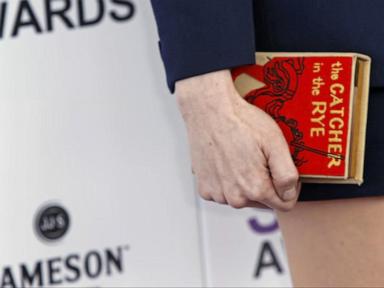
Let's get one thing straight right away. J.D. Salinger did not write a manual for assassins.
Yet, for decades, a bizarre and deeply unsettling pattern emerged in American true crime. Some of the most notorious acts of violence in the late 20th century featured a shared, silent accomplice: a cheap paperback copy of The Catcher in the Rye. For a closer look into this area, we recommend: this related article.
If you've ever read the book in high school, you probably remember Holden Caulfield as a whiny, cynical teenager wearing a red hunting hat, complaining about "phonies". He doesn't commit acts of violence. He actually calls himself a pacifist. So how did this specific coming-of-age novel find its way into the hands of real-world murderers?
It wasn't a coincidence, but it also wasn't a curse. The real reason this book became linked to high-profile crimes lies in a dangerous cocktail of extreme mental illness, deep-seated alienation, and a fatal misreading of a literary classic. To get more context on this topic, comprehensive reporting can also be found on Entertainment Weekly.
The Dark Trilogy of Catcher Crimes
To understand the connection, you have to look at the three major crimes where Salinger's novel played a prominent, almost theatrical role.
1. Mark David Chapman and the Murder of John Lennon (1980)
On December 8, 1980, Mark David Chapman shot and killed former Beatle John Lennon outside the Dakota apartment building in New York City. Instead of fleeing, Chapman calmly stood on the sidewalk and opened a copy of The Catcher in the Rye. Inside, he had written: "This is my statement. Signed, Holden Caulfield."
During his trial, Chapman claimed that killing Lennon—whom he viewed as the ultimate wealthy "phony"—would somehow preserve Lennon's innocence or draw attention to the book's message. He literally wanted to become Holden Caulfield.
2. John Hinckley Jr. and the Attempt on Ronald Reagan (1981)
Just a few months later, on March 30, 1981, John Hinckley Jr. shot and wounded President Ronald Reagan. When federal agents searched Hinckley’s hotel room, they found a familiar paperback on his desk: The Catcher in the Rye. While Hinckley was primarily motivated by a delusional obsession with actress Jodie Foster, his psychological profile mirrored Chapman's isolation and fixation on the book.
3. Robert John Bardo and the Murder of Rebecca Schaeffer (1989)
In 1989, Robert John Bardo shot and killed 21-year-old actress Rebecca Schaeffer at her doorstep after stalking her for three years. As he fled the scene, Bardo tossed a red paperback copy of The Catcher in the Rye onto the roof of a nearby building. Bardo later claimed he wasn't trying to copy Chapman, but the presence of the book cemented its reputation as a calling card for the deeply disturbed.
The Fatal Misreading of Holden Caulfield
So, why this book? Why didn't these men obsess over The Great Gatsby or To Kill a Mockingbird?
It comes down to Holden's voice. Salinger wrote the novel in the first person, capturing a raw, stream-of-consciousness style of teenage isolation. For an ordinary reader, Holden's narrative is a comforting reminder that everyone feels lonely, awkward, and disconnected sometimes.
But for someone suffering from severe, untreated mental illness—like schizophrenia or bipolar disorder, which both Chapman and Bardo struggled with—that intense first-person voice became a mirror.
Normal Reader: "I relate to Holden's frustration with superficial people."
Delusional Reader: "Holden is speaking directly to me. I am Holden. I must carry out his mission."
These killers suffered from a psychological phenomenon known as referential thinking, where a person believes that random events, songs, or books contain highly personal, hidden messages directed solely at them.
They took Holden’s hatred of "phonies" and weaponized it. Holden merely complains about actors, teachers, and acquaintances. He retreats inward. But these men twisted that passivity into a call to arms. They targeted celebrities—the ultimate public figures—under the delusion that they were cleansing the world of superficiality.
The Conspiracy Theories and the CIA
Because the book appeared in the hands of multiple assassins during the 1980s, conspiracy theorists naturally jumped on it.
You've probably heard the rumors: The Catcher in the Rye was a mind-control trigger used by the CIA’s MKUltra program. The theory goes that the book contained "trigger words" designed to activate sleeper agents to assassinate political figures and cultural icons. Pop culture even fueled this fire; in the 1997 movie Conspiracy Theory, Mel Gibson's brainwashed character is practically compelled to buy a copy of the book whenever he sees it.
Honestly, it's a wild story, but it lacks any real evidence.
The simpler, much more logical explanation is math and sociology. By the 1980s, The Catcher in the Rye had sold tens of millions of copies. It was required reading in almost every American high school. It was cheap, ubiquitous, and dealt explicitly with isolation and mental instability.
If a young, unstable man in the 1980s was looking for a book that matched his internal rage and loneliness, Salinger’s novel was the most accessible thing on the shelf. It wasn't a government trigger; it was just a highly popular book that resonated with the wrong people.
What We Get Wrong About the Book's Message
The supreme irony of this entire dark history is that Chapman, Hinckley, and Bardo completely missed the point of the book.
Holden's fantasy of being the "catcher in the rye" is about saving children from falling off a cliff—essentially, protecting them from losing their innocence and becoming cynical, damaged adults. He wants to preserve life and purity.
When Mark David Chapman shot John Lennon to "preserve his innocence" before he could get any older or more "phony," he committed the very act of destruction that Holden spent the entire novel dreading. He became the cliff, not the catcher.
If you want to understand the true impact of the book, don't look at the courtroom exhibits of the 1980s. Look at how it helps millions of ordinary, lonely teenagers realize they aren't alone in their heads. The book is a tool for empathy, not violence.
If it’s been years since you read Salinger's work—or if you've only ever known it through the lens of true crime—it’s time to separate the art from the tragedies. Grab a copy, read it with fresh eyes, and focus on the actual story of a hurting kid trying to find his way home. Just leave the red hunting hat at home.