Walk through the wrought-iron gates of Harvard Yard on a crisp autumn morning, and you are stepping into an ecosystem built on the quiet confidence of centuries. The brick buildings wear their ivy like heavy, expensive coats. The endowment is larger than the gross domestic product of several nations. For generations, this patch of earth in Cambridge, Massachusetts, has operated under an unspoken, universal assumption: when it comes to elite, foundational scientific discovery, the West owns the crown.
But history has a habit of moving while we are looking at the trophy case.
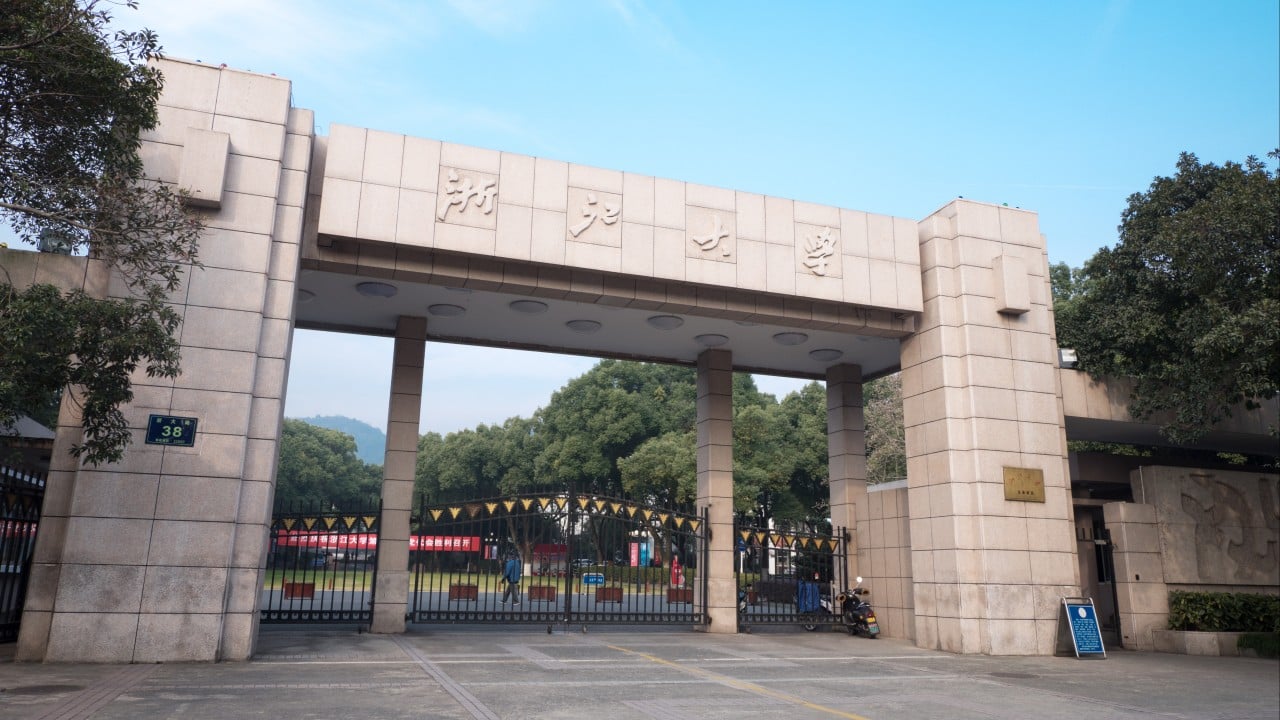
Halfway across the planet, in the coastal city of Hangzhou, the air smells of green tea and humid, high-tech ambition. There are no centuries-old brick dormitories here. Instead, there are sleek glass towers, sprawling laboratories humming with the sound of supercomputers, and a relentless, caffeinated energy that doesn't sleep. This is Zhejiang University. For decades, Western academics viewed it as a respectable regional institution—a place that produced excellent engineers but ultimately followed the lead of Ivy League trendsetters.
Then the data dropped.
When the Nature Index released its global academic rankings, measuring the output of high-quality research articles in the world’s most prestigious scientific journals, a shockwave rippled through the faculty clubs of New England. Harvard was no longer number one. Zhejiang University had taken the top spot.
To the casual observer, this looks like a minor reshuffling of academic spreadsheets. It is not. It is a seismic shift in the geopolitical fault lines of human knowledge. It marks the first time a Chinese institution has dethroned the undisputed heavyweight champion of American higher education in this specific, crucial metric of pure scientific output.
The crown has moved.
The Weight of a Single Decimal Point
To understand how this happened, you have to look past the institutional press releases and sit in the cramped office of someone like Dr. Elena Vance. She is a fictional composite, but her reality is shared by hundreds of researchers across America right now.
Elena sits under the fluorescent lights of a prominent East Coast university, staring at a half-written grant proposal. Her screen displays a maze of budgets, justification forms, and compliance boxes. She has spent the last three weeks trying to secure a $200,000 grant to fund her molecular biology lab for a year. If she fails to get it, two of her post-doctoral researchers will lose their jobs. Her pipettes will sit empty.
"We spend forty percent of our time chasing the money to do the work, rather than doing the work," she says, rubbishing a third cup of lukewarm coffee.
Now, fly to Hangzhou. Meet her real-world counterpart, a young materials scientist named Zhou. When Zhou joined Zhejiang University, he wasn't handed a stack of funding applications. He was handed the keys to a brand-new, state-of-the-art cleanroom and a multi-year budget guaranteed by the state. His only mandate? Publish in the highest-tier journals. Solve the fundamental bottlenecks in semiconductor design. Do it fast.
This is the invisible engine behind the Nature Index shift. The index doesn't count opinion pieces or low-tier industry papers. It counts raw, unfiltered breakthroughs in chemistry, physical sciences, earth and environmental sciences, and health sciences. It uses a metric called "Share," which tracks the proportion of authors on a given paper. If a university’s scientists are doing the heavy lifting on a breakthrough, that university gets the credit.
Zhejiang University didn't just edge out Harvard; it surged past it by executing a hyper-focused, aggressively funded strategy to dominate the hard sciences. While American institutions navigated a complex web of cultural debates, administrative bloat, and volatile federal funding cycles, China spent the last two decades treating scientific research like a national security emergency.
The Myth of the Copycat
For years, the West comforted itself with a comfortable, slightly arrogant narrative: China can copy, but they can't invent.
We told ourselves that the Eastern educational model, with its emphasis on rote memorization and high-stakes testing like the Gaokao, could produce brilliant technocrats but lacked the creative spark required for true, paradigm-shifting discovery. Harvard, with its liberal arts foundation and celebration of individual iconoclasm, would always hold the monopoly on genius.
That narrative expired.
The papers coming out of Zhejiang University are not derivative. They are pioneering. They are mapping the quirks of quantum computing, designing biocompatible materials that could replace damaged human tissue, and unlocking new efficiencies in solar cell technology that could alter the trajectory of climate change.
Consider the sheer scale of the operation. Zhejiang University houses over 60,000 students. It operates on a budget that has ballooned synchronously with China's rise as an economic superpower. But money alone cannot buy the top spot on the Nature Index. You cannot bribe your way into the peer-reviewed pages of Nature or Science. You have to earn it with data that withstands the scrutiny of the world’s most skeptical minds.
What we are witnessing is the industrialization of genius. China has treated the production of elite scientists the same way it treated the production of high-speed rail or solar panels. They built an infrastructure designed to eliminate friction for researchers.
When a brilliant young mind at Zhejiang needs a specific mass spectrometer, it doesn't take six months of departmental committee meetings to approve the purchase. It arrives the next week. When a lab needs a cohort of brilliant, tireless graduate students, they are drawn from a pool of millions of highly motivated young people who view scientific achievement as the ultimate ticket to social mobility.
The Hidden Fractures in the Ivy League
It is tempting to view Harvard's displacement as a temporary fluke, a momentary wobble in an otherwise flawless record. But that ignores the systemic rot that has been creeping into the foundations of Western academia for years.
The modern American university is in the middle of an identity crisis. Presidents are called before congressional committees. Endowments are scrutinized by politicians. Faculty members are caught in the crossfire of bitter culture wars.
More importantly, the financial model of American research is fracturing. Increasingly, elite institutions rely on soft money—short-term grants, corporate sponsorships, and philanthropic whims. A researcher at an Ivy League school must think like an entrepreneur, a public relations manager, and a politician just to keep their lab lights on.
There is an emotional toll to this system. Talk to American academics in their quiet moments, away from the recruiters and the glossy brochures, and you will hear a profound weariness. They feel squeezed by administrative demands. They watch as an increasing share of tuition dollars goes toward luxury student centers and armies of diversity, equity, and title compliance officers, while the budgets for actual bench science are nickel-and-dimed.
Meanwhile, institutions like Zhejiang have benefited from a singular, unblinking focus. The Chinese government’s "Double First-Class University Plan" identified a select group of institutions and injected them with unprecedented resources, aimed squarely at dominating global rankings. They eliminated the distractions.
Why the Average Person Should Care
It is easy to look at this global academic arms race and shrug. Why does it matter if a university in China publishes more chemistry papers than a university in Massachusetts? How does that affect the price of groceries, the safety of our neighborhoods, or the future of our children?
It matters because scientific dominance is the leading indicator of civilizational power.
The country that leads in high-quality scientific research today is the country that owns the patents, the industries, and the medical cures of tomorrow. When the U.S. dominated the mid-twentieth century, it wasn't just because of military might; it was because the Bell Labs, the MITs, and the Harvards of the world invented the transistor, the internet, and the polio vaccine. Those breakthroughs created trillions of dollars in wealth and reshaped global culture in America’s image.
If the center of gravity for foundational science shifts to Asia, the future shifts with it.
Imagine a world where the next generation of life-saving cancer treatments are discovered, developed, and patented in Hangzhou, not Boston. The intellectual property will be owned there. The high-paying manufacturing jobs will be located there. The global standards for ethics, access, and distribution will be set there.
We are not talking about a abstract academic trophy. We are talking about the blueprint for the human future.
The Sunset of Monopoly
The rise of Zhejiang University to the top of the Nature Index is not an isolated event. It is the exclamation point at the end of a long, deliberate sentence.
For the past decade, Chinese institutions have been climbing the ranks, step by agonizing step. Tsinghua University, Peking University, the University of Science and Technology of China—they have all been closing the gap. Zhejiang’s leap over Harvard is simply the moment the trend became undeniable.
This does not mean Harvard is suddenly obsolete. It remains an intellectual powerhouse with an unparalleled brand and a concentration of historical prestige that cannot be built overnight. But prestige is a lagging indicator. It lingers long after the structural advantages that created it have begun to erode.
The era of Western monopoly over elite science is officially over.
The future will not belong to a single hemisphere or a single elite institution. It will be a fierce, fast-paced, and deeply competitive arena where the old guard can no longer rely on its pedigree to win.
As the sun sets over the Charles River in Cambridge, lighting up the red bricks of Harvard with a warm, nostalgic glow, the lights are already burning bright in Hangzhou. Thousands of young scientists are leaning over their microscopes, adjusting their algorithms, and writing the next chapter of human discovery. They are not waiting for permission. They are not looking back.


