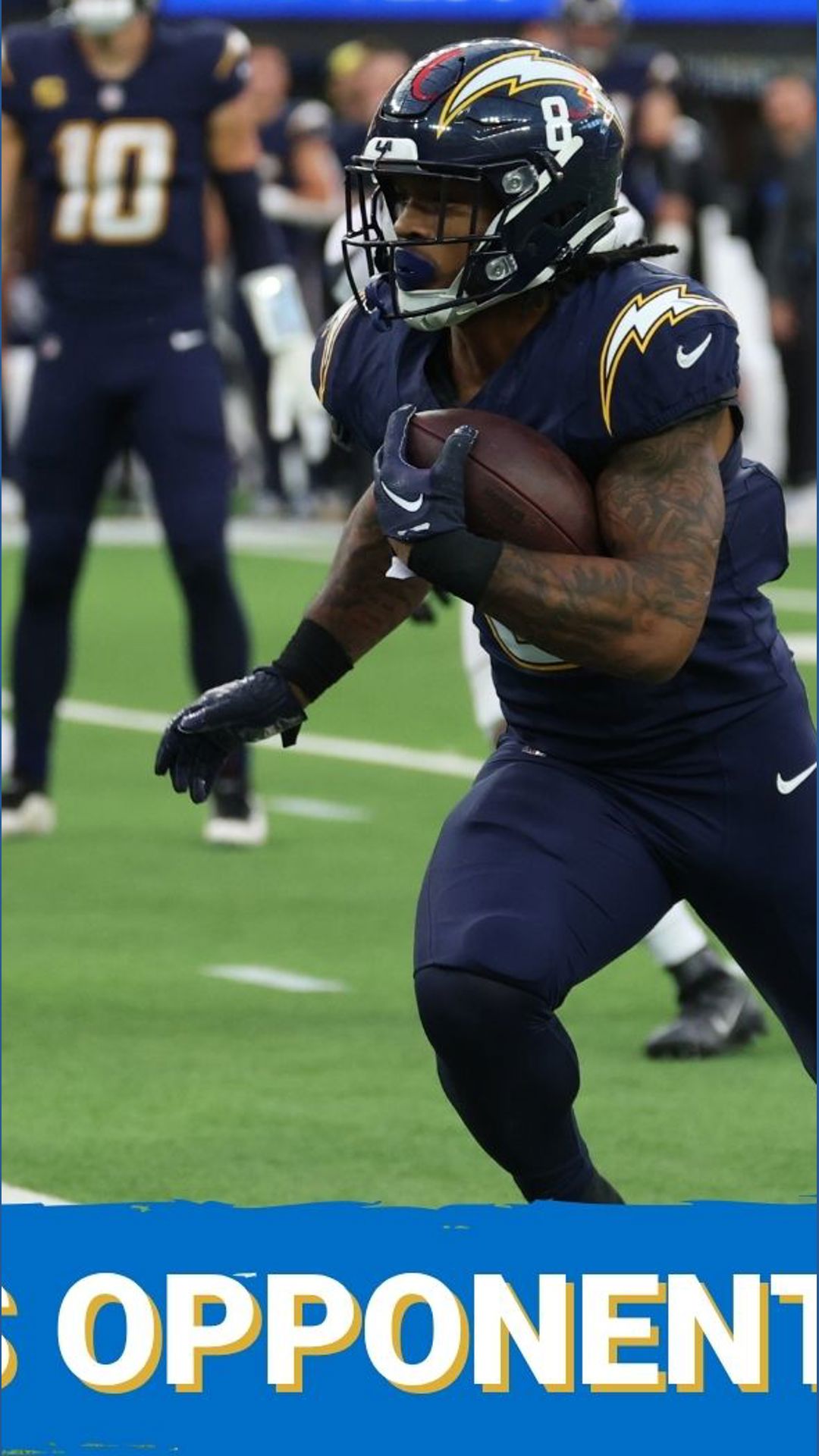
The Los Angeles Chargers think they just solved their red zone woes. The national media is busy grading this trade with a chorus of "A" marks, praising the front office for finally giving Justin Herbert a physical freak of nature at tight end. They are looking at David Njoku’s wingspan and his highlight reel hurdles. They see a Pro Bowler.
I see a massive misallocation of capital that ignores how Jim Harbaugh actually builds winning football teams.
Drafting a blue-chip quarterback and then surrounding him with expensive, late-career "solutions" is the hallmark of a franchise that doesn't understand its own identity. By bringing Njoku into the fold, the Chargers haven't found a missing piece. They’ve added a complex variable to an equation that required a simple constant.
The Myth of the Elite Tight End Savior
NFL analysts love the "security blanket" narrative. They’ll tell you that a young quarterback needs a massive target over the middle to bail him out. It sounds logical. It looks great on a whiteboard. In reality, paying top-tier money for a tight end who has spent his career being "on the verge of a breakout" is a trap.
Njoku is a phenomenal athlete. Nobody disputes that. But look at the efficiency metrics. Throughout his tenure in Cleveland, his production fluctuated wildly based on scheme and quarterback play. He isn't Travis Kelce—a player who creates his own gravity. Njoku is a floor-raiser, not a ceiling-shatterer.
The Chargers are paying for the idea of Njoku. They are paying for the 2017 draft pedigree and the occasional one-handed catch that goes viral. Meanwhile, the successful Harbaugh blueprints—both at Stanford and in San Francisco—relied on tight ends who were essentially third tackles first and receivers second. If you aren't moving people in the run game, you aren't helping a Harbaugh offense.
Greg Roman and the Tight End Graveyard
Everyone is assuming Greg Roman is salivating at this signing. They remember Mark Andrews in Baltimore and think this is a 1:1 replacement. It isn’t.
Andrews and Lamar Jackson had a shorthand that was built over years of specific, high-volume target shares. Roman’s system demands a level of blocking discipline that frequently neuters the statistical output of "move" tight ends. I’ve watched offensive coordinators try to shoehorn "matchup nightmares" into rigid power-running schemes for a decade. It almost always results in a frustrated player and a confused quarterback.
Imagine a scenario where Njoku is asked to stay in and chip a defensive end 40% of the time to protect Herbert behind a line that is still a work in progress. You aren't getting $15 million worth of value out of a pass-protection assistant. You are paying a premium for a weapon and using it as a shield.
The "People Also Ask" crowd wants to know: "How does David Njoku improve the Chargers' offense?"
The honest answer? He complicates it. He forces the ball away from a wide receiver room that needs to establish a hierarchy. He creates a demand for targets that might not exist in a run-heavy, ball-control philosophy.
The Opportunity Cost of the Flashy Signing
Money isn't infinite. Neither is roster space. By committing this kind of draft capital or salary cap space to the tight end position, the Chargers are actively deciding NOT to fix their defensive interior or their depth at tackle.
In the AFC West, you don't win by having the best tight end. You win by being able to hit Patrick Mahomes and keeping Justin Herbert upright. The Chargers have historically failed at the latter. Investing in a pass-catcher before you’ve solidified the trenches is like buying a high-end sound system for a car that has a blown head gasket.
I’ve seen front offices make this exact move when they feel the pressure of a "window" closing. They want to show the fanbase they are "all-in." But "all-in" usually just means "expensive."
The Red Zone Fallacy
The loudest argument for this deal is the red zone. "Njoku is a jump-ball specialist," they cry.
Statistical reality check: Red zone efficiency is more closely tied to offensive line push and quarterback decision-making than the height of your tight end. If you can't run the ball from the five-yard line, the defense can drop seven into coverage and take away the "jump ball."
Njoku has had seasons where his touchdown production was nearly invisible. To assume he suddenly becomes a double-digit TD threat because he switched jerseys is a fantasy. It ignores the fact that Cleveland’s system was designed to manufacture those touches, and he still struggled with consistency and drops at various points in his career.
Why This Will Feel Like a Success (For Two Months)
The first four weeks will be fine. There will be a highlight-reel touchdown in the back of the end zone. The talking heads will declare the Chargers the new kings of the West.
Then, the injuries will hit. Or the running game will stall. Or the defense will give up 35 points because the cap space wasn't spent on a veteran nose tackle. Suddenly, Njoku will be catching 4 passes for 38 yards in a loss, and everyone will wonder why the offense looks so disjointed.
The Chargers didn't need a star. They needed an identity. You don't build an identity by collecting names; you build it by selecting roles. David Njoku is a name. Whether he can actually play the role Greg Roman requires is a gamble the Chargers shouldn't have taken.
Stop looking at the jersey. Start looking at the cap sheet and the scheme fit. The Chargers just bought a shiny new toy while the foundation of the house is still settling.
If you want to win championships, you stop trying to win the offseason. You stop signing the guys everyone recognizes and start signing the guys everyone fears. David Njoku is many things, but he hasn't struck fear into a defensive coordinator in years.
He's a luxury item in a budget-conscious league. Good luck with the payments.