Police charge a suspect. Headlines scream order restored. Everyone breathes a quiet sigh of relief and moves on to the next outrage cycle.
That reflex is lazy. Dangerous. And dead wrong.
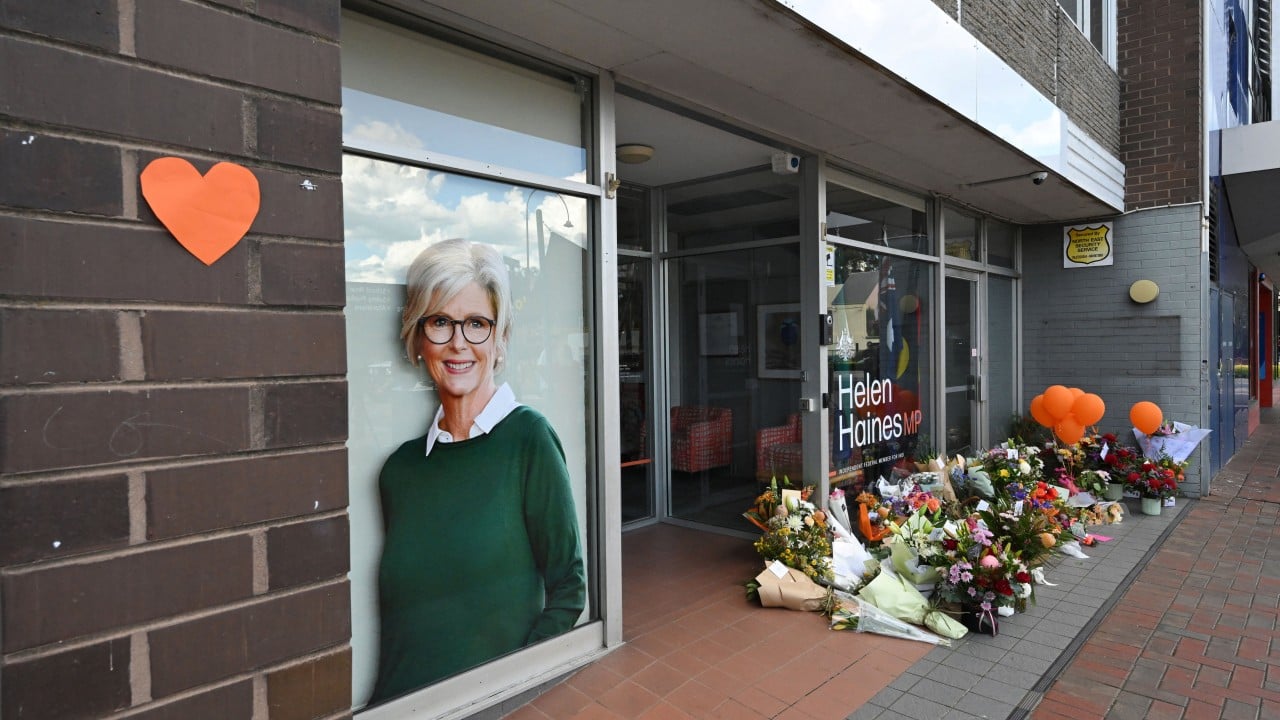
Whenever a sitting politician like Australian MP Helen Haines is targeted and police announce an arrest, the standard coverage follows a predictable script. It treats the incident as an isolated criminal event involving a single unstable actor, praises swift law enforcement action, and frames the solution around tighter perimeter security, stronger legislation, or louder condemnations of online toxicity.
I have spent years watching political risk, public-sector security, and crisis response play out inside high-stakes institutions. I have seen governments and organizations blow millions of dollars on reactive security theater—panic buttons, armored glass, performative briefings, and bloated threat-monitoring contracts—while ignoring the structural rot that actually produces attacks on elected officials. A courtroom docket tells you who allegedly pulled the trigger or threw the punch. It tells you almost nothing about the ecosystem that normalized the hostility in the first place.
If you think arresting one suspect solves the problem exposed by an attack on a regional independent like Helen Haines, you are asking the wrong question. The real question is not whether police can catch an offender after the fact. The real question is why representative democracy has become a high-friction contact sport where local accountability and physical intimidation now share the same postcode.
The Lazy Consensus Around Lone-Actor Arrests
Standard crime reporting loves a neat villain. One man charged. One case file opened. One clear line between "normal citizens" and "the fringe."
That framing is comforting. It is also analytically sloppy.
In political violence and harassment research—work associated with scholars and practitioners such as criminologist Paul Mullen, threat-assessment specialists in behavioral analysis, and parliamentary security reviewers across Westminster systems—attacks on public figures rarely emerge in a vacuum. Even when an offender acts alone physically, the grievance narrative is almost always marinated in broader cultural and informational currents. Treating every arrest as proof that the system worked confuses post-incident policing with pre-incident prevention.
Arrests matter. Due process matters. Holding an individual accountable under the law is non-negotiable in any functioning democracy. Yet when media coverage stops at the charge sheet, it reinforces a comforting illusion: that political hostility belongs to a handful of outliers rather than a shifting baseline of public behavior.
Consider the structural difference between targeted physical violence, intimidation, and routine civic anger. Critics often lump all three together or, conversely, separate them so sharply that warning signs get missed. Intimidation is not merely rude constituent feedback; it is behavior designed to impose a personal cost on someone for doing a public job. When an independent MP representing a regional electorate faces an attack, the stakes extend beyond one person's safety. Regional independents often operate with leaner institutional buffers than major-party leaders, making accessibility—town halls, main-street walkabouts, local offices—both their political strength and a recurring vulnerability.
Imagine a scenario where a regional MP cancels every unscheduled public appearance for a year after an assault. On paper, the MP stays safe. In practice, democratic access shrinks, rumor fills the vacuum left by face-to-face engagement, and extremes gain volume while everyday constituents lose a direct line to their representative. That trade-off is rarely factored into quick-hit news cycles.
Why People Ask the Wrong Questions After a Political Attack
Scroll through the questions people type into search bars right after news breaks that police have charged someone over an attack on an MP, and you will see the same flawed premises repeated over and over.
"Does charging a suspect prove political violence is rising?"
No—and pretending a single arrest proves a macro trend is bad analysis. Criminal charges establish probable cause against a specific individual in a specific incident; they do not by themselves constitute a statistical time series. To measure trends accurately, you need consistent reporting definitions across jurisdictions, longitudinal data on threats versus physical assaults, and careful separation between reported incidents and actual changes in underlying behavior (since higher awareness often increases reporting rates).
What you can say without inventing numbers is that high-profile attacks on lawmakers—both in Australia and in comparable democracies—have repeatedly forced parliaments and police forces to confront gaps between traditional public-order policing and modern grievance-driven offending. Dismissing the pattern because one case goes to court is denial. Treating every headline as a statistical spike without checking methodology is panic. Both are lazy.
"Should politicians just get heavier security and keep their distance?"
If your answer to political hostility is turning elected representatives into untouchable VIPs surrounded by barriers, you have just handed bullies a structural victory.
Accessible leadership is a feature of democratic accountability, not a design flaw. When representatives become unreachable, resentment deepens, conspiracy thrives, and political representation starts looking like a remote broadcast rather than a civic relationship. Heavier security has a legitimate role in high-risk situations, especially around specific threats or volatile crowds. Making distance the default cure, however, hollows out the very institution you are trying to protect.
"Are harsher laws and tougher sentences the real deterrent?"
Tougher penalties sound decisive at a press conference. In practice, deterrence in grievance-driven or emotionally charged offenses is messy and unreliable. Offenders who cross the line into physical assault are frequently driven by immediate anger, distorted grievances, fixation, or personal crisis rather than a calm cost-benefit calculation about sentencing guidelines.
Laws set boundaries and deliver justice after harm occurs. They rarely rewire the habits of people who spend months consuming outrage before stepping onto a public street.
What Actually Drives Hostility Toward Public Officials
To understand why moments like an attack on Helen Haines hit a nerve, look at three mechanics that rarely get honest treatment in mainstream commentary.
| Mechanism | How Conventional Coverage Frames It | What Actually Happens on the Ground | Practical Consequence |
|---|---|---|---|
| Grievance Amplification | "A lone angry individual snapped." | Personal frustration fuses with wider political or cultural grievances, lowering internal inhibition. | Escalation can look sudden to outsiders while feeling justified to the actor. |
| Accessibility vs. Exposure | "Security just needs to be tighter." | Open electorates and local visibility increase contact points compared with closed-door offices. | Over-locking down access erodes public trust and democratic reach. |
| Institutional Lag | "Police charged someone, case moving forward." | Courts process individual acts slowly while online and street-level hostility adapts fast. | Public confidence lags behind legal outcomes, leaving communities on edge. |
Notice how none of these mechanics requires inventing statistics or blaming a convenient scapegoat. They describe real friction points in modern public life.
First, grievance amplification turns ordinary political disagreement into personal warfare. Disagreement is healthy; demonization is corrosive. When public discourse treats opponents not merely as wrong, but as existential enemies or traitors, the moral barrier between shouting and striking weakens for a small fraction of people. Even a tiny fraction of a large population creates real incidents.
Second, the accessibility paradox hits regional and community-focused representatives hard. Voters expect their MP to show up locally, listen at community events, and remain reachable. That openness is part of the social contract. Yet every open door is also an unguarded threshold if crowd dynamics, venue layout, or de-escalation planning are treated as afterthoughts.
Third, institutional lag frustrates everyone. Legal systems are built for evidentiary rigor, fairness, and deliberation—not instant emotional closure. While charges wind through court procedures, the public is left staring at unanswered questions about motive, safety, and norms. When institutions move deliberately in a hyper-speed media environment, cynicism rushes into the gap.
The Uncomfortable Blind Spots in My Own Argument
A contrarian take that pretends to have zero downsides isn't analysis; it's salesmanship. There are real risks in pushing back against the "arrest = resolution" narrative.
Downplaying the significance of a police charge can sound as though you are minimizing what the victim went through. Let's be crystal clear: an attack on any elected official—or any worker doing a public-facing job—is an unacceptable violation of personal safety and democratic norms. Nothing in a systems critique excuses an assailant or diminishes the impact on the person targeted.
There is also the risk of over-theorizing. Sometimes a person commits an assault because of acute personal instability, substance issues, or impulse, not because of a grand sociological masterplan. If you force every incident into a macro-political framework, you can miss mundane operational failures—like poor venue planning, inadequate staffing, or missed local warning signs.
Finally, focusing on cultural norms and institutional design can sound abstract to someone asking a concrete legal or operational question today. Systems change takes years; courtroom accountability and immediate safety measures cannot wait for cultural renewal.
Unconventional Moves That Actually Work
If reactive press releases, panic spending, and wishful thinking don't cut it, what actually moves the needle? Here is practical, unglamorous work that takes real discipline.
- Audit physical exposure by event type, not one-size-fits-all theater. A quiet local coffee catch-up, a heated public forum, and a regional community festival carry completely different risk profiles. Map sightlines, exits, approach lanes, and staff positioning for each format instead of buying generic security packages.
- Train staff and volunteers in early behavioral de-escalation, not just emergency lockdown. Most escalations start with boundary-pushing—invading personal space, filming aggressively, baiting for a reaction—long before physical contact happens. Clear scripts, early disengagement rules, and calm distance-management stop many incidents before they peak.
- Separate legal accountability from public norm-setting. Let police and courts do their evidentiary work quietly and accurately without turning every court date into a partisan megaphone. Meanwhile, leaders across party lines should enforce a plain, boring standard: fierce argument is welcome; hands-off and zero threats are baseline rules of civic life.
- Protect regional representation without turning MPs into fortresses. Invest in smart, low-profile protective support and vetted venue protocols so representatives can keep meeting constituents safely rather than retreating behind closed doors.
- Track incident patterns honestly over time. Require consistent reporting on threats, intimidation, and assaults against public officials so policy debates rest on verified trends rather than whichever clip went viral this week.
Charging a suspect closes a chapter in a police investigation. Keeping democracy safe, open, and sane requires fixing the climate around it long before anyone reaches for a weapon or a fist.