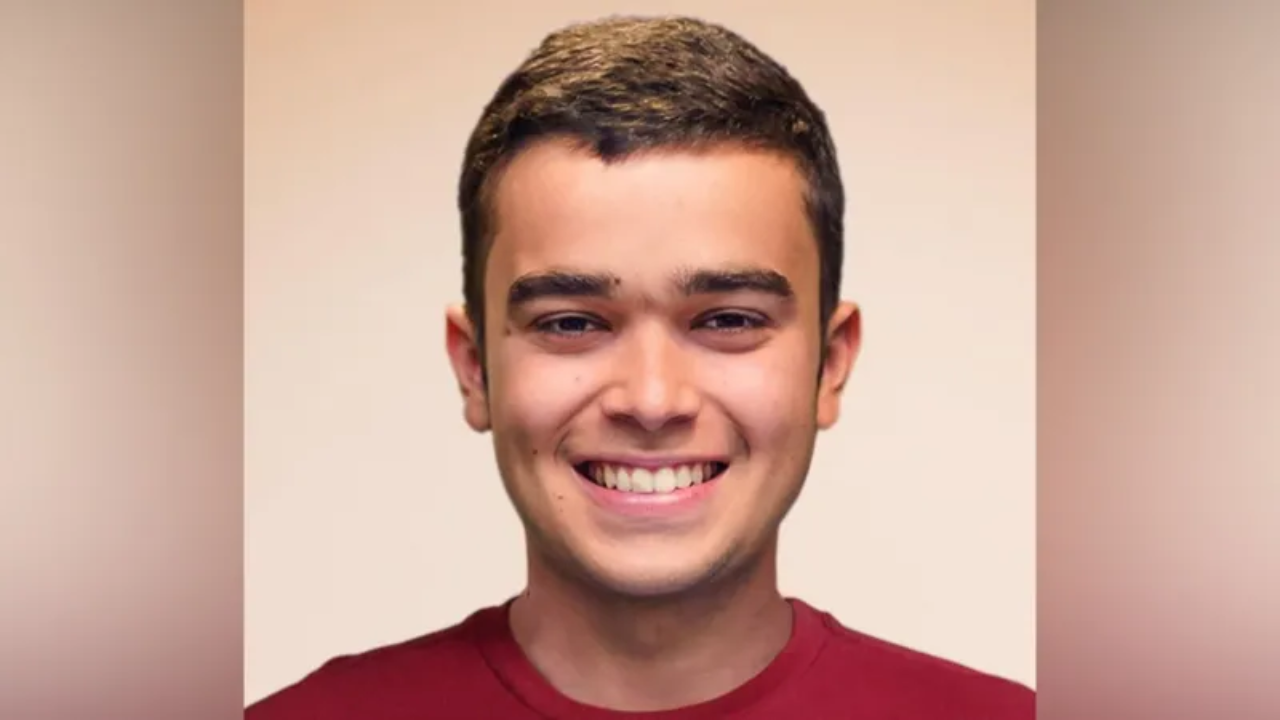
The fluorescent lights of a Manchester University laboratory don't usually scream divine intervention. They scream of late-night cramming, the sharp scent of ozone, and the rhythmic hum of equipment that defines the life of a chemical engineering student. In 2014, Pedro Ballester was just another face in that mechanical hum. He was a teenager who loved rugby, obsessed over his grades, and worried about his future.
He was also dying.
We often think of sanctity as something draped in heavy velvet, smelling of ancient incense and locked behind the stone walls of a medieval cathedral. We imagine saints as marble statues with vacant stares, disconnected from the grit of the twenty-first century. Pedro shatters that image. He didn't live in a desert; he lived in a dorm. He didn't wear a hairshirt; he wore a North Face jacket.
The Ordinary Radical
Born in Manchester to Spanish parents, Pedro grew up in a household where faith was as natural as breathing, but it was never forced. He was a bright, gregarious kid who joined Opus Dei—a Catholic institution that emphasizes finding God in the middle of everyday work—as a numerary member. This meant he committed to a life of celibacy and service while staying fully immersed in the secular world.
Think about that for a second. While his peers were navigating the messy, often hedonistic waters of university life, Pedro was waking up early to pray before tackling thermodynamics.
His "radicalism" wasn't found in shouting from street corners. It was found in the way he treated the person sitting next to him in a lecture. His friends remember him not as a preacher, but as a listener. He had this uncanny ability to make people feel like they were the only person in the room. In an age of digital distraction and performative social media, that kind of presence is its own form of miracle.
The Great Interruption
In December 2014, the trajectory of his life—the internships, the career, the expected milestones—hit a wall. A sharp, persistent pain in his back wasn't a pulled muscle from rugby. It was advanced osteosarcoma. Bone cancer.
The diagnosis of a terminal illness at age 18 is a special kind of cruelty. It is the theft of potential. For most, this would be the beginning of a bitter descent. But for those watching Pedro, the hospital room in Manchester became something else entirely. It became a hub.
His room was rarely quiet. Students, priests, and skeptical academics drifted in and out. They came to comfort him, but they usually left feeling like they were the ones who had been comforted. Pedro didn't stop being a student of engineering; he just shifted his focus to the mechanics of suffering. He spoke about his pain with a terrifyingly calm lucidity. He viewed his cancer not as a mistake, but as a "mission."
The Invisible Stakes of a Modern Saint
Why does this matter to someone who isn't Catholic, or even religious? Because Pedro Ballester represents a shift in how we perceive "the good life."
We are currently obsessed with "wellness"—the idea that if we eat the right greens, meditate for ten minutes, and optimize our sleep cycles, we can achieve a state of permanent equilibrium. Pedro’s life suggests that true wellness has nothing to do with the absence of pain, but with the presence of purpose.
When the Vatican began the formal process for his beatification, they weren't looking for magic tricks. The "cause" for a saint in the modern era is an investigation into "heroic virtue." It’s a legalistic, rigorous deep dive into whether a person lived the ordinary to an extraordinary degree.
For Pedro, that virtue was joy. Not the cheap, fleeting happiness of a good day, but a stubborn, defiant joy that persisted through chemotherapy and the realization that he would never graduate.
A Legacy in Real Time
On January 13, 2018, Pedro died. He was 21 years old.
Usually, the memory of a student fades within a few years of their graduation or departure. Files are archived; lockers are reassigned. But the "Pedro effect" has done the opposite. It has rippled outward from Manchester to South America, from Spain to the Philippines.
Young people today are the most "connected" generation in history, yet they report the highest levels of loneliness. We are starving for authenticity. We are tired of influencers selling us a curated version of perfection. Pedro’s appeal lies in his imperfection. He felt the pain. He cried. He struggled with the unfairness of his situation. But he stayed.
He remained "in the world" until the very last breath, proving that you don't need to flee reality to find something sacred.
If the Church eventually declares him a saint, he will be the first of "Gen Z" to hold that title. He would be a saint who knew how to use a smartphone, who understood the pressures of exam season, and who navigated the complexities of identity in a post-modern world.
He didn't perform his faith for an audience. He lived it in the quiet gaps between hospital bleeps and the turning of textbook pages. He showed that the most revolutionary thing a person can do in a cynical world is to remain hopeful when there is every reason to despair.
The lab lights in Manchester still flicker over students debating equations and dreaming of the future. The hum of the university continues, indifferent to the individual lives passing through its halls. Yet, there is a lingering sense that the air is a little different because a kid with a backpack and a terminal diagnosis decided that his life, however short, was a gift worth giving away.