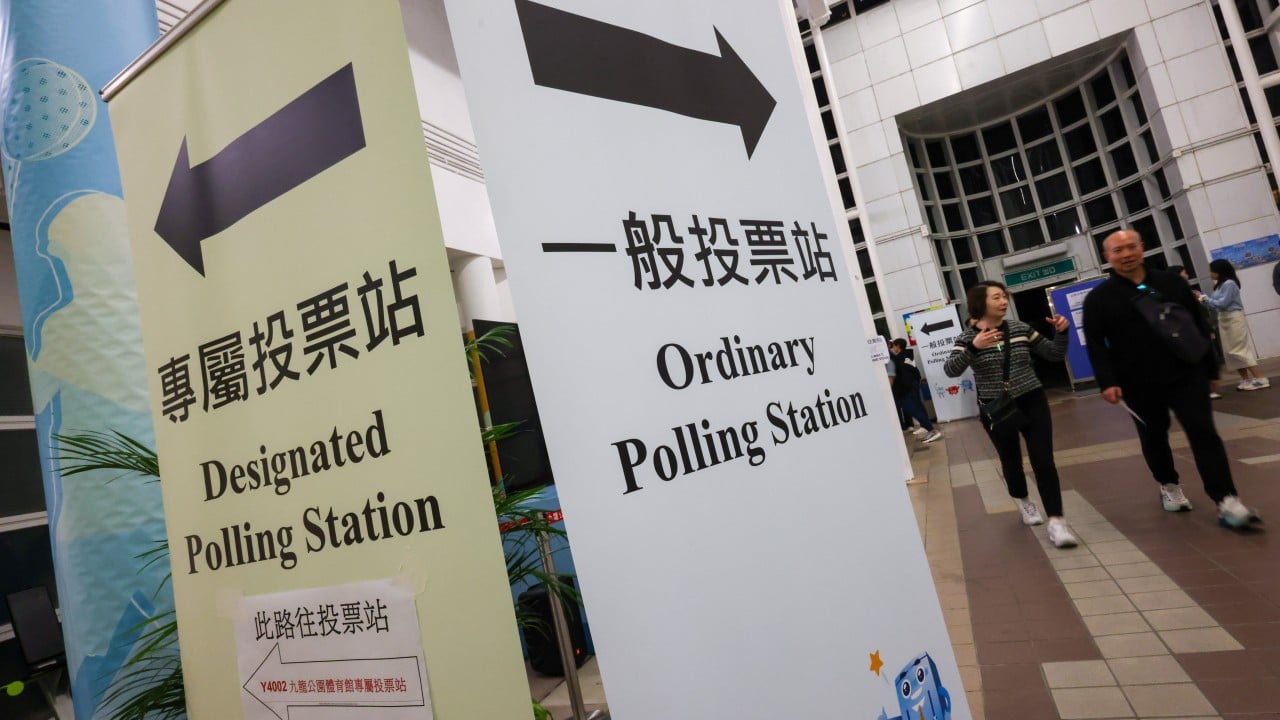
A Hong Kong court recently handed down a suspended prison sentence to an unemployed man for merely hitting "share" on a social media post that advocated for a boycott of the Legislative Council elections. The ruling marks a grim milestone in the city’s rapidly tightening legal architecture. Under Section 27C of the Elections (Corrupt and Illegal Conduct) Ordinance, inciting another person not to vote or to cast an invalid vote carries severe penalties, even if the incitement happens in cyberspace and involves zero physical disruption. The individual received a two-month sentence, suspended for 18 months, proving that ordinary citizens now face jail time for digital actions that once fell under standard political expression.
This case is not an isolated incident of judicial overreach. It is the deliberate output of a legal machine recalibrated to enforce absolute political conformity.
The Mechanics of Digital Criminalization
For decades, political boycotts were a standard tool of democratic dissent worldwide. If a voter felt the electoral system was rigged or unrepresentative, staying home or spoiling a ballot was a silent, powerful protest. That option has been systematically criminalized in Hong Kong.
The law targets the act of "inciting" others. The legal definition of incitement under this ordinance is extraordinarily broad. It does not require proof that anyone actually changed their behavior because of the post. The prosecution only needs to prove that the defendant distributed the message to the public.
When an unemployed resident shared a post originally authored by an overseas activist, they became a cog in a broader geopolitical standoff. The court treated the digital share as a conscious choice to disrupt public order. This shift turns everyday internet users into potential felons.
The enforcement mechanism relies heavily on algorithm tracking and citizen reporting. Authorities monitor social media platforms for specific keywords related to the Legislative Council, known locally as Legco. Once a repost is flagged, the path from digital footprint to a police interrogation room is short. The lack of a high-profile platform does not offer protection. The judiciary is using ordinary citizens to send a clear message to the broader populace.
The Illusion of Choice in Reformered Elections
To understand why a simple repost triggers a criminal conviction, one must look at the structural changes made to Hong Kong’s electoral system. Following Beijing's overhaul of the process, candidates must undergo rigorous vetting by a pro-Beijing committee before their names can even appear on a ballot. This ensures that only those deemed patriots can run for office.
With opposition candidates effectively barred or imprisoned, the government faced a new challenge: low voter turnout. A dismal turnout signals a lack of legitimacy to the international community.
| Election Year | Vetting Structure | Public Dissent Status | Average Turnout Rate |
|---|---|---|---|
| Pre-Reform | Open nomination via public endorsement | Fully legal and protected | Historically high (58% - 71%) |
| Post-Reform | Mandatory screening by Patriot Committee | Criminalized under Section 27C | Historically low (30% or less) |
The state now treats the act of voting not just as a civic right, but as a mandatory demonstration of loyalty. Conversely, advocating for a boycott is viewed as an existential threat to the state's narrative of stability. By criminalizing the call to stay home, the government attempts to manufacture consent through coerced participation.
The Compliance Trap for Everyday Users
Many internet users still operate under the assumption that liking, sharing, or retweeting someone else's content carries low legal risk. This case shatters that illusion. The defense argued that the individual did not fully grasp the legal consequences of his digital actions, pointing out his lack of political involvement. The magistrate rejected this line of reasoning, emphasizing that ignorance of the law is no defense.
The strategy relies on deterrence. By prosecuting an unemployed individual rather than a prominent political figure, the state demonstrates that no one is too insignificant to escape scrutiny.
"The law makes no distinction between an activist with a million followers and an ordinary citizen with ten. The act of dissemination itself constitutes the crime."
💡 You might also like: The Price of a Lit Lamp
This creates a pervasive climate of self-censorship. When the boundaries of illegal speech are intentionally vague and the penalties severe, individuals naturally choose to remain silent on all political matters. You stop sharing news. You stop commenting on public policy. Eventually, you stop discussing the government altogether.
The Role of Overseas Dissidents and Domestic Victims
A stark asymmetry exists in how these laws impact the population. The original creators of the boycott calls are frequently located safely overseas in the United Kingdom, Canada, or Taiwan. They operate beyond the immediate reach of Hong Kong law enforcement, though bounties and arrest warrants have been issued for some.
Domestic residents who amplify these messages bear the full brunt of the legal system. Overseas activists continue to call for resistance, while citizens on the ground pay the price for listening to them.
This dynamic creates friction within the pro-democracy movement. Critics argue that urging domestic residents to engage in high-risk digital dissent from a position of safety is irresponsible. Others maintain that any form of resistance must be kept alive, regardless of the cost. The reality remains that the dock is populated by locals who misjudged the state's surveillance capabilities.
The Global Ripple Effect of Local Rulings
What happens in Hong Kong rarely stays there. The legal frameworks refined in the city offer a blueprint for other authoritarian regimes seeking to muzzle digital dissent without enacting total internet blackouts.
Instead of blocking platforms like Facebook or Instagram entirely, which harms international business interests, the state allows the platforms to function but penalizes the users. This hybrid model combines economic openness with political repression.
International tech giants find themselves in an impossible position. They must comply with local laws and data requests to keep operating in the region, yet doing so makes them complicit in the suppression of speech that would be protected in their home countries. Most platforms have quieted their public opposition, choosing profits over principled stands.
The Real Cost of a Suspended Sentence
A suspended sentence is often viewed as a slap on the wrist. In reality, it serves as a leash. For the next 18 months, the convicted individual must live with the knowledge that any perceived infraction—political or otherwise—could trigger immediate imprisonment.
The conviction creates a permanent criminal record. In an economy already under strain, an individual with a record for political crimes faces bleak employment prospects. Local companies avoid hiring anyone flagged by the authorities for fear of drawing negative attention to themselves.
The punishment extends far beyond the courtroom doors. It impacts housing, social relationships, and mental health. The individual becomes a walking warning sign to their neighbors, friends, and family. The social fabric frays as people distance themselves from those labeled as subversives.
The Systematic Elimination of Legal Grey Areas
The judiciary was once considered the bedrock of Hong Kong's autonomy, operating under a common law system distinct from mainland China. That system is being re-engineered from within. Judges now routinely prioritize national security and state stability over individual civil liberties.
The language used in judgments has grown increasingly severe. Defendants are frequently accused of trying to "paralyze the government" or "create chaos" through entirely non-violent means.
This leaves no room for nuance. A citizen cannot argue that their post was intended as satire, or that they were merely sparking a debate. The courts have made it clear that during political transitions, the preservation of state institutions overrides traditional free speech protections.
The trajectory is clear. The space for independent thought and digital expression will continue to shrink. As the government prepares to introduce even stricter domestic security laws, the threshold for what constitutes a crime will drop further. The citizen who thinks they are safe because they do not participate in protests will find that the boundary of criminal conduct has moved to encompass them where they sit. Every click, share, and comment is a calculated risk in an environment where the rules are written by the prosecution.