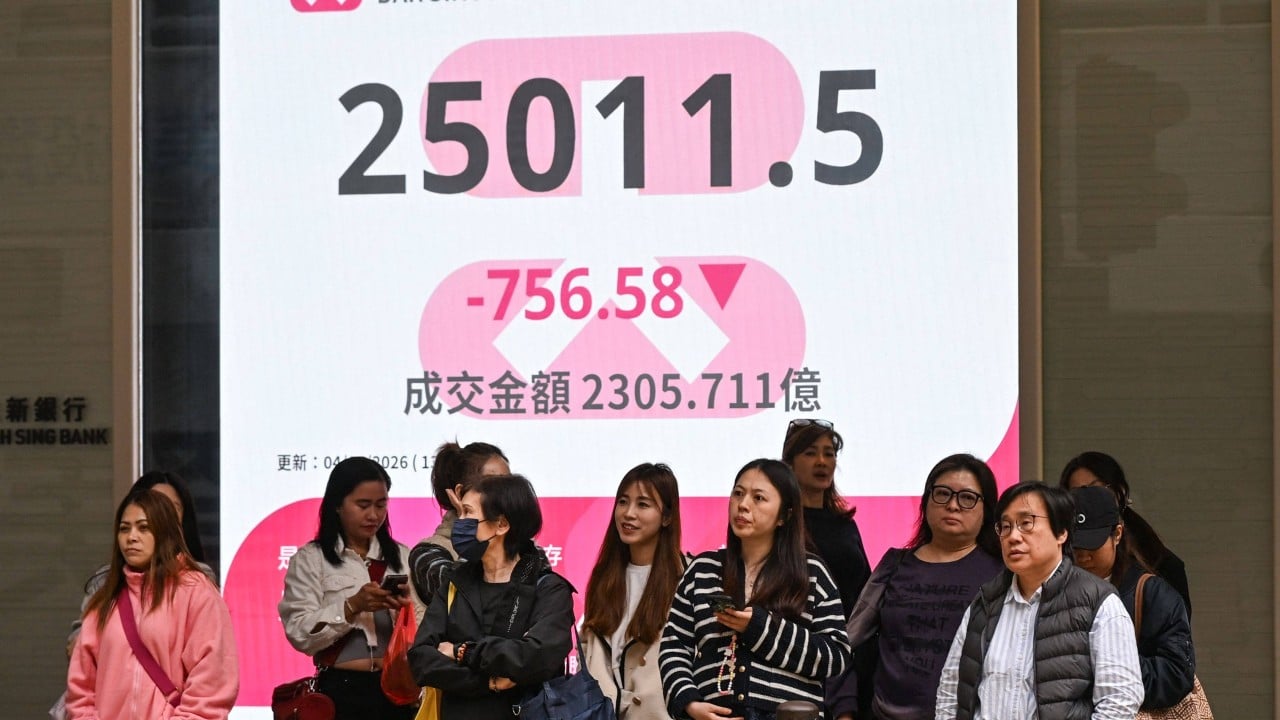
The inclusion of Chinese artificial intelligence frontrunners Zhipu AI and MiniMax into Hong Kong’s Hang Seng Tech Index represents a critical structural rescue mission for an equity gauge that completely missed the initial global AI boom. By integrating these newly listed tech entities, the index compilers are desperately injecting fresh momentum into a benchmark that underperformed global peers while Wall Street rode the back of silicon-fueled euphoria.
Yet, beneath the euphoria of a massive share price rally and projected capital inflows lies a stark operational reality. The immense paper gains achieved by these companies since their January listings are balanced on a razor-thin edge of artificial scarcity, with over 90 percent of their shares currently locked away from the public. Read more on a connected issue: this related article.
+-----------+-----------------------+---------------------+
| Company   | H1/9M 2025 Revenue    | H1/9M 2025 R&D Spend|
+-----------+-----------------------+---------------------+
| Zhipu AI  | RMB 191 million       | RMB 1.594 billion   |
| MiniMax   | USD 53.44 million     | USD 180.00 million  |
+-----------+-----------------------+---------------------+
The Structural Mechanics of a Manufactured Squeeze
Market participants cheer when a stock rises 300 percent in less than six months. Wise capital allocation teams look at the free float.
Right now, the actual circulating shares for both corporations are miniscule. Zhipu AI, trading under Knowledge Atlas Technology, operates with a functional free float of just 2.67 percent. MiniMax is only slightly more liquid at 5.44 percent. When an absolute minimum of equity is available on the open exchange, even modest institutional buying creates an intense upward trajectory. More journalism by The Verge explores similar views on the subject.
The inclusion into the Hang Seng Tech Index forces passive exchange-traded funds and index-tracking institutional portfolios to buy these shares regardless of fundamental business metrics. Analysts expect the combined weighting of these two generative AI firms to hover around 5 to 9 percent of the tech gauge. With roughly USD 4 billion in passive capital mimicking the index, tracker funds must purchase hundreds of millions of dollars in shares simply to prevent tracking error.
The real prize, however, is Southbound Stock Connect eligibility. This regulatory mechanism allows mainland Chinese retail and institutional investors to buy Hong Kong-listed equities directly. Zhipu AI is slated for fast-track inclusion via this pipeline. MiniMax will face an extended regulatory delay until late summer because it employs a weighted voting rights structure, requiring a longer operational seasoning period under Hong Kong listing rules.
While investment banks publish optimistic projections suggesting Stock Connect could eventually funnel up to HKD 100 billion into these two specific counters, they routinely skip over the structural trap door built into the summer calendar.
The July Lock-Up Expiry and the Free Float Shock
The primary risk confronting current shareholders is not model performance or regulatory compliance. It is a simple matter of market supply.
Early July marks the exact six-month anniversary of both initial public offerings. This date coincides with the expiration of mandatory lock-up periods for cornerstone investors and early-stage pre-IPO venture funds.
- MiniMax Face-Off: Nearly 50 percent of the total outstanding equity of the company will instantly become eligible for public sale. This includes a 44.29 percent block held by early insiders alongside 5.34 percent held by cornerstones.
- Zhipu AI Phase One: A smaller but significant 5.83 percent block of cornerstone stock unlocks in July. The true liquidity test arrives in January of next year, when more than 60 percent of non-controlling shares lose lock-up protection.
When the volume of tradable equity expands multiple times over within a forty-eight-hour window, the pricing power shifts entirely to buyers. Early financial backers who entered seed rounds years ago are sitting on massive theoretical gains. The temptation to lock in realized returns will be immense, particularly given the macro environment in mainland technology sectors.
If passive index tracking funds are forced to buy at the exact moment insiders attempt to dump millions of shares, the index itself will act as a liquidity sponge for exiting venture capitalists.
The Capital Destruction Ratios of Generative Models
Behind the stock ticker momentum sits the reality of contemporary AI economics. These enterprises consume cash at a rate that would terrify traditional technology executives.
For every single Renminbi that Zhipu AI generated in top-line revenue during the first half of last year, it expended over eight Renminbi on research, development, and computational hardware. MiniMax displayed slightly better metrics but still lost more than three dollars for every single dollar it booked in sales.
"The corporate strategy relies entirely on top-line growth to justify constant capital raises, creating a structural loop where revenue expansion directly accelerates cash burn."
This dynamic is sustainable only if public markets function as an infinite refinancing tap. The listing boom in Hong Kong has temporarily filled corporate coffers, but public market investors are far less forgiving of perpetual structural losses than private venture funds.
The Hong Kong exchange is undergoing a profound migration. Tech listings have raised billions this year, fundamentally shifting the capital allocation away from old-economy real estate and banking sectors. Yet, if these premier artificial intelligence entities suffer severe post-unlock deprecation, the entire thesis of Hong Kong as the primary capital hub for Chinese deep tech could face an institutional freeze. Investors tracking these developments must look past the index inclusion headlines and focus squarely on the July liquidity wall.