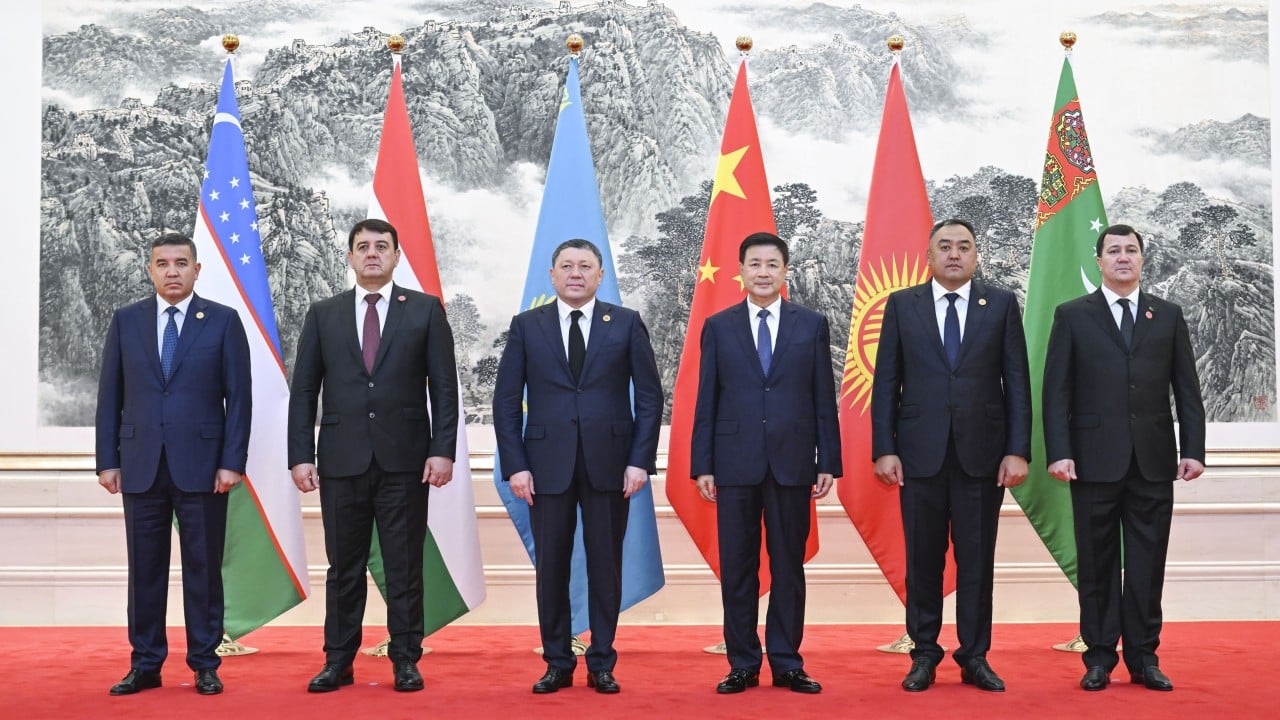
Geopolitical realignment rarely announces itself with institutional declarations. Instead, it consolidates through administrative standardization, police coordination summits, and the quiet integration of internal security apparatuses. When Beijing convenes regional law enforcement leadership from Central Asian states, the objective is not diplomatic theater; it is the construction of a synchronized security architecture designed to protect critical trade corridors and insulate authoritarian governance models from external shocks.
The convergence of Chinese domestic security priorities with Central Asian state survival strategies forms an operational triad: threat suppression, energy corridor insulation, and trade route standardization. Understanding this alignment requires dissecting the mechanics of bilateral and multilateral security agreements that bind Kazakhstan, Kyrgyzstan, Tajikistan, Turkmenistan, and Uzbekistan to Beijing's internal security perimeter.
The Structural Drivers of Regional Police Integration
Central Asian states face a distinct governance dilemma. They must generate economic growth through integration with global markets while maintaining rigid domestic control over political opposition, religious movements, and ethnic minorities. Beijing offers a security template that resolves this tension by prioritizing state stability over open political systems.
The primary driver is the institutionalization of the Shanghai Cooperation Organisation Regional Anti-Terrorism Structure alongside bilateral ministry-to-ministry protocols. Police cooperation extends far beyond intelligence sharing. It includes joint operational training, standardized riot control protocols, biometric data integration, and the procurement of surveillance hardware produced by Chinese firms.
By upgrading the technological baseline of Central Asian police forces, Beijing establishes a unified operational standard across the Eurasian landmass. When local forces utilize identical communications encryption standards, facial recognition architecture, and border monitoring equipment, cross-border friction drops and centralized coordination increases.
Securing the Energy and Logistics Grid
The Belt and Road Initiative depends on absolute spatial predictability. Energy pipelines originating in Turkmenistan, natural gas fields in Uzbekistan, and transit rail lines traversing Kazakhstan represent vital chokepoints that cannot be left to the security vagaries of local municipal police forces or fragmented regional commands.
Protection of these linear assets requires specialized territorial defense. Chinese security planners treat economic corridors as integrated operational theaters rather than commercial projects. This involves several distinct security layers:
- Physical surveillance grids utilizing aerial drones, ground sensors, and closed-circuit television networks deployed along pipeline rights-of-way and rail junctions.
- Rapid-response regional police units trained specifically in counter-sabotage operations and industrial asset defense, funded partially through security assistance packages.
- Digital surveillance nodes at major border checkpoints that cross-reference cargo manifests with biometric profiles of truck drivers and logistics personnel.
The economic cost function of disruption is exceptionally high. A localized security failure in the Fergana Valley or along the Dostyk rail port halts high-value freight movement between China and Europe. Regional police coordination functions as an insurance policy against logistical friction, ensuring that supply chain velocity remains constant despite local political volatility.
Threat Suppression and the Standardization of Dissent
Beijing’s primary strategic vulnerability in Central Asia involves the permeability of its western borders. The historical movement of ethnic Uighurs, transnational extremist networks, and organized smuggling rings creates continuous security pressure points across the Tian Shan mountain range.
To neutralize these vectors, bilateral security frameworks have evolved from reactive extradition requests to proactive, preemptive threat elimination. Central Asian police forces operate under increasing pressure to monitor, detain, and repatriate individuals flagged by Chinese intelligence. This dynamic creates a unified enforcement zone where domestic dissent within Central Asia and security concerns in Xinjiang are treated as a single operational challenge.
The mechanism relies on financial and technical leverage. Security assistance, police vehicle donations, and specialized training academies function as instruments of institutional alignment. Local law enforcement agencies adopt investigative frameworks that mirror Chinese legal and administrative definitions of extremism, subversion, and public order offenses.
The Mechanics of Asymmetric Influence
China does not project regional power through military occupation or overt ideological export. It projects power through infrastructural dependency and bureaucratic integration. Central Asian interior ministries and national security committees find themselves structurally reliant on Chinese technological ecosystems for internal policing.
This creates a long-term strategic lock-in. Once a national police force builds its command-and-control infrastructure around specific hardware platforms, proprietary software, and encrypted communication networks, the cost of switching suppliers becomes prohibitive.
The resulting security architecture alters the geopolitical orientation of the region. While Central Asian states maintain multi-vector foreign policies—balancing relations with Russia, the European Union, and the United States—their internal security apparatuses are increasingly anchored to Beijing's operational standards.
Strategic Forecast for Regional Enforcement
The ongoing consolidation of police coordination between China and Central Asian states will accelerate through the deployment of automated border management systems and shared intelligence databases. Future security summits will transition from broad strategic dialogues to tactical synchronization exercises, focusing on urban riot management, critical infrastructure defense, and cyber-sovereignty enforcement. Western policy planners must recognize that competing for influence in Central Asia requires engaging with these entrenched administrative realities rather than offering abstract governance alternatives. The state that controls the security infrastructure and logistical surveillance grids of the Eurasian corridor dictates the terms of regional commerce and political stability for the next generation.