Science does not happen in a sterile vacuum. It happens in cramped university labs where students pull all-night sessions fueled by caffeine and pop music. It happens on isolated observation platforms built in disputed waters. Right now, Chinese researchers are quietly breaking records, shifting global talent pools, and redefining what it means to build a modern society.
The global scientific hierarchy is shifting fast. From microscopic discoveries to colossal engineering feats, the momentum has clearly changed directions. Here are the major breakthroughs reshaping our world. For a different view, consider: this related article.
A Tiny Goby and a Global K-Pop Icon
Let's start with a nine-millimeter fish that completely upended a biology lab. Researchers from Sun Yat-sen University recently discovered a brand-new species of bumblebee goby on Hengqin Island in Guangdong Province. It marks the very first time this specific fish genus has been officially documented in China.
The tiny creature sports bold black and yellow striped scales. But its most striking feature isn't its color. It's its name: Brachygobius jennie. Further coverage regarding this has been published by The New York Times.
Jiangyan Tian, a postgraduate student leading the work, openly admitted that listening to South Korean singer Jennie Ruby Jane of BLACKPINK kept him going through grueling hours of research. He named the species after her as a direct thank-you for that motivational boost. It's a vivid reminder that the people behind major discoveries aren't robots. They're human beings driven by the same culture as the rest of us.
The 6G Network Where Walls Have Eyes
If you think your current 5G connection is fast, you're missing the bigger picture. Chinese engineers are already building infrastructure for the next generation of data transfer. In their experimental 6G setups, a city's physical structure becomes an active participant in the network.
Engineers developed a specialized metasurface system that acts like a highly precise, dynamic mirror for wireless signals. It bounces data around corners to eliminate frustrating dead spots in dense concrete environments.
The real twist? The system pulls double duty. While it routes data, it simultaneously tracks movement across the room, functioning essentially like an ultra-precise radar system. In a 6G smart city, every pipe and wall could theoretically monitor physical spaces without a single traditional camera in sight.
Desalination for Less Than a Dollar
Freshwater scarcity is one of the most pressing crises facing our generation. Turning ocean water into something drinkable has historically been a luxury reserved for wealthy oil nations because traditional methods consume staggering amounts of energy.
A Chinese research team just flipped that equation on its head. They created a new photothermal material by weaving specialized nanoparticles into a three-dimensional structure. This material optimizes how solar energy gets absorbed and converted into heat to drive evaporation.
During a year-long outdoor test, their prototype ran with zero utility energy costs. It stabilized the process so efficiently that desalinating seawater became cheaper than purchasing standard bottled water. This shifts desalination from an elite infrastructure project to a viable, localized utility for developing coastal regions.
Turning the South China Sea into a Lab
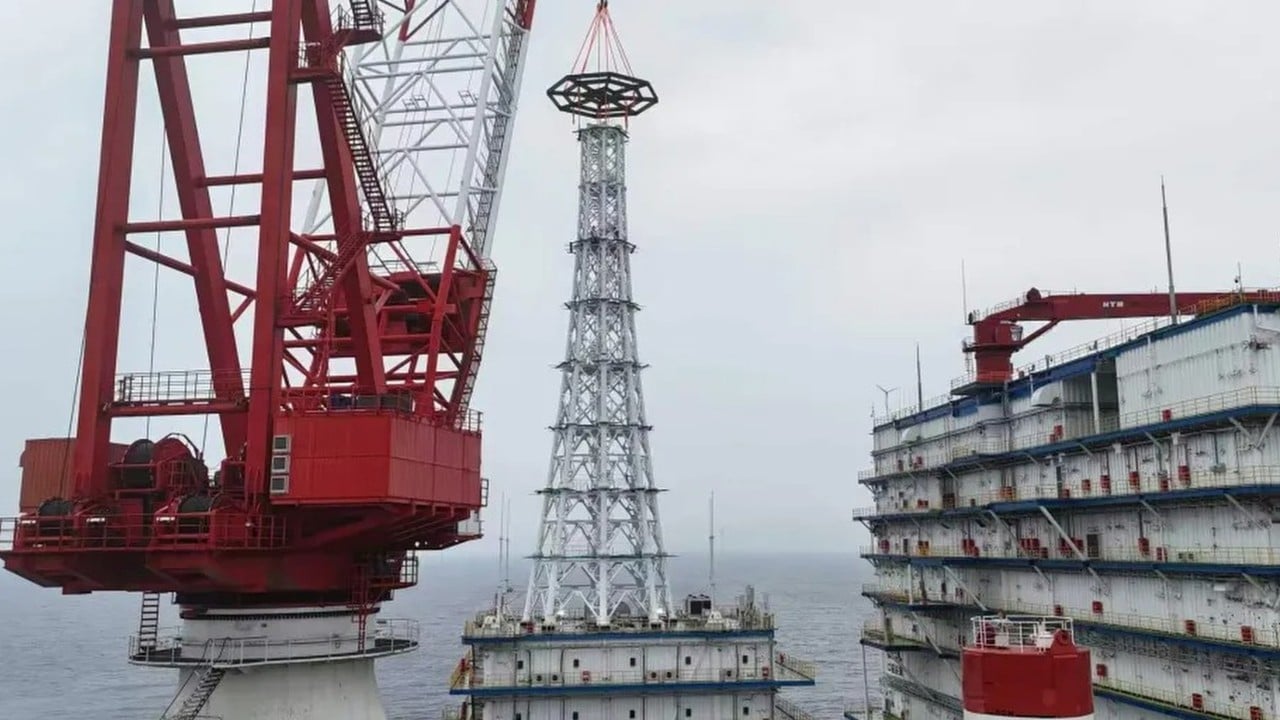
Scale matters in environmental science. You can't accurately predict massive atmospheric changes by looking at local weather stations. To solve this, China built a record-breaking 100-meter observation tower right in the middle of the South China Sea.
Managed by the country's meteorological administration, this tower stands as the tallest environmental observation structure in that maritime region. Its sole purpose is to collect highly detailed data on atmospheric conditions, wind patterns, and sea-air interactions. The data gathered here will dictate how meteorologists map typhoons and climate shifts across Asia for decades.
The Massive Reverse Brain Drain
For decades, the standard narrative in global academia was simple: the brightest minds left Asia to secure tenured spots at elite American institutions. That narrative is dead.
Take Chen Weiqiang, a prominent pioneer in "cancer-on-a-chip" biomedical engineering. He held a secure, tenured professorship in mechanical and biomedical engineering at New York University. He chose to leave it behind to join Nanjing University as a distinguished professor.
He isn't alone. Climate scientist Li Xueke recently walked away from her position at the University of Pennsylvania to take a post in Hong Kong. Her research focuses on Arctic shipping routes opened up by global warming—a field with massive economic consequences.
These researchers aren't just moving for better labs. They're fleeing what many describe as an increasingly hostile, heavily scrutinized political environment for Chinese scientists in the United States. They want to be where the funding is steady and the institutional backing is absolute.
Surpassing the West on Global Quality of Life
The shift isn't just visible in academic journals; it's showing up in hard international metrics. A recent report from the United Nations tracking Sustainable Development Goals shows that China is currently on track to outpace the United States in key human and planetary health metrics.
According to the data, China has hit its targets for eliminating absolute poverty and establishing baseline quality education. Meanwhile, the US achieved its primary marks in industrial innovation and infrastructure but lags behind in equitable social safety nets.
What This Means for Your Future
The center of gravity for global research has moved. If you are a student, investor, or tech enthusiast, looking exclusively to Western hubs means you are viewing the world through an outdated lens.
To stay ahead of these shifts, you need to change how you consume information. Stop relying solely on Western tech aggregates. Start tracking publications coming directly out of institutions like Sun Yat-sen University, Tsinghua, and the Chinese Academy of Sciences. The future isn't being theorized; it's already being built.