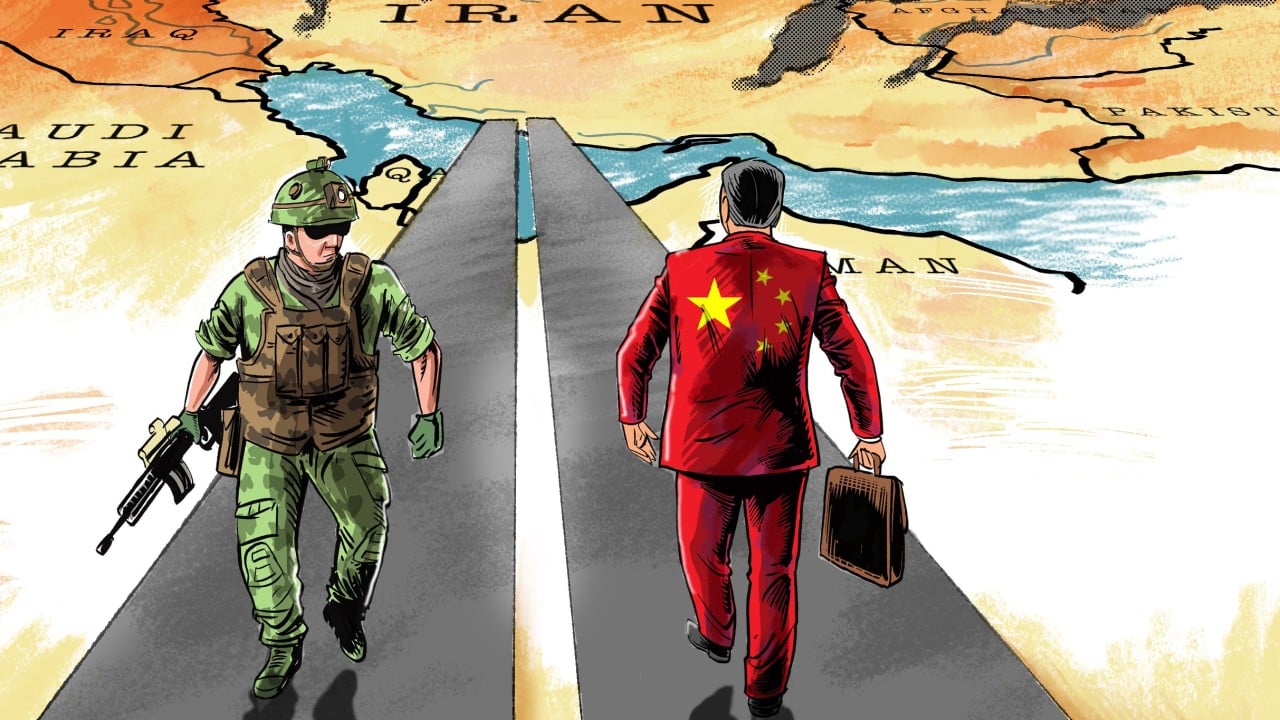
The long-standing assumption that Beijing views the Middle East merely as a gas station with a security problem is dead. For decades, the geopolitical calculus was simple: Washington provided the guns and the regional stability, while Beijing cut the checks for crude oil. That convenient arrangement has fractured. As Gulf capitals seek to diversify their economies away from hydrocarbons, China is offering a partnership that goes far beyond the traditional "security umbrella" model. It is a fundamental rewiring of regional influence based on technology transfers, infrastructure, and a shared skepticism of Western-led liberal internationalism.
Saudi Arabia and the United Arab Emirates are no longer interested in being junior partners in a Western security bloc. They are looking for a structural transformation. China recognizes this shift and is positioning itself as the primary architect of the Gulf’s post-oil future. This is not about replacing the U.S. Navy in the Strait of Hormuz; it is about who owns the digital and physical infrastructure of the 21st century.
The Infrastructure of Integration
Beijing's influence in the Gulf is being built with concrete and fiber optics. While Washington remains bogged down in the logistics of military deployments and arms sales that often come with heavy political strings, China is signing contracts for ports, industrial parks, and 5G networks. The Belt and Road Initiative (BRI) has found its most enthusiastic partners in Riyadh and Abu Dhabi, where the "Vision 2030" and "We the UAE 2031" programs align almost perfectly with Chinese industrial strategy.
Take the Khalifa Port in Abu Dhabi. COSCO Shipping, a Chinese state-owned giant, holds a 35-year concession to operate a major terminal there. This isn't just a business deal. It is a strategic anchor. By integrating Gulf ports into a global network controlled by Chinese logistics firms, Beijing ensures that the trade routes of the future remain oriented toward the East. The physical presence of Chinese firms at these maritime chokepoints provides a level of influence that a carrier strike group cannot match.
The scale of this integration is massive. We are seeing the development of "digital silk roads" where Huawei and other Chinese tech firms provide the backbone for the Gulf’s smart cities. This is a deliberate move. By embedding Chinese technology into the very fabric of the Gulf’s daily life, Beijing creates a path of dependency. Once a nation’s data, telecommunications, and government services are running on Chinese hardware, switching back to Western alternatives becomes prohibitively expensive and technically complex.
Technology Transfers and the End of the Turnkey Era
The Gulf states are tired of buying finished products. They want the recipes. For years, Western defense and tech companies sold high-end equipment to the region but kept the intellectual property and high-level maintenance firmly in their own hands. This "turnkey" model kept the Gulf dependent. China is winning favor by breaking that mold.
Beijing is increasingly willing to share the "how" along with the "what." In sectors ranging from drone manufacturing to renewable energy and nuclear power, Chinese firms are entering into joint ventures that include significant local production and training components. This approach appeals directly to the Gulf’s desire for "localization."
Consider the aerospace sector. Saudi Arabia has moved to establish domestic drone manufacturing capabilities with the help of Chinese state-owned enterprises. While the U.S. restricts the sale of armed drones due to human rights concerns and regional stability pacts, China sees an opportunity to sell the factory itself. This isn't just about weapon sales. It is about building a domestic industrial base that the West has historically been reluctant to support.
The Logic of Non-Interference
There is a profound ideological alignment happening that often escapes Western analysts. The leadership in the Gulf and the leadership in Beijing share a common worldview: the "primacy of stability." Both sides believe that economic development should precede political liberalization—if liberalization happens at all.
China’s policy of non-interference is its greatest diplomatic asset in the region. Unlike Washington, Beijing does not lecture Riyadh on its domestic policies or criticize Abu Dhabi for its involvement in regional conflicts. This absence of moralizing creates a "no-strings-attached" environment that is highly attractive to monarchies that value their sovereignty above all else.
This is not a case of the Gulf states being "tricked" by China. They are clear-eyed about the risks. They know that Beijing is a transactional power that puts its own interests first. However, they find the Chinese transaction much easier to manage than the American one. With the U.S., every arms deal involves a gauntlet of Congressional oversight, media scrutiny, and human rights reports. With China, it is a business meeting.
The Financial Pivot and the Petroyuan
For decades, the global oil market has been anchored by the U.S. dollar. This "petrodollar" system gave Washington immense leverage over global finance and provided a steady demand for U.S. Treasuries. That monopoly is starting to erode.
The talk of a "petroyuan" is no longer just a fringe economic theory. During President Xi Jinping’s 2022 visit to Riyadh, the prospect of settling oil trades in Chinese currency was discussed openly. While a full-scale shift away from the dollar isn't happening tomorrow, the fact that it is being discussed at the highest levels of government is a seismic shift.
China is the world's largest importer of crude oil. The Gulf states are among the largest exporters. It makes fundamental economic sense for them to trade in the currency of the buyer. Furthermore, using the yuan allows these nations to bypass the Western-dominated SWIFT payment system, providing a hedge against the kind of financial sanctions that were used to cripple the Russian economy.
Beyond the Security Umbrella
The Western media often frames the China-Gulf relationship as a zero-sum game where Beijing tries to replace the U.S. as the regional "policeman." This is a fundamental misunderstanding of Chinese strategy. Beijing has no desire to inherit the headaches of Middle Eastern security. They do not want to be the ones mediating tribal disputes or patrolling the borders of failing states.
China prefers a "hub and spoke" model of influence. They want to be the economic and technological hub, with the Gulf states acting as the spokes that fuel their growth. They are happy to let the U.S. maintain its military bases and deal with the messy business of counter-terrorism. China’s goal is to ensure that when the dust settles, the region’s wealth and infrastructure are tied to the East.
The real competition is not over who has the most soldiers on the ground, but who controls the standards of the future. Whether it is the standards for 6G telecommunications, the protocols for central bank digital currencies, or the logistics of global shipping, China is making sure it is the one writing the rules.
The Risks of the Great Diversification
This pivot to the East is not without its hazards. The Gulf states are attempting a delicate balancing act, trying to maintain their security ties with Washington while deepening their economic ties with Beijing. This "multi-aligned" strategy assumes that both the U.S. and China will tolerate a partner that plays both sides.
Washington is already pushing back. We have seen the U.S. threaten to withhold F-35 sales to the UAE over the presence of Huawei 5G equipment. As the geopolitical rivalry between the U.S. and China intensifies, the room for the Gulf to sit on the fence is shrinking. They may eventually be forced to choose, and that choice will be based on which power offers the most credible path to long-term survival.
Moreover, China’s slowing economy and its internal demographic challenges raise questions about its long-term reliability as a partner. If China’s demand for energy peaks earlier than expected, or if its "Belt and Road" investments become too burdensome, the Gulf’s bet on the East could look very different.
The New Reality
The era of the U.S. as the sole indispensable power in the Middle East is over. The Gulf states are becoming sophisticated geopolitical actors that understand their own leverage. They are using China to extract better deals from the West and using the West to keep China in check.
But beneath this balancing act lies a hard truth. China is offering something the West has struggled to provide: a roadmap for modernization that does not require Westernization. As long as Beijing continues to provide the technology, the infrastructure, and the political cover for the Gulf’s ambitious transformation plans, its influence will continue to grow.
The security umbrella provided by the U.S. may still be in place, but the house it protects is increasingly being furnished, wired, and funded by China. This is not a future possibility. It is the current reality. The power centers of the world are shifting, and the Gulf has already decided that its future lies in being a bridge between two worlds, rather than an outpost for one.
The shift is visible in the specialized economic zones appearing along the Red Sea. These are not merely trade hubs; they are incubators for a new kind of globalism where Chinese manufacturing meets Gulf capital. It is a partnership of convenience that has hardened into a partnership of necessity. Every new 5G tower, every new desalination plant built with Chinese components, and every oil shipment settled in yuan is a brick in a new regional order. The Gulf isn't just looking for a new protector; it is looking for a new way to be a global power, and it has found a willing partner in Beijing.
The regional powers are no longer waiting for permission from the West to define their own destiny. They are building it, one Chinese-backed project at a time.