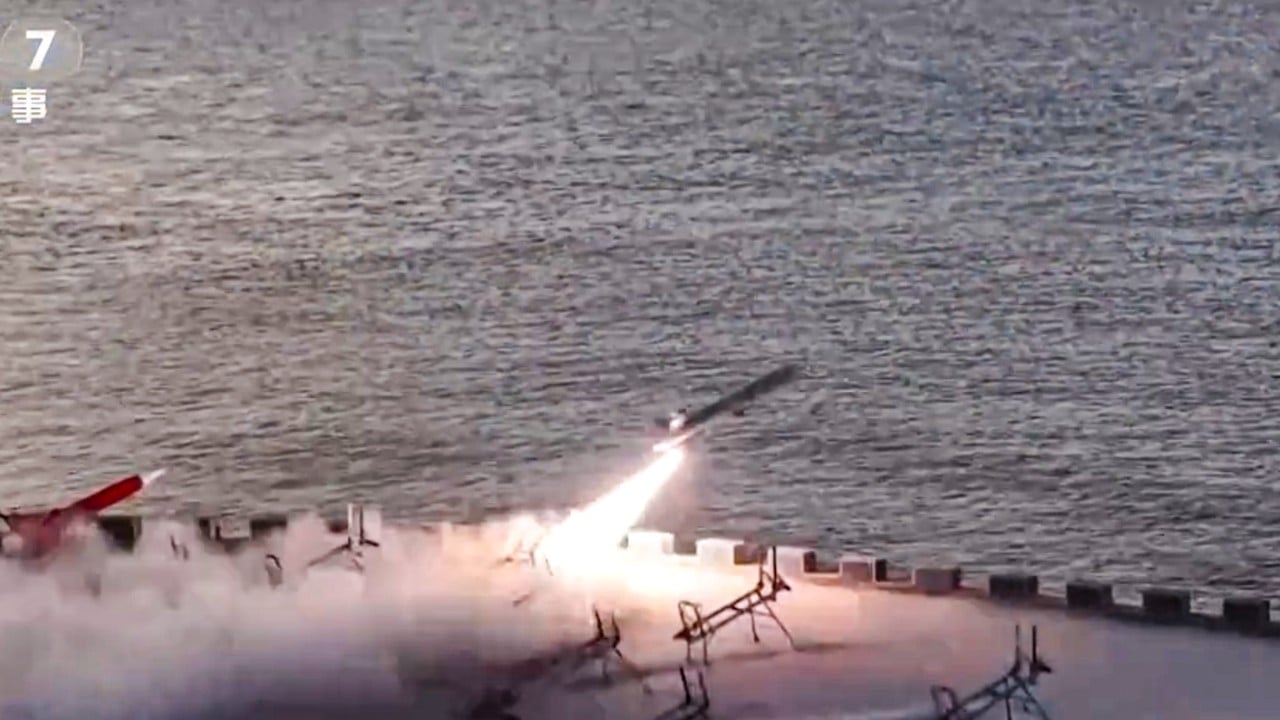
The traditional battleship is a floating target. If you think that sounds dramatic, look at the Black Sea. For the last few years, we’ve watched billion-dollar vessels get harassed and sunk by cheap, remote-controlled motorboats packed with explosives. China is paying attention. At the latest Zhuhai Airshow and several recent defense expos, Beijing made it clear they aren’t just building more ships. They’re building a completely different kind of naval defense system designed to stop the drone swarms that are rewriting the rules of maritime engagement.
It’s not just about bigger guns anymore. It’s about speed, sensing, and sheer volume. The People's Liberation Army Navy (PLAN) is moving toward a layered defense that treats drones as the primary threat, not a secondary nuisance. This shift matters because it signals a move away from the "carrier-centric" thinking that has dominated the Pacific for decades. If you’re tracking global security, you need to understand that China is pivoting toward a reality where the ocean surface is a suicide zone for anything that can't defend against a swarm.
The Problem With Traditional Naval Defense
Most modern destroyers are designed to fight other destroyers or shoot down high-flying jets. They use massive, expensive missiles to take out targets hundreds of miles away. That works great until fifty small, low-profile drones start screaming toward your hull at forty knots. You can't waste a $2 million missile on a $20,000 drone. It’s bad math. You'll run out of ammo before the enemy runs out of plastic.
China's new approach leans heavily on "hard kill" and "soft kill" combos. They’ve been showing off high-rate-of-fire gatling guns and new laser systems that can track dozens of targets simultaneously. The goal is simple. They want to create a "no-go" bubble around their fleet. We’re talking about CIWS (Close-In Weapon Systems) that have been tuned specifically for the erratic, low-altitude movement of sea drones.
Electronic Warfare is the New Front Line
If you can’t hit it with a bullet, fry its brain. That’s the philosophy behind China’s massive investment in shipborne electronic warfare (EW). Drones rely on GPS and radio links to find their targets. If you jam those signals, the drone becomes a very expensive piece of driftwood.
But drones are getting smarter. They’re starting to use AI-driven terminal guidance, meaning they don't need a human pilot for the final mile. To counter this, Chinese defense firms like CASIC are pushing specialized microwave weapons. These aren't just jammers. They’re high-energy bursts that physically destroy the circuits inside a drone. It’s invisible, it’s instant, and it’s arguably the only way to handle a massive swarm without needing a bottomless magazine of bullets.
The Rise of the Mother Ship
One of the most interesting pieces of tech coming out of China right now isn't a weapon at all. It’s a carrier. Not for planes, but for drones. We saw the launch of the Zhu Hai Yun, an autonomous vessel designed specifically to carry, launch, and recover dozens of air, surface, and underwater drones.
This isn't a ship that hides. It’s a ship that extends its eyes and ears thousands of miles. By using these autonomous motherships, the PLAN can create a massive sensor net. They’ll see an incoming threat long before it gets within striking distance. It changes the role of the human sailor from a lookout to a fleet manager. You’re not scanning the horizon with binoculars anymore. You’re watching a digital map populated by hundreds of remote sensors.
Why the World is Scrambling to Keep Up
The United States and its allies aren't sitting still, but they’re facing a different problem. The US Navy is built around large, legacy platforms that are hard to change quickly. China has the advantage of building much of this drone tech from the ground up right now. They’re integrating these systems into their new Type 055 destroyers and Type 052D ships as they roll off the assembly line.
It’s about production capacity. If war at sea becomes a contest of who can build more drones and more anti-drone systems, the industrial base becomes the deciding factor. China’s shipbuilding capacity is currently dwarfing the rest of the world. They aren't just innovating on the tech side; they’re innovating on the scale side.
What This Means for Pacific Security
The South China Sea is essentially a laboratory for this tech. We’re seeing more "gray zone" tactics where unmanned vessels are used to shadow or harass other ships. It’s a lower risk for the aggressor. If a drone gets sunk, nobody dies. There’s no funeral. No political fallout of a "fallen hero." This makes the threshold for starting a conflict much lower.
This is why the new naval defense systems are so aggressive. They have to be. In a world where drones are cheap and human life is politically expensive, the side that can effectively neutralize unmanned threats wins the long game of attrition.
The Shift to Subsurface Threats
Don't forget what's happening under the water. Aerial drones get the headlines because they're easy to film, but Unmanned Underwater Vehicles (UUVs) are the real nightmare for a navy. China has been testing "intelligent underwater tethered mines" and autonomous subs that can sit on the seafloor for months, waiting for a specific acoustic signature.
Stopping these requires a completely different set of tools. You need high-frequency sonar and underwater "interceptor" drones. Basically, small torpedoes that hunt other torpedoes. The PLAN is increasingly showing off these "underwater robots" at trade shows, suggesting they're moving past the prototype phase and into active deployment.
How to Track This Shift
If you want to stay ahead of these developments, stop looking at how many aircraft carriers a country has. That’s old-school thinking. Start looking at the following:
- Launch-to-Recovery Ratios: How many drones can a single ship manage at once? If a destroyer can only track five targets but faces fifty, it’s a failure.
- Magazine Depth: How many "shots" does a ship have before it’s defenseless? This is why lasers are the holy grail—they only need power, not physical shells.
- AI Autonomy: Look for news about "man-in-the-loop" vs. "fully autonomous" systems. The faster the AI can make a decision to fire, the better the defense.
The reality of naval warfare has changed faster in the last three years than it did in the previous fifty. China's new naval defense systems are a direct response to a world where the biggest threat to a billion-dollar ship is a swarm of drones built in a garage. It’s a game of cat and mouse where the mice are suddenly armed with explosives, and the cat is desperately trying to upgrade its claws. Keep your eyes on the next round of sea trials out of Dalian and Shanghai. That’s where the real future of the Pacific is being decided.