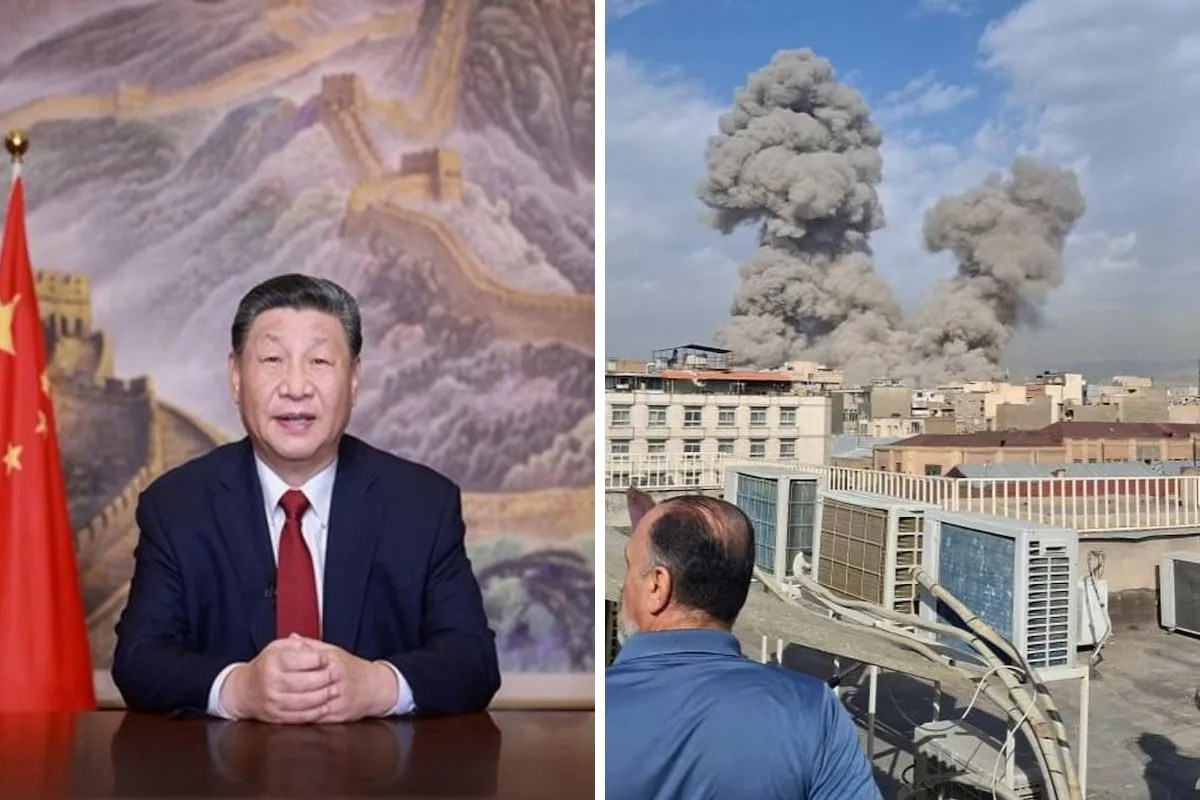
The current volatility in the Middle East is often viewed through the lens of regional religious or historical animosity, yet a structural analysis reveals it is governed by a sophisticated "Triangle of Constraints" involving Beijing, Tehran, and Washington. China’s recent diplomatic signaling—publicly supporting Iran’s "sovereignty and national dignity" while calling for restraint—is not a simple gesture of solidarity. It is a calculated move to preserve three specific strategic assets: energy security, the integrity of the Belt and Road Initiative (BRI) logistics, and the preservation of U.S. overextension.
The Energy Dependency Bottleneck
China’s alignment with Iran is rooted in a fundamental vulnerability: the Strait of Hormuz. China imports approximately 40% of its crude oil from the Persian Gulf. Any uncontrolled kinetic exchange between Israel and Iran that closes this chokepoint triggers an immediate economic shock to the Chinese industrial base.
- Discounted Energy Flow: Iran provides China with roughly 1 million to 1.5 million barrels of oil per day, often processed through "teapot" refineries in Shandong. This oil is frequently settled in Yuan (RMB), bypassing the SWIFT system and mitigating the impact of U.S. dollar-denominated sanctions.
- The Strategic Reserve Factor: Unlike the U.S., which can rely on domestic shale production, China’s internal supply is insufficient to sustain a high-intensity industrial economy if Gulf supplies are severed. Beijing’s support for Iran acts as a "stability premium" to ensure that Tehran does not resort to the "nuclear option" of closing the Strait, which would be as damaging to China as it would be to the West.
The Proxy Neutrality Framework
Beijing employs a strategy of "Calculated Ambiguity." By rhetorically supporting Iran, China gains leverage in Tehran, positioning itself as the only global power capable of mediating with the West. However, China refuses to provide formal military guarantees. This creates a specific power dynamic:
- Diplomatic Shielding: China uses its UN Security Council veto as a bargaining chip. It protects Iran from certain multilateral sanctions to maintain the viability of the 25-Year Strategic Cooperation Agreement.
- Technology Transfers vs. Kinetic Support: While China exports dual-use technology—including components for UAVs (Unmanned Aerial Vehicles) and missile guidance systems—it avoids direct arms transfers that would trigger secondary sanctions against its major state-owned banks.
- The Israel Balancing Act: China is a major infrastructure investor in Israel, notably managing the Haifa port. Beijing cannot fully alienate Israel without jeopardizing its access to Israeli semiconductor technology and agricultural innovation.
The Cost Function of U.S. Engagement
From a grand strategy perspective, the Iran-Israel conflict serves as a "Force Multiplier" for Chinese interests elsewhere, specifically in the Indo-Pacific. Every carrier strike group deployed to the Eastern Mediterranean is one fewer asset available for the "First Island Chain" surrounding Taiwan.
The Theory of Strategic Distraction
If the U.S. is drawn into a direct conflict with Iran to defend Israel, the American "Pivot to Asia" effectively collapses. China views the Middle East not as a theater to be won, but as a theater where the U.S. must be kept occupied. Beijing’s statements are designed to embolden Iranian resilience just enough to keep U.S. resources committed to the region, without allowing the conflict to reach a level of total regional war that would destroy the infrastructure China has built via the BRI.
Structural Vulnerabilities in the China-Iran Axis
Despite the appearance of a "No Limits" partnership in the Middle East, the relationship faces severe friction points.
- The GCC Counterweight: China’s largest trade partners in the region are actually the GCC states—Saudi Arabia and the UAE. These nations view Iran as a primary threat. If China leans too far toward Tehran, it risks its massive 5G and renewable energy contracts in Riyadh.
- The Implementation Gap: Much of the $400 billion promised in the China-Iran 25-year deal remains unspent. Chinese firms are notoriously risk-averse; they hesitate to invest in Iranian infrastructure while the threat of U.S. "snapback" sanctions remains high.
- Intelligence Asymmetry: China lacks the deep human intelligence (HUMINT) networks in the Middle East that the U.S. and Russia possess. This makes Beijing a "reactive" rather than "proactive" player when regional escalations occur.
The Three Pillars of Chinese Mediation
When China intervenes—as it did with the Saudi-Iran rapprochement in 2023—it follows a repeatable three-step logic:
- Economic Primacy: The premise that economic integration will eventually override sectarian or ideological conflict.
- Non-Interference: A rejection of the "Democratic Peace Theory" in favor of supporting whoever is currently in power, regardless of their domestic policies.
- Multipolarity: Utilizing the BRICS+ framework to create an alternative diplomatic forum where Iran and regional rivals can interact without U.S. oversight.
The Mechanics of Escalation Control
If Israel launches a significant strike on Iranian nuclear or energy infrastructure, China’s response will likely shift from rhetorical to economic. We should expect:
- Increased RMB Liquidity: Providing Iran with more robust financial channels to stabilize the Rial.
- Intelligence Sharing: Subtly providing satellite imagery or electronic warfare signatures to Iranian proxies to increase the "cost of entry" for Israeli or U.S. operations.
- The "Broker" Gambit: Offering to host a regional peace summit in Beijing to finalize the neutralization of the conflict, thereby signaling the end of the "American Century" in Middle Eastern diplomacy.
Strategic Forecast for the 2026-2030 Window
The probability of a full-scale regional war is mitigated by the fact that neither China nor the U.S. can afford the resulting global depression. However, the "Gray Zone" conflict will intensify. China will continue to facilitate Iranian "shadow exports" while publicly calling for peace. This allows Tehran to survive under pressure, keeps Israel on a defensive footing, and ensures the U.S. remains strategically anchored in a region it has been trying to leave for over a decade.
The optimal play for observers is to track the movement of China’s state-owned shipping fleets and the volume of RMB-denominated oil trades. These are the true metrics of China’s commitment to the Iranian "front." If Chinese tankers begin to divert from the region, it signals that Beijing has intelligence of an imminent, uncontrollable escalation. Until then, expect the continuation of "militant diplomacy"—high-volume rhetoric backed by low-risk, high-reward economic support.
Would you like me to analyze the specific impact of Chinese-made EW systems on Israeli-US aerial dominance in the Levant?