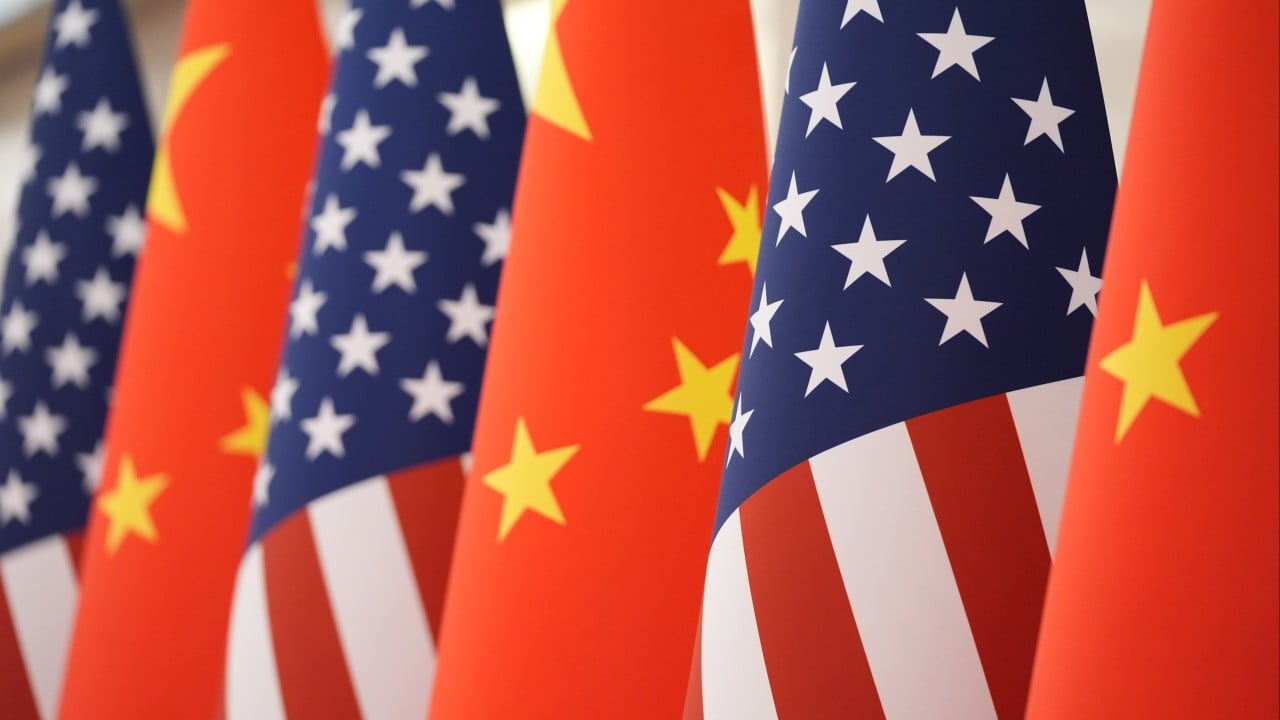
Mainstream financial media loves a predictable script. The latest installment involves parsing official press releases from Beijing, leading to the breathless conclusion that China is desperately begging Washington for tariff relief while crying foul over American protectionism.
It is a comfortable narrative. It fits neatly into the standard geopolitical playbook. It is also completely wrong.
The lazy consensus assumes tariffs are a friction point China desperately needs to eliminate to survive. Analysts look at the public complaints about US trade policies and mistake diplomatic posturing for economic panic. They see a victim. They fail to see the strategy.
Here is the reality corporate boardrooms refuse to face: Beijing does not want a return to the free-trade status quo of 2016. The trade war did not weaken China’s industrial base; it catalyzed its modernization. The public demand for tariff cuts is a brilliant diplomatic smoke screen designed to mask a harsh economic reality. Tariffs have become the ultimate stress test, and China has already figured out how to pass it.
The Myth of the Desperate Exporter
The standard economic argument says tariffs raise prices, lower demand, and crush export-led economies. If you only look at direct bilateral trade balances between Shanghai and Long Beach, that logic seems to hold. But trade data is fungible.
Step away from the surface-level numbers and look at the broader mechanics of global supply chains. When the US levied tariffs on Chinese goods, production did not magically return to Ohio or Pennsylvania. It moved to Vietnam, Mexico, Malaysia, and Indonesia.
But who owns the factories in Vietnam and Mexico?
Over the last decade, Chinese foreign direct investment into Southeast Asia and Latin America skyrocketed. Components are manufactured in Shenzhen, shipped to Tijuana or Hai Phong for final assembly, and stamped with a new country of origin before entering the US duty-free. The US consumer still buys Chinese industrial capacity; they just pay a premium for a detour.
I have spent years analyzing manufacturing migration patterns across East Asia. The companies that panicked in 2018 are either gone or unrecognizable today. The survivors did not wait for trade negotiators to save them. They decentralized. They rerouted. By the time a Western diplomat sits down to negotiate a tariff reduction, the supply chain has already shifted around the obstacle.
The Subsidized Efficiency Trap
Western commentators frequently point to China’s industrial subsidies as a sign of an unfair, artificial market. They argue that without state backing, these industries would collapse under the weight of American tariffs.
This view misunderstands the fundamental purpose of Chinese industrial policy. The goal was never to create permanently subsidized entities that require a life support machine. The goal was to fund scale until scale created its own unstoppable efficiency.
Look at the electric vehicle and renewable energy sectors. The West labels Chinese dominance here as a product of "malicious" market distortion. In reality, early state capital allowed Chinese manufacturers to build massive vertical integration. They secured the lithium mines, built the processing facilities, and mastered battery chemistry while Western automakers were still trying to figure out how to sell more SUVs.
Now that the scale is achieved, the subsidies are drying up domestically because they are no longer needed. The production cost of a Chinese-made EV or solar panel is so low that even a 100% tariff cannot make a Western equivalent price-competitive without massive, ongoing taxpayer bailouts in the US and Europe.
When Beijing complains about American tariffs, they are not begging for a lifeline. They are setting a rhetorical trap. By loudly demanding adherence to free-market principles, China positions itself as the defender of the global trade order while forcing the West to adopt increasingly clumsy, expensive protectionist policies that drag down Western economic growth.
Dismantling the Supply Chain Relocation Fantasy
A common question dominating corporate strategy meetings is: How long will it take to completely decouple from China?
The premise of the question is fundamentally flawed. You cannot decouple from the only country that possesses a complete industrial ecosystem.
Consider the tool-and-die industry. If an American company wants to manufacture a new consumer electronics product, they need specialized molds and machinery. In the US, finding a shop that can produce these tools to precise specifications can take months. In the Pearl River Delta, there are thousands of highly specialized shops within a twenty-mile radius that can deliver prototypes in forty-eight hours.
This density creates a gravity well. It is not just about cheap labor; that era ended a decade ago. It is about logistical speed and ecosystem depth.
- The Raw Material Access: China controls the refining capacity for the vast majority of critical minerals.
- The Component Ecosystem: A factory in Ohio must import dozens of sub-components to assemble a finished product. A factory in Changzhou can source all of them within a two-hour drive.
- The Engineering Pool: China graduates more engineers in a single year than the US does in a decade, providing an endless supply of technical talent optimized for manufacturing process improvement.
Moving a factory to India or Ohio does not solve your China problem. It simply introduces new bottlenecks, higher energy costs, and a lack of skilled technical oversight. Decoupling is a political slogan, not a viable corporate strategy.
The Hidden Risk of Getting What You Ask For
Let us run a thought experiment. Imagine a scenario where Washington suddenly capitulates. Every tariff levied since 2018 is dismantled tomorrow. Free trade reigns supreme once again.
What happens next?
A sudden removal of tariffs would unleash a flood of hyper-efficient Chinese industrial goods into the Western market, completely decimating the fragile domestic manufacturing initiatives currently being funded by Western governments. The nascent battery factories in Europe and the semiconductor fabrication plants being built in the US would instantly become economically unviable. They cannot compete on price, speed, or volume without protectionist walls.
Beijing understands this. A complete removal of tariffs would actually accelerate friction because it would force Western nations to implement even more drastic, non-tariff barriers like outright import bans or national security exclusions.
The current tariff regime, while annoying, provides a predictable framework. It creates a stable, manageable hurdle that Chinese exporters have already learned how to jump. It keeps Western competitors weak and reliant on government subsidies, while forcing Chinese firms to become leaner, meaner, and more globalized.
Stop Reading the Press Releases
If you want to understand the future of global trade, stop reading diplomatic transcripts. They are theater designed for domestic audiences.
Western leaders use tariffs to signal strength to voters who lost factory jobs decades ago. Chinese leaders decry those same tariffs to signal adherence to international norms to the Global South. Neither side is telling the truth about the underlying economic mechanics.
The trade war is over, and the result is a draw that favors the incumbent factory floor of the world. The tariffs did not isolate China; they forced it to build a more resilient, distributed, and dominant global footprint.
Stop asking when the trade barriers will come down. They are part of the architecture now. Start building your corporate strategy around the assumption that the friction is permanent—and learn from the companies that are already profiting from it.