Elon Musk loves the spotlight, but while Neuralink grabs headlines with sci-fi promises of telepathic gaming, Chinese researchers are quietly moving past the clinical trial phase. They aren't just building prototypes anymore. They are deploying commercial brain-chip implant technology into the real world.
If you think this is still a Silicon Valley story, you're mistaken. The global race for neural interface dominance has shifted east, driven by a state-backed strategy that prioritizes medical application over billionaire-driven vanity projects. China’s approach to these devices is pragmatic, fast, and alarmingly effective.
The shift from academic research to bedside reality
Western media often frames the BCI (Brain-Computer Interface) field through the lens of Musk’s celebrity. We see the videos of monkeys playing Pong and patients moving cursors with their minds. It's impressive theater. However, the Chinese state-academic complex has spent the last five years focusing on the boring, difficult parts of hardware integration: scalability, surgical safety, and long-term signal stability.
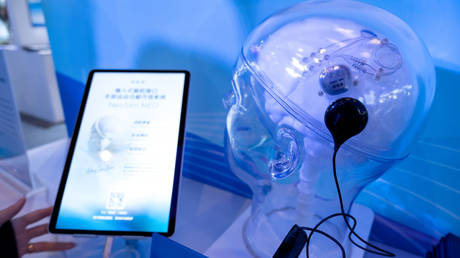
In 2024 and 2025, several Chinese firms—most notably those linked to institutions like Tsinghua University—began moving beyond the "proof of concept" stage. The NEO (Neural Electronic Opportunity) system, developed by researchers at Tsinghua, successfully restored mobility to patients with spinal cord injuries. Unlike Neuralink’s high-risk robotic insertion method, Chinese researchers have leaned heavily into minimally invasive stent-electrode arrays. These can be inserted via blood vessels, bypassing the need for a craniotomy.
This isn't just a technical difference. It's a regulatory strategy. By reducing surgical trauma, these companies are clearing hospital ethics boards much faster than their American counterparts.
How China optimized the BCI supply chain
You cannot build advanced neural hardware without a massive, localized supply chain. The United States struggles with the "lab-to-fab" gap—the frustrating period where brilliant academic research dies because there’s no factory ready to manufacture it at scale.
China doesn't have that problem. Because the government views brain-machine interfaces as a national strategic asset, they’ve forced a vertical integration of the industry:
- Materials science: Massive domestic production of biocompatible polymers and flexible micro-electrodes.
- Data processing: Proprietary AI chips designed specifically to decode neural spikes with ultra-low latency.
- Clinical integration: Direct partnerships between tech firms and major hospitals in Beijing and Shanghai, creating a closed loop for data collection.
Basically, if a company in Beijing needs a specific type of gold-plated sensor, they don’t wait for a global supply chain to clear customs. They walk down the street and get it produced. This speed is why you're seeing Chinese patients receive these implants while US companies are still haggling over FDA milestone requirements.
Neuralink versus the rest of the world
Don’t get me wrong. Neuralink remains a technical powerhouse. Their "N1" implant provides incredible bandwidth—capturing data from over 1,000 electrodes simultaneously. It is arguably the most sophisticated device on the planet for high-fidelity signal processing. But complexity is a liability in medicine.
Neuralink’s high-electrode count requires a massive, automated surgical robot to stitch threads into the brain. It is beautiful engineering, but it’s a clinical nightmare to standardize. Every hospital in the world would need that specific robot and a team of specialized neurosurgeons just to perform the procedure.
Chinese firms are playing a different game. They are opting for lower-bandwidth, "good enough" devices that are easier to implant. They are prioritizing clinical adoption rates over raw technical specs. In the world of healthcare, the device that gets approved and actually helps 10,000 paralyzed patients is more successful than the "superior" device trapped in an endless regulatory review.
The risks we aren't talking about
This transition toward commercialization brings heavy baggage. We are entering an era of "neuro-data" that makes current privacy concerns look like child's play. When a device sits inside your motor cortex, it doesn't just read "move hand." It records the neurological signatures of your intent, your cognitive load, and potentially your emotional state.
In China, the integration between private tech companies and the state is absolute. There is no legal wall preventing the government from accessing neural data if they define it as a public safety necessity. While Western regulators are busy drafting "neuro-rights" legislation, these devices are already recording data in Chinese clinical settings.
We are also seeing a lack of transparency regarding long-term device degradation. Brain tissue is hostile to foreign objects. It scars. Electrodes fail. If a commercial chip fails after three years, what is the protocol for extraction? Most companies are silent on this because it’s a terrifying liability.
What happens next for the industry
The commercialization of neural implants will follow the path of the cochlear implant or the pacemaker. We will see a rapid commoditization of the technology. The goalposts are shifting from "Can we do it?" to "Who can make it cheapest and safest?"
If you are watching this sector, ignore the hype about uploading consciousness or digital telepathy. Those are marketing fantasies meant to boost valuation. Instead, watch for these three indicators of real industry health:
- Surgical duration: Devices that can be implanted in under 90 minutes under local anesthesia will win the market.
- Battery longevity: Wireless charging through the scalp is the holy grail. Whoever solves this without inducing thermal tissue damage becomes the market leader.
- Data portability: Standards for how neural data is stored and interpreted. Currently, every company uses a proprietary format. That will have to change for the industry to grow.
The lead China has established is significant, but it is not permanent. The US maintains a massive edge in software, machine learning algorithms, and high-end signal processing. If Western firms can shift their focus from "world-changing robot surgeons" to "practical, minimally invasive medical tools," they can catch up. Until then, the most impactful neural interfaces in the world will continue to be manufactured in China.