The coffee in the mug was still hot when the screen flickered in a modest living room in Ohio. It was 5:15 AM. Thomas did not look at the global energy indexes because he was a logistics coordinator for a regional supermarket chain, not a commodities trader. But within three weeks, the flickering screen would dictate how much he paid for bread, how long his neighbor could afford to keep the heating on, and whether the local plastics factory down the road would lay off half its night shift.
Thousands of miles away, a strip of water measuring just twenty-one miles wide at its narrowest point had just gone quiet.
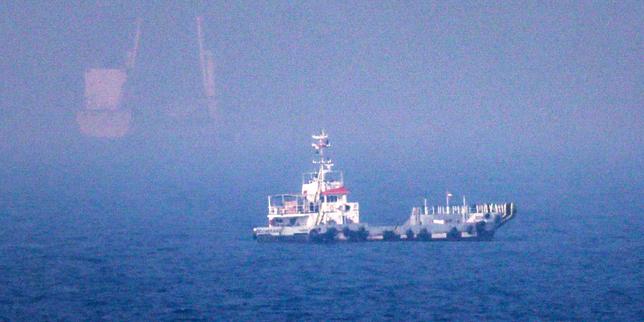
The Strait of Hormuz does not look like the center of the modern world. If you stand on the arid, jagged cliffs of Oman’s Musandam Peninsula, looking out over the grey-blue expanse toward the Iranian coast, you see nothing but water, rock, and the occasional silhouette of an industrial giant moving sluggishly along the horizon. Yet through this geographic throat flows roughly one-fifth of the world’s liquid petroleum consumption every single day. It is the pulse of global industry. When that pulse skips a beat, the shockwave does not travel at the speed of water. It travels at the speed of light through fiber-optic cables, crashing into markets before the first tanker has even dropped anchor.
To understand what happens when this passage closes, we have to look past the spreadsheets of oil ministers and look at the invisible threads connecting a supertanker in the Persian Gulf to the ordinary citizen.
Imagine a vessel named the Oceanic Venture. This is a hypothetical composite of the dozens of Very Large Crude Carriers that navigate these waters daily, but her dimensions are terrifyingly real. She is longer than three football fields. Her draft sits deep in the water, heavy with two million barrels of crude oil destined for an Asian refinery. For her captain, navigating the Strait is an exercise in hyper-vigilance. The shipping lanes are narrow—just two miles wide in each direction, separated by a two-mile buffer zone to prevent catastrophic collisions.
When geopolitical tensions boil over and the threat of closure becomes a reality, the atmosphere on a bridge like the Oceanic Venture’s changes instantly. Insurance premiums for the hull skyrocket by tens of thousands of dollars for a single transit. The crew watches the horizon not just for navigational hazards, but for fast-attack craft or the telltale wake of a sea mine.
Then comes the order to halt.
The immediate result on the world’s trading floors is a primal scream of numbers. Oil is the blood of global commerce, and when the main artery is constricted, the price per barrel surges instantly. We saw the precursor to this during historical disruptions, from the Tanker War of the 1980s to the brief, volatile panics of recent decades. When the news hits that transit has stopped, algorithms and human traders react in a fraction of a second. The price of Brent crude jumps by ten percent, then fifteen, then twenty.
But the real problem lies elsewhere, far from the shouting men in tailored suits on Wall Street.
Consider what happens next: the physical reality of oil logistics is an incredibly rigid machine. You cannot simply turn off an oil well like a kitchen faucet. If the tankers cannot move through the Strait, the storage facilities in the Persian Gulf fill up within days. Once the tanks are full, production must stop. In the oil fields of Saudi Arabia, Iraq, Kuwait, and the United Arab Emirates, pumps fall silent. The damage to reservoirs from sudden shutdowns can be permanent, altering the pressure dynamics deep underground and making future extraction more expensive and less efficient.
Simultaneously, the world’s great manufacturing hubs begin to starve. Countries like Japan, South Korea, and India rely on the Strait of Hormuz for the vast majority of their energy imports. Their strategic reserves are measured in days, not years.
Let us ground this in the reality of a manufacturing manager in Osaka. Her name is Keiko. Her factory produces specialized medical components. Her machinery requires an uninterrupted supply of electricity, and the local utility provider relies heavily on Liquefied Natural Gas (LNG) shipped directly from Qatar through that same narrow strait. When Qatar’s LNG vessels are blocked, the utility company must source gas from elsewhere. But everyone else is trying to buy that same non-Middle Eastern gas.
Prices skyrocket. Keiko’s operating costs double in a week. She faces a brutal choice: pass the cost on to hospitals that buy her components, or cut her workforce. This is how a territorial dispute in a distant body of water transforms into an employment crisis in a Japanese suburb.
The crisis behaves like a fever. It spreads through sectors that seem completely divorced from the oil industry. Take agriculture. Modern farming is entirely dependent on diesel to run tractors, transport produce, and manufacture fertilizers. Nitrogen-based fertilizers are produced using natural gas. When the global gas market panics because Qatari shipments are locked behind a naval blockade, the cost of fertilizer hits record highs.
The farmer in Brazil looks at the price of fertilizer and decides to plant less corn. The livestock producer in Iowa sees the price of corn feed rise and decides to reduce the size of his cattle herd. Months later, a shopper in a supermarket notices that a pound of beef or a loaf of bread costs significantly more. They blame local inflation. They blame their politicians. They rarely blame a twenty-one-mile strip of water on the other side of the planet.
It is easy to get lost in the sheer scale of the disaster, to view it as an abstract mathematical problem. It is not. It is deeply personal.
The uncertainty is perhaps the most corrosive element. Economists use sophisticated models to predict how high oil prices could go during a total closure of the Strait—some whisper of two hundred dollars a barrel, others suggest even higher. But the truth is, no one actually knows. The global economy has never experienced a prolonged, complete shutdown of the world's most critical energy transit point in the modern era of hyper-connected supply chains. We are guessing. And that collective ignorance breeds fear.
Fear causes hoarding. Governments begin to restrict energy exports to protect their domestic markets. Neighbors compete against neighbors for dwindling supplies of diesel and heating oil. The delicate web of international cooperation that allows global trade to function smoothly begins to fray at the edges.
But humans are remarkably resilient creatures. When the traditional routes close, we look for alternatives.
East-West pipelines cut across the Saudi desert to the Red Sea, capable of bypassing the Strait for a fraction of the region's oil exports. Abu Dhabi has its own pipeline to the port of Fujairah, outside the Gulf. But these alternative paths are like trying to empty a swimming pool with a garden hose. They can handle a few million barrels a day, but the remaining mountain of crude has nowhere to go. The global economy cannot simply adapt overnight to losing twenty million barrels of oil per day. There is no magic switch.
The solution to a crisis of this magnitude never lies in the economics textbooks. It lies in the messy, high-stakes arena of international diplomacy and raw naval power. Clearing a blocked strait requires clearing mines, establishing secure convoys, and de-escalating conflicts under the threat of catastrophic escalation. It is a slow, agonizing process where every single day of delay costs the global economy billions of dollars.
Back in Ohio, the sun was fully up now. Thomas sat in his car at the gas station, watching the digital numbers on the pump roll forward with terrifying speed. The price had jumped forty cents since yesterday evening. He felt a knot form in his stomach, a familiar anxiety about budgets, margins, and making ends meet.
He did not know the name of the captain of the Oceanic Venture. He did not know the coordinates of the shipping lanes off the coast of Oman. But as he clicked the nozzle shut and looked at the total on the screen, he felt the cold, heavy weight of the world’s most dangerous geographic bottleneck pressing directly against his wallet.

