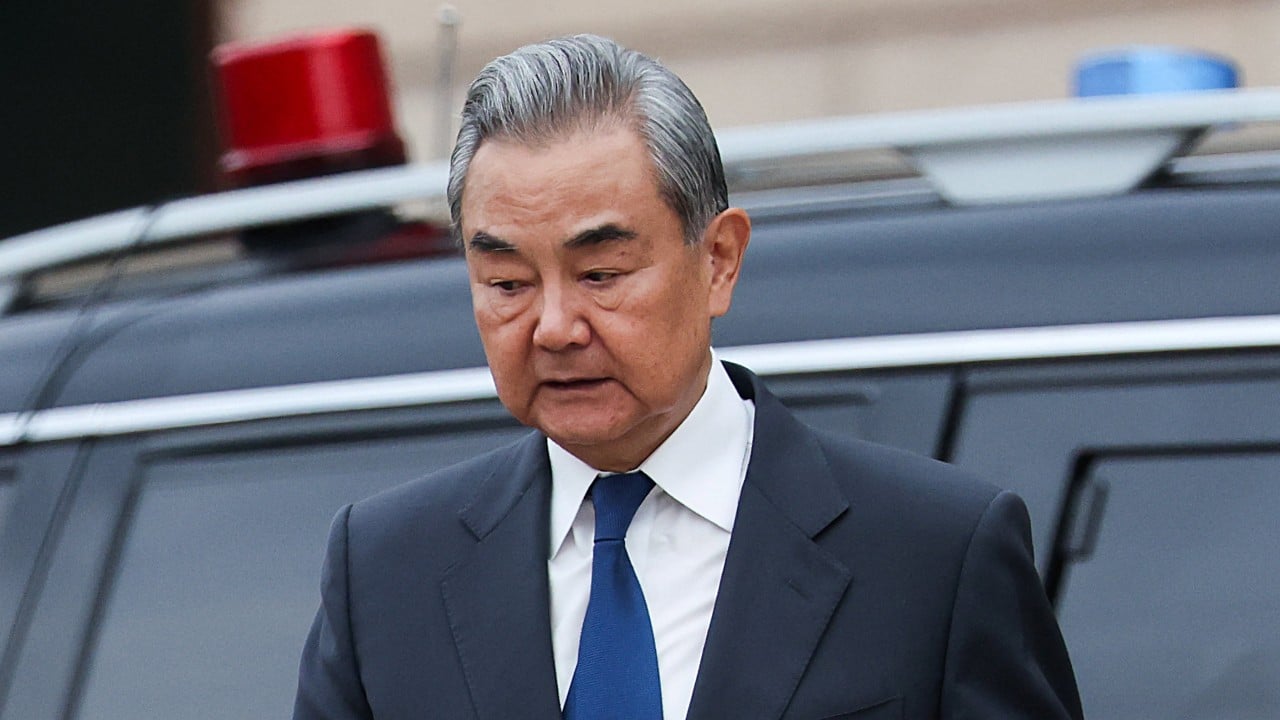
The heavy wooden doors of a secure briefing room in Washington don’t click shut; they thud. It is a sound that seals out the noise of traffic on Pennsylvania Avenue, leaving behind a silence thick with anticipation. On the mahogany table sits a single dossier, its cover marked by the stark, minimalist typography of state intelligence. Inside, the name Wang Yi appears in bold.
To the casual observer scrolling through a morning news feed, a headline about China’s top diplomat visiting the United States and Canada is just another ripple in the endless stream of geopolitical white noise. It reads like a bureaucratic chore. Meetings will be held. Handshakes will be photographed. Communiqués will be issued, phrased in that dense, bloodless dialect known only to state departments.
But diplomacy is rarely about the words spoken at the microphone. It is about the friction of two tectonic plates grinding against one another in the dark.
When a figure like Wang Yi boards a plane for North America, he carries more than a briefing binder. He carries the weight of a highly calculated, high-stakes gamble. This trip isn’t just a courtesy call; it is the meticulously laid track meant to bear the immense weight of an upcoming presidential visit by Xi Jinping. It is the invisible scaffolding upon which the immediate future of global trade, regional security, and economic stability will either stand or collapse.
To understand why this matters to someone who has never set foot in Beijing or Washington, you have to look past the podiums. You have to look at the human cost of a misstep.
The Weight in the Room
Picture a small-business owner in Ohio. Let's call her Sarah. She doesn't track the movements of foreign ministers. She tracks the cost of aluminum components, the shipping delays at the Port of Long Beach, and the interest rates on her small-business loans. For three years, Sarah's margins have shrunk. The tariff wars and frosty diplomatic silences between Washington and Beijing aren't abstract policy debates to her; they are the reasons she had to freeze hiring this quarter.
When relations between superpowers freeze, the frost bites the smallest branches first.
For months, the channels between the two capitals resembled a cracked, dry riverbed. The hotlines were silent. The scheduled Zoom calls were quietly postponed. In the vacuum left by communication, suspicion grew. Beijing watched Washington forge new defense alliances in the Pacific; Washington watched Beijing expand its naval footprint. Every routine military exercise became a potential spark.
This is the backdrop against which Wang Yi’s itinerary was built. The primary objective of this cross-continental sprint is stabilizing a relationship that had begun to listing dangerously toward conflict.
The journey spans two capitals with vastly different grievances. In Ottawa, the air is thick with tensions over electoral interference allegations and arbitrary detentions that left deep scars on the Canadian psyche. In Washington, the ledger is even longer, spanning from microchip export bans to the status of the Taiwan Strait.
Wang’s task is akin to walking a tightrope during a gale while carrying a priceless porcelain vase. He must project the unyielding strength of a rising superpower to his domestic audience back home, while simultaneously demonstrating enough flexibility to ensure his Western counterparts don’t walk away from the table entirely.
The Architecture of the Pre-Trip
There is a common misconception that summits happen because two leaders decide to chat. The reality is far more clinical.
Before a head of state like Xi Jinping ever steps onto a red carpet on American soil, every single moment of that interaction has been pre-scripted, pre-negotiated, and pre-vetted. The exact length of the handshake is debated. The seating arrangements are analyzed for subtle psychological advantages. The joint statements are fought over, comma by comma, weeks in advance.
Wang Yi is the architect. He is there to test the structural integrity of the ground before his president arrives.
If Wang’s meetings with US Secretary of State Antony Blinken and Canadian officials go poorly, the planned summit doesn't just lose its luster—it disappears. A canceled presidential visit is a massive, public loss of face for both sides. It signals to the global markets that the world's two largest economies have given up on talking.
When that happens, the reaction is instantaneous. Stock tickers dip. Procurement officers rewrite their supply chain strategies. Insurance premiums for cargo ships in the South China Sea tick upward. The ripples move from a quiet conference room directly to the price of consumer goods on local shelves.
During these preliminary rounds, negotiators use a technique known as "managing differences." It is a polite euphemism for finding the things you hate least about each other and agreeing to talk about those first. They look for easy wins. Perhaps an agreement to increase commercial flights between the nations. Maybe a joint statement on fentanyl precursor regulations.
These small, seemingly trivial agreements are the currency of diplomacy. They buy trust. And right now, the global trust deficit is bankrupting international stability.
The Canadian Complication
While the Washington leg of the trip dominates the financial news, the stop in Canada is where the narrative becomes distinctly human, layered with raw emotion and recent history.
For years, Canada-China relations have been defined by a deep, aching coldness. The shadow of the "Two Michaels"—the Canadian citizens detained by Beijing for over a thousand years in suspected retaliation for the arrest of a Huawei executive—still hangs over every interaction. Though that specific crisis was resolved, the psychological scar remains.
Canada finds itself caught in an agonizing geopolitical vice.
Economically, its businesses crave access to the massive Chinese consumer market. Geopolitically and culturally, its loyalties lie squarely with the United States. Trying to balance those two forces is a grueling exercise in compromise. When Wang Yi meets with his Canadian counterparts, he isn't just discussing trade quotas. He is navigating a minefield of public resentment and political vulnerability.
The Canadian government faces intense domestic pressure not to appear weak, to demand accountability for foreign interference. China, conversely, views such demands as an infringement on its sovereignty.
The dialogue in Ottawa is less about paving the way for grand summits and more about basic damage control. Can these two nations find a way to coexist without constant diplomatic warfare? Can they cooperate on climate initiatives while remaining diametrically opposed on human rights?
The answers aren't found in treaties. They are found in the subtle shifts of posture during late-night working dinners, where the translation earpieces are laid aside and the real, unvarnished horse-trading begins.
The Invisible Stakes
It is easy to become cynical about these high-level visits. We see the motorcades. We see the carefully curated photo ops of men and women in dark suits smiling tightly for the cameras. It feels theatrical. Artificial.
But consider the alternative.
The alternative is a world where the lines of communication are completely severed. In that world, an accidental collision between a fighter jet and a reconnaissance drone over the South China Sea isn't resolved by a quick phone call between commanders. It escalates. Orders are given. Radars lock on.
History is littered with conflicts that nobody actually wanted, triggered simply because two opposing sides miscalculated each other's intentions. They guessed when they should have known.
Wang Yi's visit is a mechanism designed to prevent that specific brand of catastrophe. By establishing a baseline of predictable communication, both sides build a safety net. They create a framework where they can compete fiercely in the economic and technological arenas without tumbling into a catastrophic hot war.
This trip is about establishing the rules of engagement for a new era of cold confrontation. It is an acknowledgment that neither superpower can erase the other from the map. They are stuck together on this planet, bound by supply chains, shared climate threats, and the mutual assured destruction of their financial systems.
The motorcade departs. The black sedans slide through the rainy streets of the capital, heading back toward the tarmac where a plane waits to return to the Far East.
The public will receive a sterile press release detailing the topics discussed: trade, regional security, cultural exchanges. The words will be dry, intentionally scrubbed of any human vitality.
But in the quiet offices of the state departments and ministries, the real work begins. Analysts will dissect every word, every sigh, every moment of hesitation from the meetings. The track has been inspected. The loose spikes have been hammered down.
Somewhere in a suburban manufacturing plant, a business owner checks her email, hoping for news of stabilized shipping lanes. Somewhere in the Pacific, a naval commander adjusts his course, operating under slightly clearer guidelines than he had the week before.
The machinery of the world continues to turn, lubricated not by grand declarations of friendship, but by the slow, painful, and utterly necessary work of talking through the silence.