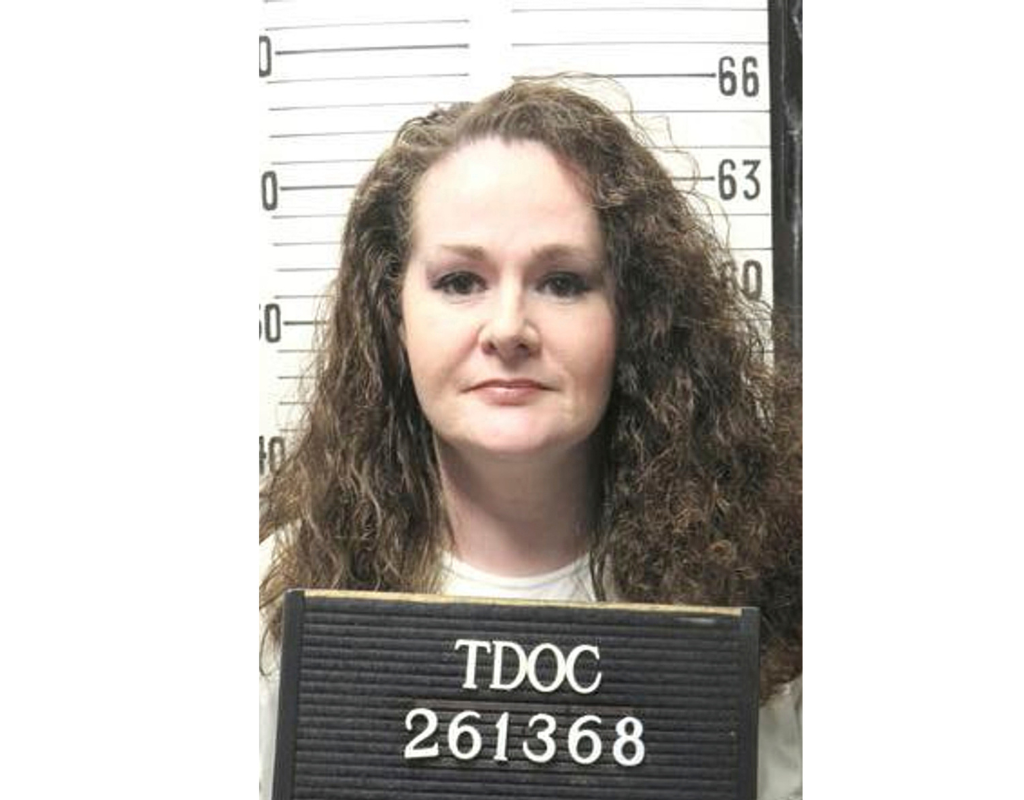
Every major outlet covering Christa Pike’s first public statement since her failed execution is asking the wrong question. They are obsessing over the optics of survival, the morbid curiosity of a prisoner waking up after the state tried to kill her, and whether her words signal remorse or defiance.
That is lazy journalism. It treats a systemic constitutional collapse like a daytime soap opera.
When a state attempts to execute a human being and fails—and the inmate subsequently speaks to the public—the story is not about the inmate’s personality. It is about the total operational bankruptcy of modern capital punishment protocols and the media’s complicity in sanitizing state-sponsored incompetence. If you are reading standard coverage of Pike’s statement to figure out how she "feels," you are missing the actual crisis unfolding in front of you.
The Myth of the "Botched" Execution
Mainstream coverage relies heavily on the word "botched." They use it as an adjective to describe a rare, unfortunate operational hiccup—like a caterer dropping a tray or a technician miscalibrating a valve.
Stop calling it botched. A botched execution implies that the baseline procedure is normally precise, clinical, and medical. It is none of those things.
In my years analyzing criminal justice policy and appellate litigation, I have watched state departments of corrections spend millions of dollars constructing elaborate theater to make state killing look like a surgical procedure. They use gurneys, alcohol swabs, heart monitors, and white coats. Yet, behind the curtain, the actual mechanics are run by non-medical personnel using compounded drugs sourced from opaque, unregulated pharmacies because legitimate pharmaceutical manufacturers refuse to sell to prisons.
When Christa Pike survived her scheduled execution and later released a statement, the press framed it as an anomaly. It isn't. According to data compiled by the Death Penalty Information Center (DPIC) and legal scholars like Austin Sarat, lethal injection has the highest rate of execution failures of any method used in modern American history.
The failure is baked into the design. You cannot ask correctional officers with minimal anatomical training to establish central venous access on inmates whose veins have often deteriorated from decades of confinement, stress, or prior substance use, and then act shocked when the protocol collapses. Calling Pike's survival a freak accident protects the state from admitting that its execution apparatus is fundamentally broken.
Why the Media Misreads Prisoner Statements
When an inmate survives an execution attempt and speaks out, reporters immediately play armchair psychologist. They dissect every syllable for signs of contrition, manipulation, or trauma.
Let’s look at the actual reality of capital litigation. Christa Pike has spent decades on Tennessee’s death row—sentenced at age 20 for the 1995 murder of Colleen Slemmer, making her the youngest woman on death row in the United States at the time. Anyone who has spent nearly thirty years navigating the post-conviction appellate labyrinth does not speak to the press casually.
Every word in a post-execution statement is filtered through a high-stakes legal prism. Here is what the mainstream commentary ignores:
- The Eighth Amendment Trap: Under the U.S. Constitution, the Eighth Amendment prohibits cruel and unusual punishment. Following a failed execution, the defense team's primary objective is establishing a factual record that a second attempt constitutes unconstitutional torture or psychological torment—a legal battle fought and narrowly lost by Willie Francis in 1947, which set the brutal precedent that a failed execution does not automatically bar a second try.
- The Publicity War: In capital cases where legal avenues are nearly exhausted, public perception is the only remaining lever to influence executive clemency. A statement isn't a diary entry; it is a strategic pleading aimed directly at the governor’s desk.
- The Trauma Reality: Survivors of failed executions experience acute physiological and psychological shock. Expecting a coherent, media-trained soundbite from someone who just underwent physical trauma on a death chamber gurney—and then criticizing their tone—is absurd.
By reducing Pike’s statement to a character study, commentators erase the terrifying legal precedent at stake: whether the state gets a "do-over" when its own incompetence inflicts severe physical pain without achieving death.
The "Closure" Lie We Keep Telling Victims' Families
Whenever a high-profile execution stalls or fails, pundits inevitably invoke the concept of "closure" for the victim's family. In the case of Colleen Slemmer’s family, the brutal nature of the 1995 crime is undeniable. Nobody who understands the facts of that murder minimizes the horror inflicted upon Slemmer.
However, the media narrative that an execution delivers closure—and that a failed execution cruelly delays it—is a documented falsehood that actively harms victims' families.
I have spoken with dozens of family members of homicide victims across multiple states. The consistent feedback is devastating: the death penalty does not heal grief; it freezes it in amber for thirty years. Every appeal, every stay, every execution date, and every failed attempt forces the victim's family to relive the worst day of their lives on the state's schedule.
If the state wanted to protect victims' families from prolonged trauma, it would utilize life without parole—a sentence that achieves finality the moment the gavel drops, with a fraction of the appellate delays and zero risk of a public death-chamber fiasco. Instead, politicians and pundits sell families the illusion of a definitive ending through capital punishment, knowing full well that modern execution protocols are prone to catastrophic failure. When the execution fails, the state blames the legal system, the press blames the inmate's lawyers, and the victim's family is left holding the emotional wreckage.
Dismantling the Common Questions Around Failed Executions
If you look at what people are searching for following Pike's statement, the queries reveal just how deeply public misconceptions run. Let's tear down the flawed premises behind the most common questions.
"Why doesn't the state just use a different, faster method?"
This assumes there is a painless, foolproof way to kill a healthy human being on a schedule. There isn't. States have tried reverting to firing squads, nitrogen hypoxia, and the electric chair because lethal injection drugs are unavailable. Every single alternative carries severe, documented risks of prolonged agony. Nitrogen hypoxia, recently adopted in states like Alabama, resulted in visible prolonged convulsions and gasping during its inaugural use. Switching methods doesn't solve the problem; it just changes the mechanism of failure.
"Doesn't surviving an execution violate double jeopardy?"
No, and believing it does is a fundamental misunderstanding of constitutional law. Double jeopardy under the Fifth Amendment protects against being prosecuted or sentenced twice for the same offense. In Louisiana ex rel. Francis v. Resweber, the U.S. Supreme Court ruled that carrying out a valid death sentence after a mechanical failure is not double jeopardy, nor is it cruel and unusual punishment unless the state intentionally inflicted unnecessary pain. The law is entirely stacked in favor of the state trying again.
"Shouldn't a person who committed a brutal crime suffer anyway?"
This is the quiet part that supporters of capital punishment rarely say out loud on television, though it drives public sentiment. Even if you hold the retributive view that brutal criminals deserve pain, the U.S. Constitution explicitly forbids the government from acting as a torturer. The moment you allow the state to bypass constitutional guardrails for the "worst of the worst," you hand the government unchecked power that never stays confined to death row.
The Uncomfortable Truth About The Contrarian Stance
Critiquing the state's execution apparatus and the media's coverage of Christa Pike’s statement comes with an obvious, heavy downside: it sounds cold to the memory of the victim.
Let's be brutally honest about that tension. Colleen Slemmer was 19 years old when she was tortured and murdered in Knoxville. Acknowledging the systemic failure of the state of Tennessee in the execution chamber does not erase, excuse, or diminish the depravity of the crime that put Christa Pike on death row. Two things can be true at the exact same time: Pike committed an unspeakable act of violence, and the state’s inability to carry out its own sentence without creating a constitutional crisis is an indictment of the justice system.
The danger of my position is that it refuses to offer the emotional satisfaction of a simple hero-and-villain narrative. Readers want to pick a side. They either want Pike painted as an irredeemable monster who deserves whatever happens to her on the gurney, or they want her framed solely as a victim of a broken childhood and a cruel state.
Reality refuses to cooperate with either camp.
What Actually Needs to Change in Crime Reporting
If journalists want to cover Christa Pike’s statement—and the inevitable legal battle over what happens next—with actual integrity, they need to abandon the celebrity-gossip template they apply to true crime.
- Stop granting anonymity to state execution protocols. Reporters routinely repeat Department of Corrections press releases verbatim without demanding transparency on drug sourcing, technician qualifications, and failure contingencies. Secrecy laws protect incompetence.
- Audit the financial and emotional cost. Every botched execution triggers years of fresh federal litigation funded by taxpayers. Put the price tag front and center.
- Interrogate the medical ethics. When a state uses medicalized tools to end a life without licensed physicians present, call it what it is: simulated medicine.
Christa Pike’s public statement is not a curiosity, and it is not a side note to a thirty-year-old murder case. It is a live wire exposing the gap between what the justice system promises the public and what it is actually capable of delivering. Until the press stops treating state incompetence as an isolated plot twist, the public will keep buying the lie that the system works.