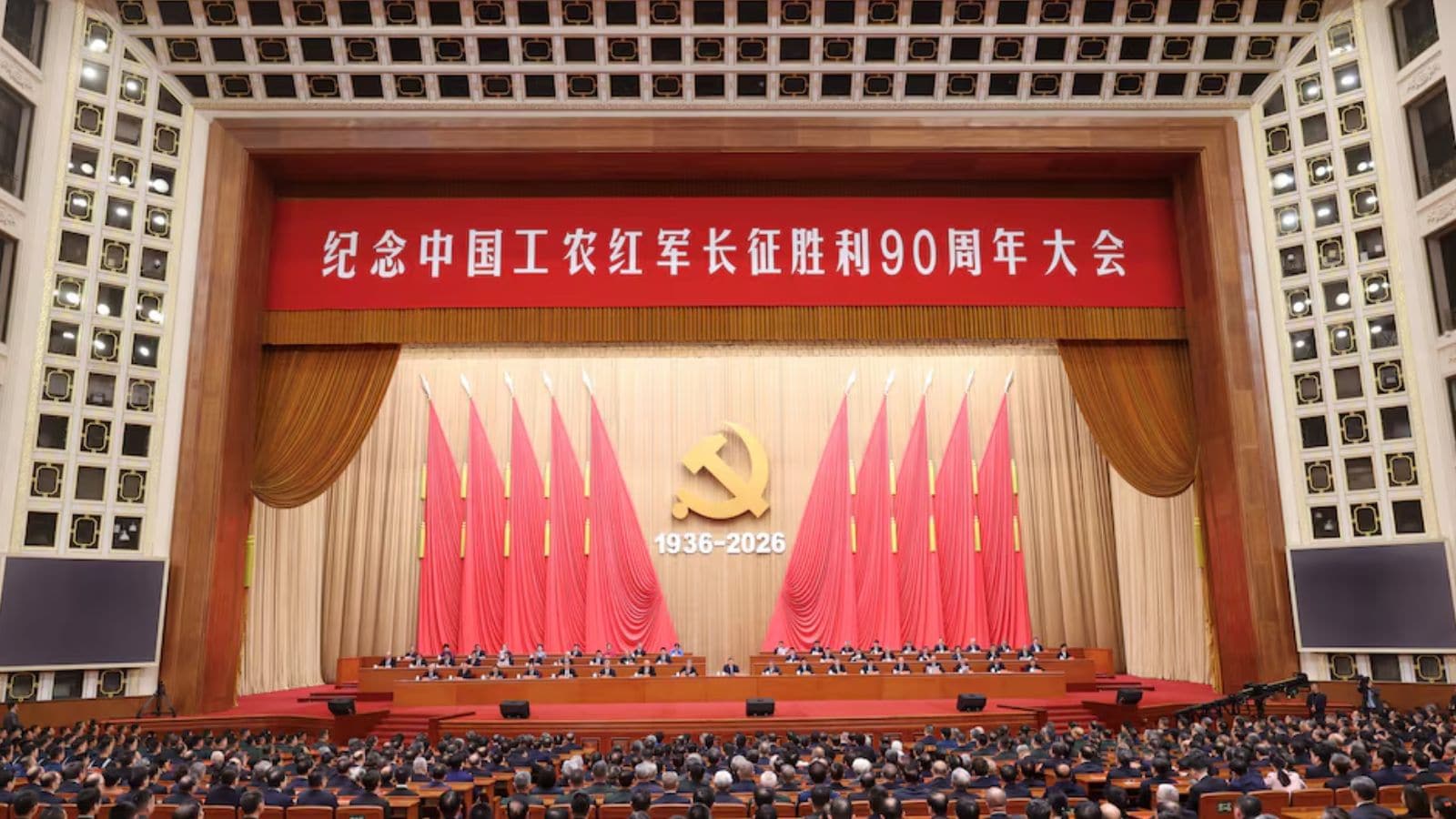
Every October, a secluded hotel in western Beijing locks its doors to the public. Swarms of security officers surround the perimeter, black sedans stream through the gates, and for four days, roughly 300 of China's most powerful political figures vanish from public view.
They're attending a plenum—the full assembly of the Chinese Communist Party’s Central Committee. For an alternative look, check out: this related article.
If you read state media coverage of these gatherings, you'll see glowing reports about ideological harmony, smooth unanimous votes, and grand statutory achievements. But if you think a plenum is just a ceremonial rubber-stamp session, you're missing the actual mechanics of Chinese power.
Understanding how these October sessions function isn't an academic exercise. It's the only way to decode where the world's second-largest economy is actually heading, who is losing power behind the scenes, and how top-level policy is locked in for years to come. Related analysis on this matter has been shared by Associated Press.
What a Plenum Actually Is
The word "plenum" simply means a full session of an assembly. In the context of Chinese politics, it refers to the formal meeting of the Party’s Central Committee—a body currently made up of around 200 full members and roughly 170 alternate members.
These individuals aren't low-level bureaucrats. They are provincial governors, military generals, heads of state-owned enterprises, top ministers, and regional party bosses.
The Party holds a major National Congress once every five years. That's where the overarching leadership is revealed. But between those historic five-year marks, the Central Committee meets in a series of seven plenums to govern the country in stages.
Each plenum in the five-year cycle has a specific, hardcoded purpose:
- First Plenum: Takes place immediately after the National Congress to formally elect the General Secretary, the Politburo, and the Standing Committee.
- Second Plenum: Focuses on government personnel and institutional restructuring before state positions are formalized at the National People's Congress.
- Third Plenum: Traditionally dedicated to sweeping economic shifts and long-term financial reform.
- Fourth Plenum: Concentrates on state governance, rule of law, or long-range economic planning like Five-Year Plan frameworks.
- Fifth Plenum: Typically held in late October of the fourth year to review long-term economic drafts or tackle internal party discipline and governance ahead of the next Congress.
- Sixth Plenum: Focuses heavily on Party ideology, historical resolutions, and internal political discipline.
- Seventh Plenum: Acts as the final cleanup meeting directly before the next five-year National Congress opens.
When news outlets report on an October plenum—such as the recent Fifth Plenary Session of the 20th Central Committee held from October 26 to 29—they're watching the central machinery of the state make decisions that ripple through global supply chains, military commands, and domestic markets.
The Four Days Behind Blacked-Out Windows
Most people assume the real debate happens on the floor of the main auditorium. That's a mistake.
By the time Central Committee members arrive at Beijing's Jingxi Hotel for the four-day event, the broad strokes of the main policy documents have already been drafted by working groups over the preceding months. What actually occurs inside those four days is a mix of high-stakes political signaling, small-group debate, and elite alignment.
1. The Opening Keynote and Report
The session begins with the General Secretary delivering a comprehensive work report on behalf of the Politburo. This speech sets the absolute tone. It lays out what the leadership considers its biggest successes since the last session and signals the precise political line every delegate must adopt.
2. Small-Group Deliberations
The delegates split up into smaller regional and departmental discussion groups. Here, provincial leaders and sector chiefs review the draft "Decision" or "Recommendations." While attendees don't openly reject top directives, these group sessions are where officials voice operational realities, push for specific regional resources, or align their departmental targets with the core line.
3. Cleaning House
Plenums are the official venue for formalizing discipline cases. If high-ranking officials or military figures were investigated or detained for corruption or political disloyalty earlier in the year, the Central Committee uses the plenum to formally endorse their expulsion. Alternate members are then officially promoted to full members to fill the empty seats.
4. The Final Vote and Communique
On the afternoon of the fourth day, delegates assemble to vote. Unanimous or near-unanimous approval is expected. Hours after the meeting adjourns, state media releases the Plenum Communique—a tightly written document of several thousand words that foreign diplomats, investors, and political analysts spend weeks parsing line by line.
Why Personnel Changes Matter More Than The Slogans
It's easy to tune out when reading official Chinese political prose. Terms like "new quality productive forces," "dual circulation," and "full and rigorous Party self-governance" sound abstract. But in a centralized political system, policy is personnel.
The real action at any plenum is watching who shows up, who gets promoted, and who vanishes.
For example, when a plenum communique records a lower-than-expected attendance rate—such as when only 82% of full members are present—it immediately signals ongoing internal purges or sweeps across key institutions like the People's Liberation Army. When senior military chiefs or provincial party secretaries are stripped of their committee status during an October session, it clears the board for new loyalists ahead of the upcoming Party Congress.
If you only read the headlines about long-term goals, you miss the power shifts happening in real time. A plenum isn't just about passing documents; it's about securing political control and signaling who is trusted to execute the leader's vision.
How to Read a Plenum Communique Like an Expert
When the official communique lands at the end of the four-day session, don't read it like a standard news article. You have to read it like an insider looking for structural shifts.
Here is the exact framework analysts use to parse the text:
- Check the Word Order: The sequence of priorities matters. If "national security" is listed ahead of "economic growth," expect tighter regulatory controls and state intervention over market expansion.
- Look for New Phrasing: When a brand-new term appears in a communique, it indicates a newly sanctioned policy direction that lower-level bureaucrats are now mandated to fund and execute.
- Note What Got Left Out: If a key policy stance from previous years suddenly disappears from the text, it often signals that the leadership is quietly abandoning an unsuccessful initiative without making a formal admission of failure.
- Count the Names: Pay close attention to the exact list of personnel actions at the very end of the document. That's where you find out who made the cut and who was quietly pushed out.
Track the official documents released by the Ministry of Foreign Affairs of the People's Republic of China or analysis from research institutions like the Brookings Institution to cross-reference translation nuances against historical trends.
Instead of waiting for general media summaries, grab the raw communique text, search for your specific industry terms—whether tech, energy, or military readiness—and compare their prominence to the previous year's text. That's how you get actionable signal out of political noise.


