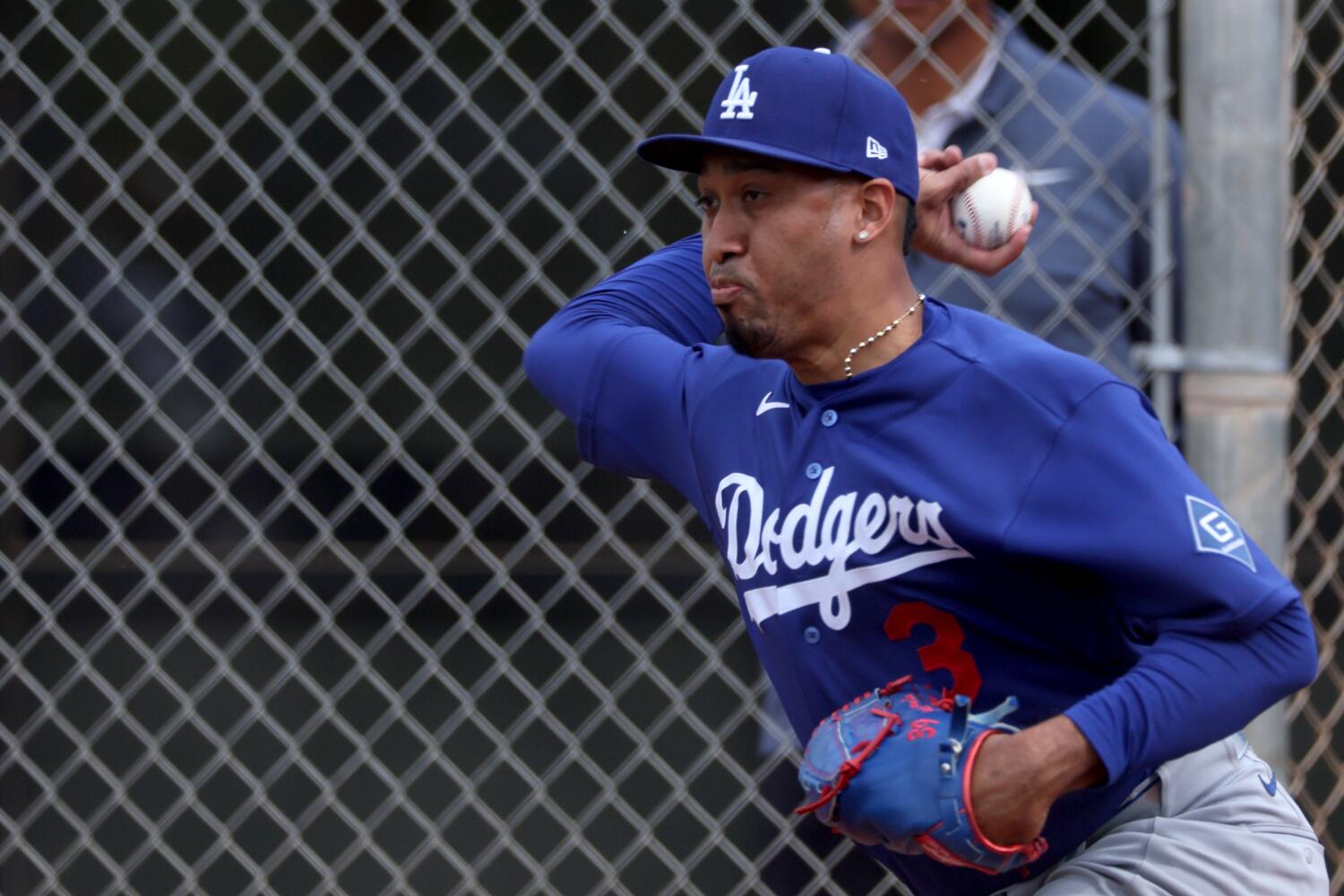
The modern baseball "closer" is a vanity project. It is a vestigial organ of a 1980s strategy that should have died with the mullet. Yet, here we are, watching the Los Angeles Dodgers—a front office supposedly run by Ivy League math wizards—fall into the most expensive trap in professional sports. By crowning Edwin Díaz the "unquestionable" closer, they haven't solved their bullpen problem; they’ve intentionally handcuffed their most expensive asset to the least important inning.
If you believe the ninth inning is the "clutch" moment because the lights get brighter and the music gets louder, you’ve been sold a narrative by television producers, not a winning strategy by data scientists. The game is won or lost in the "High-Leverage Pivot," not the ceremonial cleanup.
The Ninth Inning Fallacy
The "save" is a garbage stat. It rewards a pitcher for finishing a game regardless of the actual difficulty. Entering a game in the ninth with a three-run lead and the bottom of the order due up is a low-stress internship. Entering a game in the seventh with two runners on, one out, and Shohei Ohtani (if he were on the other side) at the plate is a cardiac event.
By designating Edwin Díaz as the closer, the Dodgers are announcing to the league that they will save their best arm for the end of the game, regardless of whether the game has already been decided by then. We have seen this movie before. I have watched managers sit on their elite relievers while the game evaporated in the seventh and eighth innings because "it wasn't their time yet."
Leverage is a mathematical reality, not a feeling.
$$LI = \frac{\Delta WE}{\text{Average } \Delta WE}$$
The Leverage Index ($LI$) tells us exactly when a pitcher's impact is maximized. If the $LI$ is $3.5$ in the seventh inning, and you’re holding Díaz for a $1.0$ $LI$ situation in the ninth, you are mathematically wasting his arm. You are essentially using a Ferrari to pick up groceries while your house is on fire three blocks away.
The Diaz Trap: Velocity is Not a Strategy
Edwin Díaz is a phenom. His four-seam fastball and "swords" slider are elite. But the Dodgers didn't just buy a pitcher; they bought a rigid role. The moment you name a closer, you create a hierarchy that prioritizes ego over efficiency.
The rest of the bullpen—the Evan Phillips and Brusdar Graterols of the world—now have to "shape up" around a fixed point. This is backwards. A bullpen should be a fluid, reactionary unit. The best managers treat their relief corps like a Swiss Army knife. Instead, the Dodgers are treating it like a set of stairs. You have to climb 7, then 8, then 9.
The "Lazy Consensus" suggests this provides stability. It doesn't. It provides predictability. Opposing managers know exactly who they are facing and when. If I’m an opposing skipper, I can burn my pinch-hitters early to create the mismatch that wins the game in the eighth, knowing the "Godzilla" of the bullpen is trapped in the dugout waiting for a ninth inning that may never come.
The Fireman vs. The Closer
We need to return to the "Fireman" era, but with 2026 data. In the 1970s, Goose Gossage didn't wait for the ninth. He entered when the fire was hottest.
- The Closer: Comes in with nobody on base, a lead, and three outs to go.
- The Fireman: Comes in with the bases loaded in a one-run game in the sixth.
Who is more valuable? The industry says the former because they get the "Save" on their Baseball-Reference page. The reality says the latter.
The Dodgers are paying for the Save. It’s a marketing expense, not a baseball one. They want the "Trumpets." They want the stadium to shake. They want the brand of a "lockdown closer." But championships aren't won by brands; they are won by Win Probability Added ($WPA$).
Stop Asking "Who Is The Closer?"
The media is obsessed with this question. "Who gets the ninth?" It’s the wrong question. The right question is: "Who is our most adaptable weapon?"
If the Dodgers were actually the innovators they claim to be, they would refuse to name a closer. They would deploy Díaz in the sixth if the heart of the order was up and the game was on the line. They won't do it. Why? Because players want the stats that get them paid, and agents want the "Closer" title to leverage in arbitration.
It is a systemic failure of the sport where the most efficient use of a player is discouraged by the financial structure of the league. I have seen teams lose playoff series because they were "saving" their closer for a lead they never got. It is the ultimate "sunk cost" fallacy. You’ve spent $100 million on a guy you refuse to use when you actually need him because the scoreboard doesn't say "9" yet.
The Hidden Cost of Bullpen Hierarchy
When you define roles this strictly, you mentally fragile-ize the rest of the staff.
- The "Seventh Inning Guy" starts to believe he isn't good enough for the eighth.
- The "Setup Man" feels like a failure if he gives up a run, because he’s "supposed" to bridge the gap.
- The "Middle Reliever" becomes a discarded tool used only when the game is a blowout.
This hierarchy creates a "not my job" culture. In a truly elite bullpen, every man is a closer. You pitch until the leverage drops or the batter is out.
The Dodgers have enough talent to overcome this tactical stupidity during the regular season. They will win 100 games because their roster is a cheat code. But in October, when every pitch is a high-leverage event, the "Edwin Díaz is the Closer" mandate will be the anchor that drags them down.
Imagine a Game 7. The bases are loaded in the sixth. The heart of the order is up. Your season is hanging by a thread. If Edwin Díaz is sitting in the bullpen with a jacket on because "it's too early," the Dodgers deserve to lose.
The Brutal Truth of Relief Volatility
Relievers are the most volatile assets in sports. One year they are untouchable; the next, they are throwing batting practice. By tethering their identity to one man in one specific inning, the Dodgers are doubling down on a high-risk, low-reward psychological profile.
They should be looking at the Tampa Bay Rays model—not because they are cheap, but because they are right. The Rays don't have a "closer." They have a stable of arms that they deploy like chess pieces based on launch angle, spin rate, and platoon splits.
The Dodgers have the money to buy the best chess pieces in the world, but they’ve decided to play checkers instead. They’ve bought the most expensive Queen on the board and decided she can only move one square at a time, and only after the 25th move of the game.
It is a waste of talent. It is a waste of money. And it is a fundamental misunderstanding of how modern baseball is won.
Get rid of the closer. Use the fireman. Burn the trumpets.