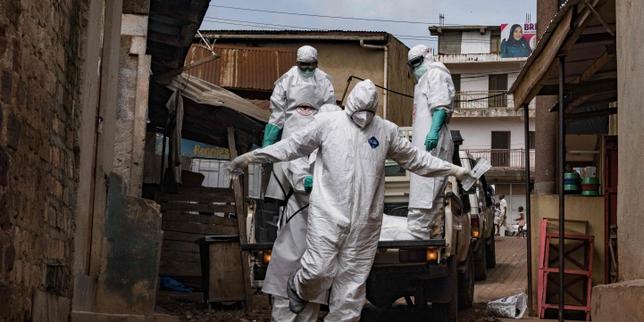
The traditional response to a viral outbreak is predictable. A country reports cases, panic ensues, and neighboring states immediately slam their borders shut. The recent headlines regarding Uganda halting movement across its border with the Democratic Republic of Congo follow this exact, exhausted script. Bureaucrats love border closures because they offer the illusion of absolute control. They look decisive on television.
They are also biologically and economically illiterate.
Locking down an artificial geographic line does not stop a filovirus. Instead, it drives the threat underground, blinds public health networks, and starves the local economies needed to fund an actual medical response. Decades of epidemiological data prove that containment through isolation is a myth. If we want to stop Ebola, we have to keep the borders open.
The Mirage of Total Containment
The core flaw in the border-closure strategy is the assumption that geographic boundaries are solid walls. The frontier between Uganda and the DRC spans hundreds of miles of dense, porous terrain. It is crossed daily by traders, family members, and migrant workers using unofficial pathways.
When official checkpoints close, these travelers do not stay home. They bypass the legal crossings.
By forcing people into the shadows, governments eliminate the only viable tool they have: surveillance. At an open checkpoint, health officials can take temperatures, log travel histories, distribute educational materials, and isolate symptomatic individuals. When you close that checkpoint, you do not stop the movement of people; you merely stop your ability to see them.
I have watched public health agencies waste millions of dollars deploying military personnel to guard dirt tracks, only for infected individuals to slip through the brush a mile down the road. The virus moves anyway, but now it moves without a paper trail.
The Fatal Economics of Isolation
A health crisis cannot be divorced from economic reality. The communities along the DRC-Uganda border rely heavily on cross-border trade for survival. When borders close, supply chains collapse instantly. Markets empty, food prices spike, and poverty deepens.
This is not just an economic tragedy; it is a public health disaster.
Malnourished, economically desperate populations are significantly more vulnerable to disease. Furthermore, a collapsed local economy means less revenue for local clinics, fewer resources for clean water, and decreased trust in the state. When the government cuts off a community's livelihood in the name of safety, the population stops cooperating with health authorities. They hide their sick. They bury their dead in secret. They view health workers not as saviors, but as economic executioners.
The World Health Organization (WHO) has repeatedly advised against international travel and trade restrictions during outbreaks. The reason is pragmatic: the economic damage of a lockdown kills more predictably than the virus itself.
Dismantling the Panic Premise
The general public frequently asks: "Shouldn't we stop all travel from outbreak zones to be safe?"
The premise of the question is deeply flawed. It assumes that an outbreak is a localized fire that can be smothered under a blanket. In reality, Ebola management relies on active community engagement, rapid deployment of mobile laboratories, and the ring vaccination of contacts.
The introduction of the Ervebo vaccine transformed Ebola management from a desperate quarantine effort into a targeted clinical intervention. We have the tools to track and neutralize the virus in real time. Resorting to medieval quarantine tactics acknowledges a failure to utilize modern medical infrastructure.
Let's look at the downsides of keeping a border open during a crisis. Yes, it requires continuous funding. Yes, it demands rigorous, around-the-clock staffing of health screening stations. It subjects border guards to increased risk, requiring strict adherence to personal protective equipment protocols. It is difficult, exhausting work that offers no easy political victories. But it keeps the data flowing.
A Blueprint for Real Biosecurity
True biosecurity demands a complete rejection of isolationist policies. Instead of building walls, resources must be diverted toward infrastructure that manages flow.
- Establish Managed Corridors: Keep major transit routes open but heavily heavily fortified with rapid-diagnostic testing sites.
- Incentivize Compliance: Provide free health checks, clean water, and basic medical care at checkpoints so travelers actively choose legal routes over illegal paths.
- Fund Cross-Border Data Sharing: Disease vectors do not respect sovereignty. Health data must move between nations as fluidly as the people do.
Stop trying to lock down the map. Start managing the movement. Turn checkpoints into diagnostic hubs, treat the border communities as allies rather than threats, and accept that isolation is a dead strategy.


