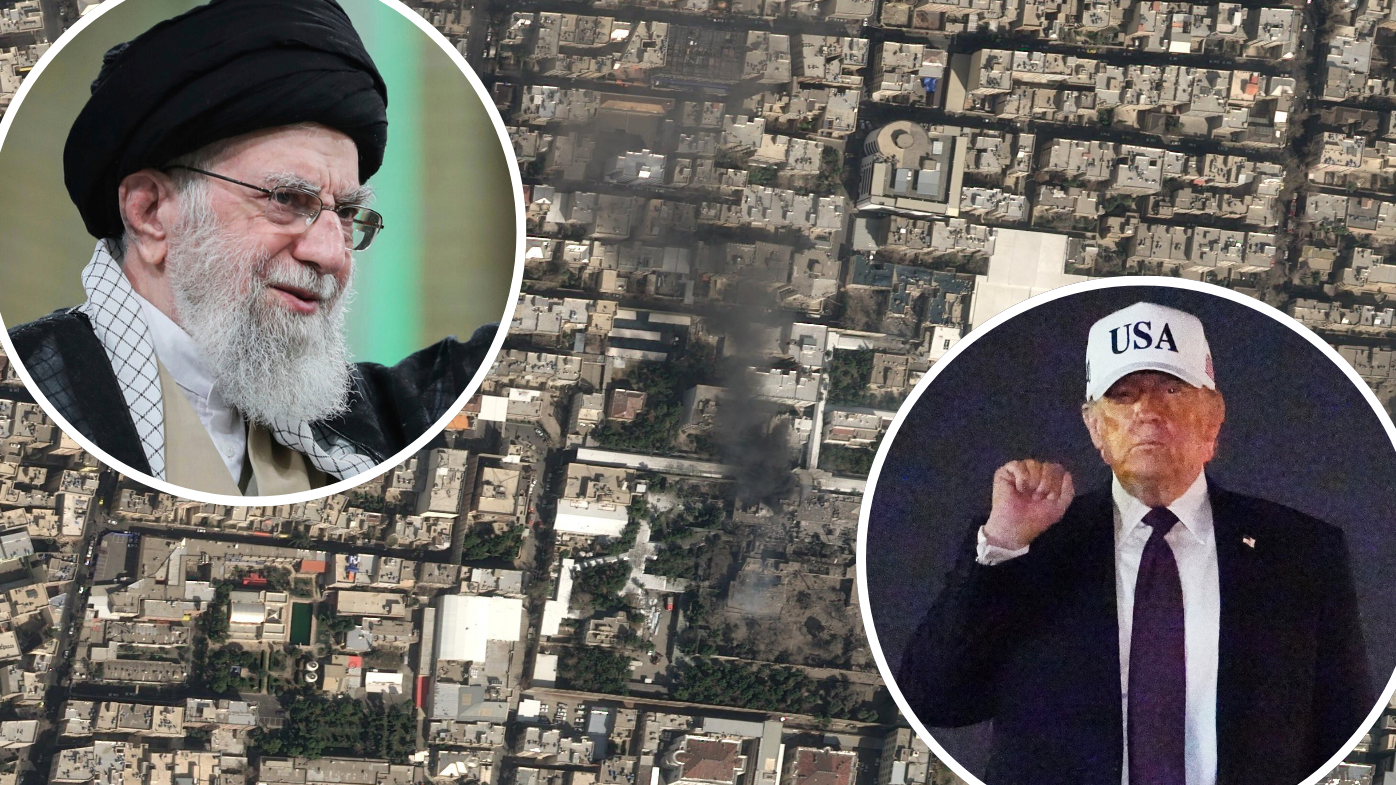
The United Nations Security Council has transformed into a theatre of the absurd where the script is written in blood and the actors are locked in a cycle of performative outrage. When UN Secretary-General António Guterres stood before the emergency session to condemn the latest escalation between Israel, the United States, and Iran, he wasn't just addressing a military strike. He was presiding over the funeral of international deterrence. The recent wave of targeted strikes against Iranian military infrastructure, backed by American logistical and intelligence support, represents a terminal break in the diplomatic containment strategy that has defined Middle Eastern policy for a decade.
The strikes were not a sudden whim. They were the calculated result of a multi-year erosion of the "gray zone" tactics Iran has used to project power through regional proxies. For years, the West accepted a degree of shadow warfare, but the calculus changed when the technical threshold of Iran’s nuclear and missile programs crossed a point of no return. Washington and Jerusalem have effectively decided that the risk of a regional conflagration is now lower than the risk of continued Iranian expansion. This is a cold, hard pivot from management to active degradation.
The Strategic Failure of Diplomatic De-escalation
For the better part of three years, the prevailing wisdom in Brussels and Washington was that Iran could be coaxed into a "longer and stronger" nuclear agreement through a mix of sanctions relief and back-channel threats. That theory is dead. The emergency Security Council meeting served as the public autopsy. While Guterres warned of a "widening abyss," the reality on the ground shows that the abyss is already here.
The US-Israeli coordination during these strikes indicates a level of tactical integration that bypasses standard diplomatic protocols. We are seeing a shift where the United States no longer acts as a restraining influence on Israeli defense policy but rather as an industrial-scale enabler. This isn't just about shared intelligence. It is about a shared realization that the United Nations lacks the mechanisms to enforce its own resolutions regarding non-state actors and regional proliferation.
Iran’s strategy of "strategic patience" has been met with a doctrine of "surgical persistence." By targeting the manufacturing hubs of the IRGC rather than just their deployments in Lebanon or Syria, the US and Israel are hitting the supply line itself. This forces Tehran into a corner: either escalate and risk the total destruction of its energy sector or absorb the losses and look weak to its internal and external supporters.
The Myth of Neutral Mediation
The Secretary-General’s condemnation reflects the growing irrelevance of the UN in modern kinetic conflicts. Guterres is technically correct that these strikes violate sovereign airspace and international law as written. But international law is only as strong as the consensus behind it. When the permanent members of the Security Council are the very ones funding, arming, or conducting the strikes, the "neutral" stance of the UN becomes a hollow exercise in semantics.
China and Russia’s predictably fierce defense of Iranian sovereignty during the meeting wasn't about upholding the UN Charter. It was about protecting a crucial node in the anti-Western bloc. For Moscow, Iran is a vital supplier of drone technology and a partner in bypassing sanctions. For Beijing, Iran is a source of cheap energy and a strategic anchor in the Persian Gulf. The Security Council has become a mirror of the new Cold War, where every vote is a proxy for larger geopolitical ambitions.
Intelligence Warfare and the End of Secrecy
The most striking aspect of the recent strikes isn't the hardware used, but the intelligence failures they expose within Tehran. These operations weren't just about dropping bombs; they were about demonstrating that Iranian air defense systems—many of them Russian-made—are fundamentally porous.
The US and Israel have moved beyond electronic warfare into a phase of deep-entry sabotage. We are seeing a pattern where kinetic strikes are preceded by cyber-attacks that blind command and control centers minutes before impact. This "hand-in-glove" warfare makes traditional condemnation look archaic. While diplomats argue over the legality of the strikes, the technical reality is that the battlefield has evolved into a space where laws of physics and code matter more than laws of nations.
The Proxy Paradox
The emergency meeting focused heavily on the risk of a "wider regional war." This phrase is a staple of diplomatic rhetoric, but it ignores the fact that a regional war has been ongoing for years. It just hasn't been a conventional one. The "Proxy Paradox" is that the more the UN tries to limit state-on-state violence, the more it incentivizes the use of non-state actors like Hezbollah, the Houthis, and the various militias in Iraq and Syria.
By targeting the source of these proxies, the US and Israel are trying to break the cycle of plausible deniability. The message is clear: if you fund the proxy, you own the consequences. This is a brutal shift in the rules of engagement. It removes the safety net that allowed Tehran to operate with relative impunity for decades.
Economic Fallout and the Global Energy Chokepoint
While the political discourse centers on human rights and sovereignty, the undercurrent is always oil and trade. The Strait of Hormuz remains the world's most sensitive economic artery. Any escalation that leads to a disruption there would send global markets into a tailspin, a reality that the Security Council members are acutely aware of even as they posture.
Iran has long used the threat of closing the Strait as its ultimate trump card. However, that card is losing its luster. The global shift toward diversified energy sources and the increased domestic production in the Americas have slightly blunted the impact of Persian Gulf volatility. Tehran knows this. If they overplay their hand and shut down the Strait, they risk alienating their only remaining major customers, namely China.
The Humanitarian Cost of Diplomatic Gridlock
The irony of the UN’s condemnation is that its inability to enforce peace is what creates the humanitarian crises it later tries to manage. The residents of Tehran, Isfahan, and Tabriz now live under the constant shadow of potential strikes, while the population in northern Israel and southern Lebanon remains displaced by constant rocket fire.
The Security Council’s failure to address the root causes—the ideological drive for regional hegemony and the proliferation of advanced weaponry—means that its "emergency meetings" are nothing more than triage for a patient that is bleeding out. Guterres’ words may ring true to those who value the ideals of the 1945 charter, but they are whispers in a hurricane of modern realpolitik.
The Hard Truth of Deterrence
Deterrence is not a static state; it is a psychological game played with kinetic stakes. When the US and Israel strike Iranian soil, they are betting that the threat of a full-scale war is enough to keep Tehran’s response within "manageable" limits. This is an incredibly dangerous gamble. History is littered with "limited actions" that spiraled into generational conflicts.
The real failure of the international community hasn't been the lack of condemnation, but the lack of a credible alternative to violence. Sanctions have been bypassed. Treaties have been shredded. Diplomacy has been used as a stall tactic. In this vacuum, the only language left is force.
Iran’s internal stability is another wildcard. The regime faces significant domestic pressure from a population that is increasingly weary of economic isolation and social repression. A foreign attack can sometimes act as a unifying force, but it can also expose the regime’s inability to protect its own people. If the IRGC cannot stop Israeli jets from flying over its most sensitive sites, its grip on domestic power begins to slip.
The New Architecture of Power
We are witnessing the birth of a new regional architecture that excludes the traditional mediators. The Abraham Accords were the first brick in this wall, and the current military cooperation is the mortar. The UN is being bypassed because it is too slow, too divided, and too focused on a world that no longer exists.
The era of "managed conflict" is over. We have entered a period of high-stakes confrontation where the goal is no longer to return to the status quo, but to build a new one through sheer force of will. The emergency session at the UN wasn't a turning point; it was a white flag. It was a formal admission that the world’s highest diplomatic body has no control over the march toward a decisive conclusion in the Middle East.
The Logistics of Escallation
Military analysts note that the scale of the recent munitions used suggests a stockpiling effort that began years ago. These aren't just surplus bombs. They are specific bunker-busting and stealth-enabling technologies designed for this exact geography. The US and Israel didn't just decide to do this yesterday; they spent years building the specific tools required to dismantle a highly integrated defense network.
This level of preparation makes the UN’s calls for "restraint" seem almost quaint. You don't build a specialized hammer and then decide not to use it when the nail is right in front of you. The strategic momentum has shifted. The deterrent value of the UN Charter has been replaced by the deterrent value of a precision-guided missile.
The global community needs to wake up to the fact that the post-WWII security framework has collapsed. There is no "going back" to a time when a Security Council resolution could stop a tank or a drone. Power is being redefined by those willing to use it, and right now, the US and Israel are demonstrating that the cost of challenging them is higher than the Iranian regime can afford to pay without risking its own existence.
The coming months will not be defined by the resolutions passed in New York, but by the flight paths of stealth fighters and the silence of disabled radar arrays. The theater of diplomacy has finished its run, and the real-world consequences are only just beginning to unfold.
Track the movement of carrier strike groups in the Mediterranean. Watch the internal messaging from the IRGC. Monitor the energy markets for signs of a preemptive spike. These are the real indicators of where we are headed. The UN can continue to hold its meetings, but the decisions that matter are being made in bunkers and situation rooms far removed from the halls of the General Assembly.
The real reason the UN is failing is simple. It is trying to use 20th-century bureaucracy to solve 21st-century warfare. Until that gap is closed, the only thing the Security Council will be able to do is provide a transcript of the world's descent into chaos. The red lines are gone. The grey zone is black and white. The next move won't be a speech; it will be an impact.
Ask yourself if a world without a functional UN is a world where you feel more secure, or if the current display of unilateral power is the only thing standing between us and a far worse global conflict. The answer depends entirely on which side of the missile defense system you are standing on.