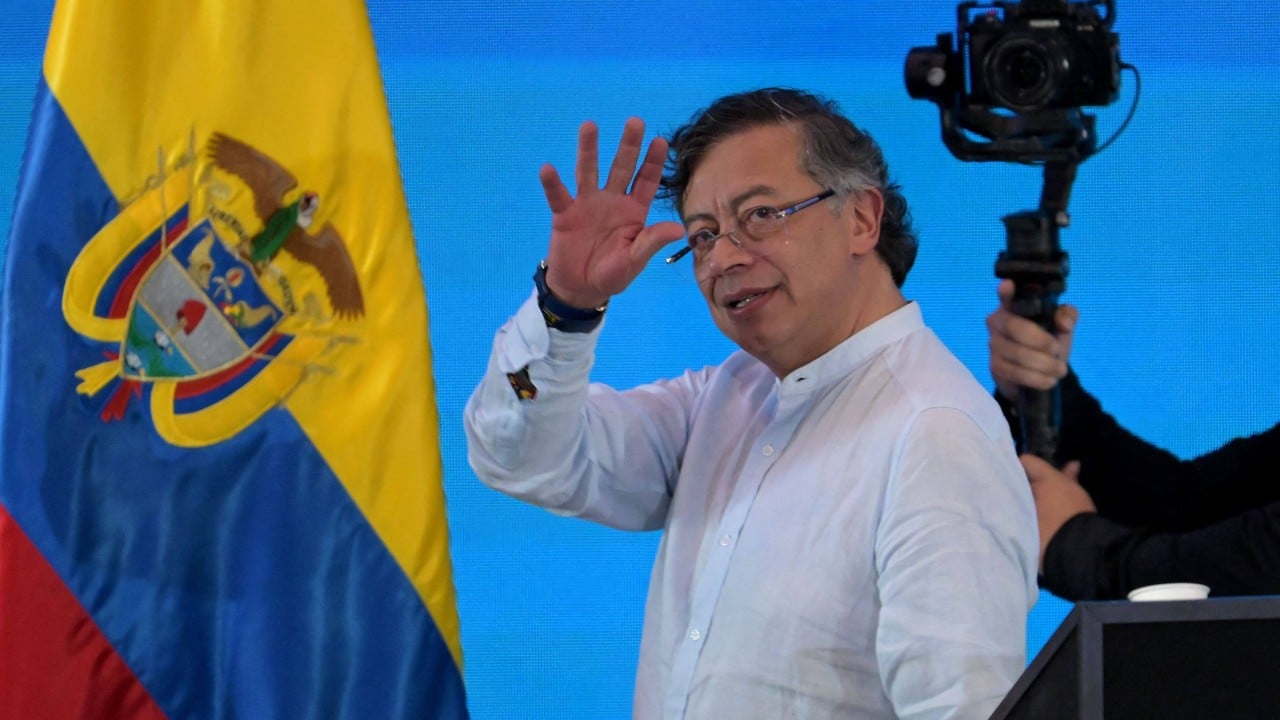
Colombia just entered uncharted political territory. In a dramatic move that has shocked the region, Colombia's president-elect suspends transition talks with the outgoing government, sparking fears of a full-blown constitutional breakdown. Abelardo de la Espriella, the hard-line conservative millionaire who narrowly won the June presidential runoff, froze all joint handover sessions just weeks before his scheduled August 7 inauguration. He openly accused outgoing leftist President Gustavo Petro of attempting an institutional coup.
The decision turned a bureaucratic formality into an ideological warzone. The process known locally as the empalme is supposed to be a smooth transfer of data, keys, and institutional knowledge. Instead, it's completely dead in the water.
This isn't just a political spat. It's a fundamental breakdown of democratic norms in one of Washington’s oldest allies in South America. The crisis escalated rapidly after Petro refused to recognize the narrow election results, claiming without evidence that a massive digital fraud scheme stole the election from his preferred successor, Senator Iván Cepeda. De la Espriella didn't hesitate to pull the plug, instructing his incoming vice president, José Manuel Restrepo, to halt all communications with current ministries.
Petro's Fraud Claims Trigger the Break
The tension started building immediately after the June 21 runoff. The final vote count showed De la Espriella leading with 49.66% against Cepeda’s 48.70%. The margin was razor-thin. Just about 250,000 votes separated the two men out of more than 25 million cast.
Petro didn't take the loss lightly. He took to social media to blast Form E-14, the official handwritten and digital tally sheets filled out by everyday poll workers. The president alleged that the country's voting logistics firm deliberately altered these forms to systematically siphon votes away from Cepeda. Petro asserted that the narrow gap wasn't an accident but a premeditated digital manipulation.
While Cepeda actually conceded the election for the sake of national stability, Petro doubled down. He published lengthy statements online comparing the transfer of power to handing over Simón Bolívar’s historic sword to a foreign puppet. He explicitly questioned the legitimacy of the entire system.
De la Espriella took that as a declaration of war. He called Petro a tyrant in the making. He argued that sitting at a table with an administration that refuses to accept the popular vote would simply legitimize a coup. He took things a step further by publicly calling on Colombia’s armed forces to ignore any unconstitutional orders coming from Petro during his final weeks in office. That's a highly dangerous gamble in a country with a long history of internal conflict.
A Toxic Handover Committee
The transition was already toxic before it officially died. Petro's administration didn't just passively accept De la Espriella's exit from the talks. Finance Minister Germán Ávila, who served as Petro's transition coordinator, had already threatened to stop cooperating because of the personnel De la Espriella brought to the table.
The incoming president appointed controversial figures like Carlos Alonso Lucio to his transition team. Lucio is a former guerrilla turned right-wing strategist who was previously convicted of fraud. For the Petro administration, having a convicted fraudster audit their books while calling them criminals was a bridge too far.
Ávila stated that the transition process isn't a criminal investigation or a trial. He argued that his team faced constant insults, slander, and threats from the incoming committee. The current government claims they have nothing to hide, but they refused to sit across from people who treated them like a cartel rather than a departing administration.
The mutual distrust runs deep. De la Espriella's team believes Petro’s ministers are actively destroying documents or hiding fiscal mismanagement. On the flip side, Petro’s allies think the incoming administration is trying to manufacture a crisis to justify radical right-wing policies the moment they take office.
What the International Observers Actually Saw
The biggest hole in Petro’s argument is that nobody else saw the fraud. Independent international missions monitored the entire election process closely. Their conclusions completely contradict the president’s narrative.
The European Union observer mission praised the transparency and efficiency of the Colombian vote-counting process. They noted that the rapid tally matched the final physical records with incredible accuracy. The Carter Center, a highly respected organization when it comes to checking global election integrity, explicitly backed the results management system. They declared it reliable, transparent, and fully traceable.
When the official count wrapped up with a 99.997% match to the preliminary numbers, even Cepeda realized he had no choice but to concede. He publicly stated that accepting the result was an act of democratic responsibility. Petro ignored his own candidate’s concession and chose to push the fraud narrative anyway.
This refusal to accept defeat fits a growing global pattern. We've seen it across the Americas over the last few years. Politicians who lose close elections blame the machines, the software, or a deep-state conspiracy rather than admitting their platform failed to secure a majority.
The Right-Wing Shift and the Trump Connection
To understand why this transition failed, you have to understand who Abelardo de la Espriella is. He isn't a traditional politician. He's a flamboyant, wealthy lawyer and businessman who built a personal brand around luxury clothing, wine, rum, and high-end restaurants. He ran as a political outsider under the Defenders of the Homeland alliance.
He also had the explicit endorsement of US President Donald Trump. De la Espriella represents a aggressive, populist right-wing wave that is sweeping back into power across Latin America. He campaigned on a hardline security platform, promising a brutal crackdown on cartel violence, urban crime, and left-wing dissident groups.
He plans to pull Colombia into the Shield of the Americas, a regional initiative backed by Trump that unites conservative governments against transnational crime and leftist regimes like Venezuela. He has openly mocked Petro's signature policy of Total Peace, which attempted to negotiate ceasefires with various armed groups. De la Espriella calls that policy a total surrender to criminals.
For Petro, handing over power to De la Espriella feels like the total destruction of his political legacy. Petro was Colombia’s first-ever left-wing president. His administration tried to rewrite the country's economic rules through major labor and healthcare reforms, land redistribution, and higher taxes on the wealthy. But his final years were plagued by stalling legislation, cabinet purges, and a major campaign finance scandal involving his own son. The election was a direct referendum on Petro’s performance, and the voters chose a complete u-turn.
Moving Toward August 7 Without a Plan
The clock is ticking. Colombia's president-elect suspends transition operations with exactly one month left until the inauguration. This creates an administrative nightmare.
The incoming government is supposed to take over a massive federal budget, manage ongoing military operations against active guerrilla groups, and run complex state ministries. Doing that blind, without a coordinated handover, is incredibly risky. Errors in the first few weeks of a new administration can destabilize the economy or cause security lapses that criminal organizations will immediately exploit.
Instead of working through the numbers, both sides are preparing for a street fight. De la Espriella has called on his supporters to resist and remain vigilant until he officially takes the oath of office. Petro keeps insisting he won't stay past his constitutional term ending August 7, but his rhetoric keeps fueling the fires of institutional illegitimacy.
If you want to know what happens next, watch the independent oversight bodies. Finance Minister Ávila has asked Inspector General Gregorio Eljach to step in and oversee the collection of state data so it can be legally archived, bypassing direct meetings with the hostile incoming team. This might be the only way to prevent a total government freeze.
The practical reality is clear. The formal, polite era of Colombian political transitions is over. De la Espriella is going to take power without a single meeting of cooperation from the outgoing administration. If you are tracking Colombian markets, security contracts, or regional foreign policy, expect immense volatility over the next thirty days. The political system is bending under the weight of this standoff, and it won't break until someone officially holds the bible on August 7.