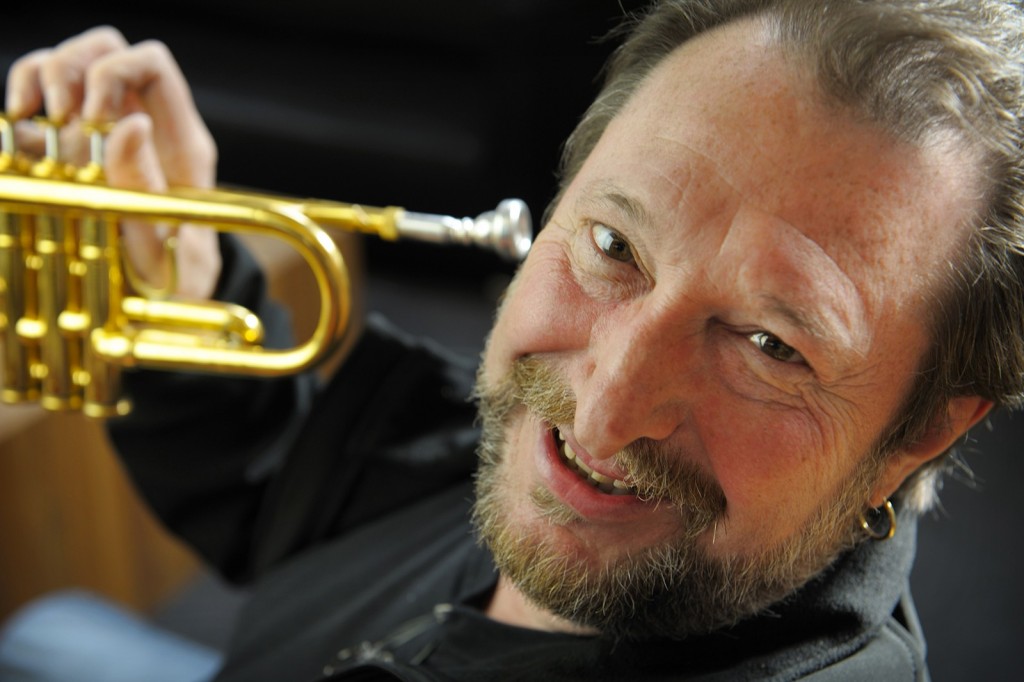
The passing of Tomi Reichental at age 90 has triggered the predictable flood of political platitudes, sanitised press releases, and solemn nods from institutional figures who excel at mourning history but fail miserably at reading it.
The media loves a neat narrative. The established script for an obituary of a Bergen-Belsen survivor goes like this: we celebrate their decades of silence, marvel at their later-life pivot to public speaking, praise their "unwavering belief in reconciliation," and pat ourselves on the back for listening to them. Politicians queue up to issue statements about a "lasting legacy of dignity" while presiding over the exact systems of public apathy and passive bystander culture that Reichental spent his final decades warning against.
This performative grief is worse than silence. It turns the raw, terrifying reality of a genocide survivor's testimony into a comfortable, historical monument—something to be admired safely from the distance of 2026, completely divorced from current societal rot.
The Fallacy of the Passive Memorial
Mainstream media framing isolates the Holocaust as a historical anomaly, an extreme explosion of evil confined tightly to the 1940s. By treating Reichental's life purely as a museum piece, institutions can praise his courage without ever having to interrogate their own modern failures.
We praise Reichental for telling school children that "the Holocaust didn’t start with cattle wagons, but with whispers, taunts, and abuse." Yet, the very same political class that issues these posthumous tributes routinely ignores or weaponises those exact whispers today when directed at modern displaced populations, minorities, and marginalized communities.
The lazy consensus asserts that by simply holding memorial services and funding educational documentaries, society has fulfilled its duty to "never forget." It hasn't. Remembering is passive; resisting the modern preconditions of dehumanisation is active. When tributes are paid by those who remain bystanders to contemporary hatred, those tributes are not acts of honor—they are acts of self-absolution.
Outgrowing the 60 Year Silence Narrative
Commentators love to romanticize the fact that Reichental did not speak about his experiences for nearly 60 years after arriving in Ireland in 1959. The public narrative treats this silence as a period of quiet, dignified healing that culminated in a triumphant speaking tour starting in 2004.
This is a fundamental misunderstanding of deep psychological trauma. I have spent years analyzing how societies process industrial-scale atrocities, and the reality is far uglier: that decades-long silence was forced by a world that simply did not want to hear it. Post-war Europe, including an insular mid-century Ireland, was a place of aggressive collective amnesia. Survivors stayed quiet because the social cost of speaking truth to an indifferent public was too high.
To frame those decades as a personal choice rather than a societal failure is historical revisionism. Reichental didn't break his silence because the world suddenly became a perfect repository for his grief; he broke it because he realized he was running out of time as one of the last living links to the twentieth century's greatest horror.
The Dangerous Luxury of Being a Bystander
The core tenet of Reichental’s lectures to over 100,000 students was a direct assault on the "bystander effect." He explicitly noted that during the rise of the Nazi regime, ordinary citizens watched, rationalized, and did nothing until it was too late.
Imagine a scenario where a modern community watches online vitriol escalate into physical blockades against asylum seekers or marginalized groups, while the average citizen tut-tuts from their living room, convinced that because they aren't actively participating, they bear no responsibility. That is the exact mechanism of escalation Reichental targeted.
The uncomfortable truth that no political figure will admit in a press release is that a vast majority of the population today would have been bystanders in 1944. We like to imagine we would have been the heroes hiding families in our attics, but modern behavior proves otherwise. The moment a society prioritizes personal comfort and bureaucratic stability over active intervention against bigotry, it validates the mechanics of the past.
True Legacy Demands Uncomfortable Action
If the public genuinely wants to honor a man who watched 35 members of his extended family vanish into mass graves, it requires abandoning the sanitised, safe version of his memory.
- Stop treating testimony as entertainment: Reichental’s documentaries and books were not meant to provide a cathartic cry for comfortable audiences. They were meant to provoke a profound sense of urgency.
- Enforce actual consequences for hate speech: A collective cultural apology after a public figure drops a bigoted dog whistle is meaningless. True vigilance means enforcing structural boundaries against the "whispers and taunts" before they scale into systemic abuse.
- Acknowledge our own hypocrisies: You cannot mourn a child of Bergen-Belsen while turning a blind eye to the modern dehumanisation of refugees fleeing modern conflicts.
The flood of tributes following Reichental's passing at 90 is a hollow exercise if it ends when the news cycle shifts. The ultimate metric of whether his legacy survives is not the number of honorary degrees or political statements left in his wake, but whether the people who heard him speak actually have the spine to stop being bystanders in their own lives.
Stop signing condolence books. Start confronting the whispers.