We love writing obituaries for things that aren't actually dead. For decades, the dominant narrative surrounding marine ecology has been one of absolute, irreversible destruction. You have seen the headlines. You have read the grim reports. Marine biologists in the mid-20th century looked at heavily degraded, overfished, or climate-stressed marine ecosystems and wrote them off forever. They logged their data, packed up their scuba gear, and declared entire underwater ecosystems completely extinct.
They were wrong.
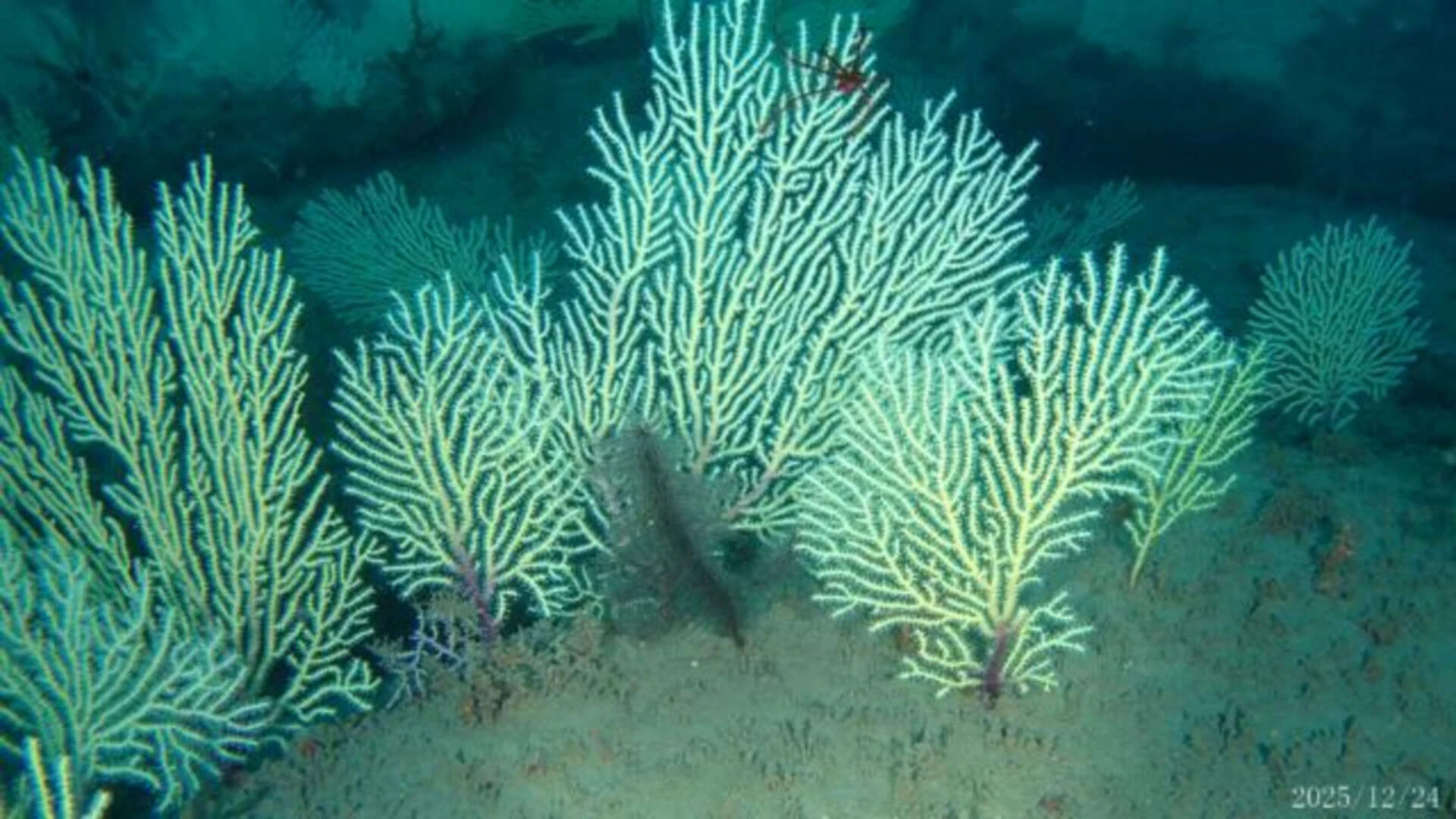
Recent expeditions using advanced autonomous underwater vehicles and deep-sea robotic explorers have turned up something shocking. Reefs that were officially written off in the 1960s are not just clinging to life. They are thriving. Deep beneath the surface, far beyond the reach of traditional human divers, these ecosystems have been quietly rebuilding themselves outside our view. This discovery shatters our understanding of marine resilience. It also exposes a massive flaw in how we have monitored our oceans for the last seventy years. We have been looking at the ocean through a keyhole, assuming the small sliver of destruction we could see represented the whole story.
The Flawed Science of the 1960s Marine Obituary
To understand how we missed an entire thriving ecosystem for over half a century, you have to look at the severe limitations of mid-century marine science. In the 1960s, marine observation relied almost entirely on two things. You had basic commercial sonar, and you had human divers wearing early scuba systems.
Human divers face hard physical limits. The safe recreational depth limit for a human diver is about 130 feet. Even highly trained commercial or scientific divers using specialized gas mixtures rarely push past 300 feet. The pressure becomes too intense. The risk of decompression sickness is too high. Time underwater at those depths is measured in minutes, not hours.
Because of these limits, early marine biologists made a massive logical leap. They assumed that if the shallow portions of a reef were destroyed by pollution, overfishing, or early warming events, the entire system was a goner. They lacked the tools to see what was happening just a few hundred feet deeper. If a reef system looked like a barren, bleached wasteland from a boat or a short dive, it was marked as dead in the official journals.
Early sonar was not much better. It could map the general topography of the seabed, but it could not differentiate between a pile of dead limestone rocks and a living, breathing deep-water coral colony. Scientists simply lacked the eyes to see the truth. They drew definitive lines on maps based on incomplete data. They created a static view of a dynamic world.
How Deep Water Drones Are Rewriting History
The sudden plot twist in this story comes down to robotics. Over the last few years, autonomous underwater vehicles and advanced remotely operated vehicles have completely altered our exploratory capabilities. These machines do not care about crushing pressure. They do not need to breathe oxygen. They do not get tired.
Modern underwater drones can descend thousands of feet into the pitch-black layers of the ocean. They stay down for days at a time. They are equipped with high-definition cameras, multi-beam sonar systems, and robotic arms that can carefully sample delicate biological specimens without destroying the surrounding habitat.
When researchers deployed these advanced drones over areas long written off as underwater deserts, the video feeds sent back to the surface blew minds. Instead of miles of gray, crumbling coral skeletons, the drones illuminated vibrant, multi-colored walls of living coral. They found massive schools of fish, unique crustacean species, and thriving deep-water organisms that had gone completely unnoticed for sixty years.
These drones do more than just record pretty video. They use advanced laser scanners to create millimeter-accurate three-dimensional models of the seafloor. This allows scientists to calculate the exact volume of living coral biomass from the comfort of a surface research vessel. The data collected by these machines proves that marine ecosystems possess a hidden capacity for survival that completely defies our traditional models.
The Reality of Deep Water Refugia
This rediscovery highlights a biological phenomenon known as deep-water refugia. When shallow-water coral reefs suffer from intense heatwaves, coastal runoff, or destructive fishing practices, the deeper segments of the same reef system are often insulated from the damage.
Deep water is naturally cooler. It is less affected by the immediate swings of atmospheric weather patterns. It sits well below the turbulent zone where coastal pollution and agricultural runoff cause the most harm. While the sun-drenched shallow corals bleach and die, their deeper counterparts stay protected by a massive buffer of cold ocean water.
These deep-water zones act as biological seed banks. They are natural sanctuaries. When conditions in the shallower zones eventually stabilize, the larvae from these deep-water survivors can drift upward via natural ocean currents. They can recolonize the damaged areas. This means that a reef we thought was completely wiped out can actually regenerate from the bottom up, using its own hidden, deep-water reserves.
This completely upends the conventional wisdom of marine conservation. We have spent decades treating shallow reefs as isolated, fragile structures. In reality, many of these systems are vertically integrated networks that extend deep into the twilight zone of the ocean. The survival of the deep network ensures the ultimate survival of the entire system.
The Failure of Performative Conservation
This technological revelation exposes a major problem with modern environmental funding. For years, ocean conservation has been heavily biased toward the visible. Money flows toward highly photogenic, shallow-water projects that make for great social media content.
We spend millions of dollars planting tiny coral fragments in shallow bays. We fund high-profile beach cleanups. We create marine protected areas that only cover the top fifty feet of water. Meanwhile, the vast, deep-water ecosystems that actually hold the key to long-term ocean survival are completely ignored because they are invisible to the naked eye.
This is performative conservation. It focuses on the symptoms we can easily see while ignoring the broader structural reality of the ocean. If we continue to direct all our resources toward saving a few highly visible shallow reefs while failing to map and protect the deep-water refugia below them, we are wasting our time.
The discovery of these forgotten reefs proves that the ocean does not necessarily need us to manually rebuild it piece by piece. It needs us to stop poisoning the water, stop overfishing the deep trawling grounds, and give these natural resilient systems the space and protection they need to heal themselves.
Shifting Focus From Shallow to Deep
Our current ocean preservation strategies are outdated. To fix this, marine conservation groups, research institutions, and governments must immediately reallocate their resources. We need to stop assuming we know where the boundaries of marine life lie.
First, we must commit to an aggressive, global mapping campaign using autonomous underwater drone fleets. We cannot protect what we do not know exists. Huge portions of the global ocean floor remain completely unmapped at high resolutions. We are making massive policy decisions based on guesswork and outdated mid-century data. That has to stop.
Second, marine protected areas must be expanded vertically, not just horizontally. It is not enough to draw a line on a flat map and declare a section of the ocean protected. Those protections must explicitly extend down to the deepest trenches of the seabed. Bottom trawling, deep-sea mining, and commercial exploration must be entirely banned in areas where deep-water refugia are suspected to exist.
Finally, we need to change how we measure ecological health. A bleached shallow reef is a tragedy, but it is not a definitive end. We must look at the entire vertical column of an ecosystem before we write its obituary. The data is out there. The technology exists. We just need to stop looking at the ocean surface and start paying attention to what the drones are showing us underneath.
Invest in deep-sea robotic exploration. Push for vertical marine protected areas. Demand that conservation funding go toward high-tech data collection rather than superficial public relations campaigns. The ocean is proving to be far tougher than we gave it credit for, but it only works if we protect the hidden strongholds keeping it alive.