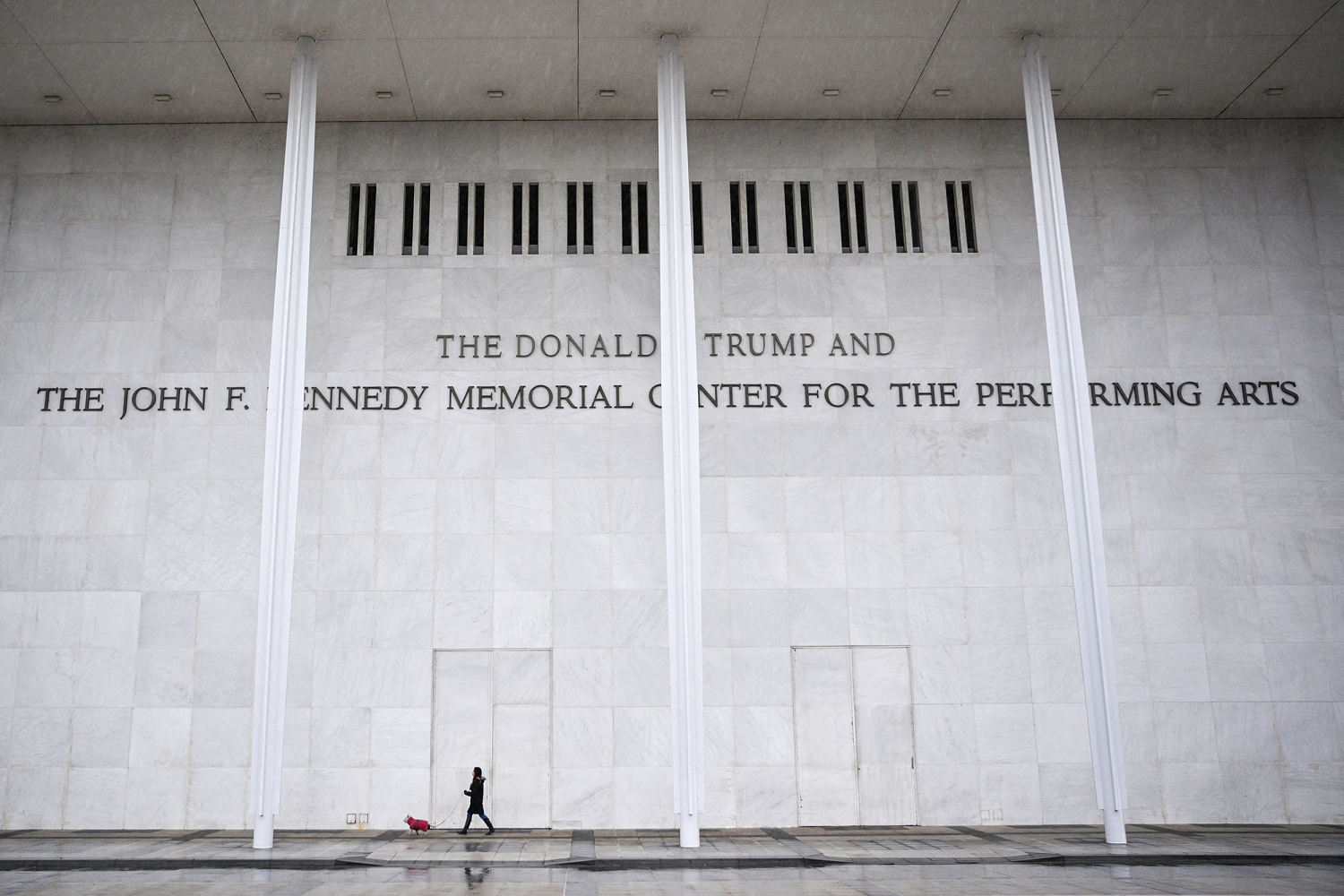
The marble of the Kennedy Center doesn’t just sit there. It glows. If you stand on the terrace at dusk, watching the Potomac pull the last of the orange light toward the horizon, the building feels less like a structure and more like a collective inhalation. It is a monument to the idea that a nation is defined not just by its borders or its ledger, but by the art it protects.
But lately, the air around the marble has felt thin.
In the quiet offices of Washington, where the stroke of a pen carries more weight than a sledgehammer, a series of moves began to accelerate. The goal was efficiency. The method was a rapid-fire overhaul of how the Kennedy Center functions, moving with a speed that many argue bypasses the very checks and balances designed to keep such a cultural titan stable. This isn't just about a change in management or a shift in the budget. It is a fundamental tension between the urge to "gut" and the duty to preserve.
When a group of conservationists filed a lawsuit to block these efforts, they weren't just fighting over a set of bureaucratic rules. They were fighting for the ghost of the building itself.
The Friction of Care
Think about a watch. To make it run faster, you might be tempted to remove the gears that feel like they are creating drag. But some of that drag is actually tension. Without it, the spring unwinds all at once, and the watch is no longer a tool for telling time; it is just a box of broken metal.
Environmental and conservation laws often act as that necessary tension. They are slow. They are frustrating. They require studies, public comment, and a meticulous look at how a new parking lot or a structural change might bleed into the surrounding ecosystem or the historic skyline. For those who want to build, these laws feel like a chokehold. For those who live in the shadow of the building, they are the only thing ensuring that the future doesn't pave over the past without asking permission.
The legal challenge currently winding through the courts hinges on the accusation that the previous administration tried to bypass these "gears" to fast-track changes to the Center. The plaintiffs argue that by shortening the window for review and limiting the scope of environmental impact studies, the government didn't just save time. It silenced the public.
Consider a hypothetical resident of Foggy Bottom—let’s call her Elena. Elena has walked her dog past the Kennedy Center for thirty years. She knows how the wind tunnels through the pillars. She knows where the migratory birds rest. In a world of "hasty gutting," Elena’s voice is the first thing to be discarded. The logic is simple: Elena doesn't have a degree in urban planning, so why should her experience slow down a multi-million-dollar project?
The problem is that a hundred thousand "Elenas" make up the soul of a city. When you remove the requirement to listen to them, you aren't just being efficient. You are being deaf.
The Myth of the Blank Slate
There is a specific kind of arrogance that comes with the desire to "streamline" history. It treats a living landmark like a blank slate, a project to be optimized rather than a legacy to be stewarded.
The lawsuit points to a specific set of administrative maneuvers intended to reduce the oversight of the National Environmental Policy Act (NEPA). For decades, NEPA has been the "look before you leap" law. It forces federal agencies to consider the footprint of their boots before they stomp. The efforts to block these changes suggest that when you stop looking, you inevitably start breaking things that cannot be fixed with a fresh coat of paint.
Imagine the Kennedy Center stripped of its context. Imagine it surrounded by "optimized" infrastructure that ignores the flow of the river or the integrity of the original design. The marble starts to look like just another slab of rock. The glow fades.
The legal battle isn't merely about whether a specific hallway gets renovated or a wing gets added. It is about the precedent of speed. If the government can "hastily gut" the protections for a national monument to the arts, what happens to the local park? What happens to the historic bridge in a small town that doesn't have a team of high-powered lawyers to protect it?
The Weight of a Signature
The documents filed in court are dry. They are filled with citations, "whereas" clauses, and references to administrative procedures that would put a caffeinated student to sleep. But beneath the legalese is a very human anxiety: the fear of being ignored.
Conservation groups aren't just protecting trees or water. They are protecting the right to have a conversation. They are asserting that the public has a "lived experience" interest in how their federal land is used. When we talk about "gutting" efforts, we are talking about the removal of the guardrails that prevent the government from acting as a private developer.
There is a strange paradox in the way we view progress. We want things to be better, but "better" is rarely the result of "faster." The most enduring parts of our culture—the symphonies performed inside those walls, the plays that make us weep, the architecture that leaves us breathless—were not created in a rush. They were the result of agonizing deliberation, revision, and care.
Why should the rules governing the house of those arts be any different?
The lawsuit acts as a sudden, sharp brake. It is a demand for the world to stop and look at the fine print. It reminds us that once a protection is removed, it rarely comes back. Once the "hasty gutting" begins, the scars remain long after the architects have moved on to the next project.
The Invisible Stakes
Sometimes, the most important things are the ones we can’t see until they are gone. We don’t notice the clean air until the smog rolls in. We don’t notice the silence until the jackhammers start. We don't notice the value of a slow, democratic process until we find ourselves standing in front of a finished project we never agreed to, wondering how it happened so fast.
The lawyers argue over statutes. The activists hold their signs. The politicians talk about growth and modernization.
But back on that terrace at the Kennedy Center, the wind is still blowing off the Potomac. The marble is still holding the warmth of the day. A young cellist is walking through the stage door, her mind on a difficult passage in a concerto she has practiced for a thousand hours. She understands the value of the slow work. She knows that you cannot rush the resonance.
If we allow the process of protecting our landmarks to be hollowed out for the sake of a deadline, we are admitting that the deadline matters more than the landmark. We are saying that the clock is more important than the culture.
The lawsuit is still active. The marble is still white. The sun is still setting. But the question remains: are we building a future we actually want to live in, or are we just trying to get there as fast as possible, regardless of what we leave behind on the side of the road?
The answer isn't in the court's ruling. It’s in whether we still believe some things are worth the wait.