Concrete remembers what politicians forget.
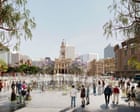
Step onto the scorched pavement of any modern metropolis at high noon, and you can feel it—the trapped breath of a city that prioritizes utility over air. Sydney is no stranger to this asphalt pressure. It is a city of wind and harbor light, but also of quiet desperation for open breath. For years, the promise of a new public square hung over the inner-city skyline like a deferred dream. It was supposed to be a place where the concrete gave way to breathing room. A plaza. A gathering ground. A public living room where the noise of the commuter traffic could dissolve into the chatter of strangers eating lunch on stone benches. Don't forget to check out our previous coverage on this related article.
Then came the intervention.
The New South Wales government stepped in, and with a few bureaucratic strokes of a pen, uncertainty clouded the blueprint. Plans stalled. Questions eclipsed blueprints. And the public square remained an abstraction trapped in a corridor of power struggles. If you want more about the history here, USA Today provides an excellent breakdown.
To understand why this matters, you have to look past the bureaucratic jargon and the cost projections. You have to look at Sarah.
Sarah is a hypothetical commuter, but she represents thousands. Every morning, she steps off the train at Central Station, shoulders tense, navigating a labyrinth of steel corridors and grey walls. Her world is compressed. For Sarah, a public square is not a line item in an urban renewal budget; it is a psychological decompression chamber. It is the difference between a city that consumes you and a city that hosts you. When a government halts the creation of public gathering spaces, it is not merely delaying construction. It is postponing human connection.
Urban spaces are the democratic pulse of a metropolis. Ancient Greeks understood this when they built the agora. Romans knew it in the forum. A true public square belongs to no one and everyone. It is where protestors gather, where musicians play to empty air hoping someone will stop, where office workers eat soggy sandwiches while watching pigeons wage turf wars over breadcrumbs. It is the great equalizer.
When plans for Sydney's public square were thrown into doubt following the state government's sudden pivot, the underlying friction was classic: vision versus control. Municipal planners wanted a vibrant, open-ended civic heart. State authorities weighed the optics, the security, the budget overruns, and the invisible political chess pieces that dictate how our streets are shaped.
Control usually wins. People usually lose.
Consider what happens next when a project of this magnitude enters political purgatory. The site sits dormant. Fences go up, wrapped in glossy vinyl renderings of what could be, mocking the pedestrians who walk past them daily. The dust settles. The urgency fades from the front pages.
Yet, the need does not vanish.
Sydney is growing upward and outward at a frantic pace. Glass towers pierce the clouds, casting long, cold shadows over narrow sidewalks. Every time a potential public square is compromised or delayed, the city loses a battle against claustrophobia. We build more tarmac, more transit hubs, more conduits for movement, but fewer destinations to simply be.
The government’s intervention was framed around fiscal prudence and strategic realignment. Standard political vocabulary for hesitation. But hesitation has a cost that spreadsheets fail to capture. It erodes trust. It teaches citizens that their urban environment is something done to them, rather than with them.
Walk through Circular Quay on a Friday evening. Watch how desperately people seek out a patch of grass, a low concrete wall, a place to anchor themselves against the tide of human movement. The hunger for shared space is palpable. We are more connected digitally than ever, yet physically starved for the casual, unplanned proximity that a town square provides.
When the decision-makers in Macquarie Street pull back the reigns on public spaces, they are making a statement about what—and who—cities are for. Are they efficient economic engines designed to funnel workers from suburban bedrooms to corporate desks and back again? Or are they homes?
The controversy over Sydney’s new square is far from resolved. Legal challenges, funding reviews, and competing visions will likely drag on for months, if not years. The renderings will yellow in filing cabinets. Committees will meet behind closed doors.
Meanwhile, Sarah will keep walking down the same narrow pavement, dodging morning crowds, her shoulders still tight. She doesn't need a masterclass in urban planning to know something was stolen from her. She can feel it in the concrete. Cold. Hard. Unyielding. Waiting for a change that keeps getting pushed into tomorrow.