The key turns in the lock, but it feels less like an entrance and more like a surrender.
Inside a cramped third-floor apartment in Brussels, Marie stares at her monthly bank statement. The numbers on the page do not add up to a life. They add up to rent, utilities, and a grim arithmetic of survival that leaves precisely twelve euros for emergencies. Outside her window, the European capital hums with the bureaucratic machinery of a continent supposedly dedicated to prosperity. Yet Marie, a thirty-four-year-old translator with a master’s degree and a steady contract, spends half her waking hours terrified of a plumbing leak. A single broken appliance means choosing between groceries and a repair bill.
She is not alone. Across the European Union, millions are trapped in the same quiet panic. The walls of our cities have grown too tall, too expensive, and entirely indifferent to the people who built them.
Then enter the technocrats.
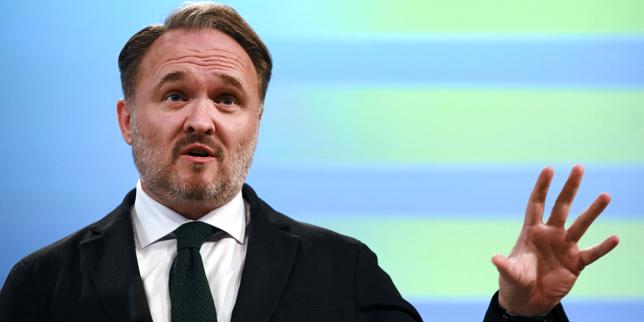
Recently, European Commissioner Dan Jørgensen stepped into the glaring light of this housing crisis with a set of proposals designed to shake the foundations of real estate markets. His ideas are bold, contested, and fiercely debated in the sterile corridors of power. But down here on the ground, where the paint is peeling and the rent goes up every September, policy is not an intellectual exercise. It is a lifeline or a falling axe.
To understand why Jørgensen’s proposals matter, we have to look past the press releases and examine the architecture of our current failure.
For decades, housing has undergone a silent metamorphosis. Once viewed as a fundamental social good, a pillar of stability alongside healthcare and education, it has been aggressively financialized. Bricks and mortar became asset classes. Pension funds, private equity syndicates, and remote investors began treating apartments in Lisbon, Berlin, and Paris the way Wall Street treats commodities futures. Yields replaced yards. Profit margins displaced people.
The result is a mathematical impossibility. Wages have stagnated in real terms, weighed down by inflation and economic shifts, while property values have skyrocketed into the stratosphere. In many urban centers, buying a home is no longer a milestone of adulthood; it is a hereditary privilege reserved for those who inherited property or wealth. For everyone else, the rental market is a predatory hunger game where tenants bid against each other for the privilege of handing over sixty, seventy, or eighty percent of their monthly income to landlords who hold all the leverage.
This is where Jørgensen’s contested propositions enter the arena.
What is the European Commissioner actually proposing? Strip away the diplomatic jargon, and the core of the strategy involves injecting unprecedented levels of public support, regulatory pressure, and structural intervention directly into the housing market. Jørgensen has signaled a push for massive investments in social and affordable housing, urging member states to unlock funds and rethink state-aid rules that traditionally restricted government interference in real estate development.
Critics immediately recoil. Free-market purists argue that government intervention will distort prices further, stifle private construction, and create bureaucratic bottlenecks. They point to historical missteps where poorly managed public housing projects devolved into neglected enclaves. They warn that capping rents or forcing developers to include affordable units in luxury projects will simply cause private capital to flee the market altogether, freezing construction when we need more units than ever.
There is a logical weight to their caution. Bureaucracy moves at the speed of melted glaciers. A poorly designed subsidy can easily bloat developer profits without adding a single square meter of livable space for Marie.
Yet the alternative to intervention is not a functioning free market. It is total collapse.
When the market is entirely unregulated, it optimizes exclusively for wealth generation. It builds luxury high-rises with infinity pools while nurses, teachers, firefighters, and translators are pushed further and further into the periphery, spending hours every day commuting from suburban outposts because they cannot afford a roof within city limits. That is not an efficient market. That is a social hemorrhage.
Consider what happens when a city loses its working heart. The baker closes because the staff cannot afford the bus fare from the outer rings. The local school struggles to retain teachers who refuse to spend their salaries on exorbitant rent. The social fabric frays, tears, and eventually dissolves.
Jørgensen’s proposals attempt to stitch that fabric back together, even if the needle is clumsy. By demanding that European funds be leveraged to prioritize affordable housing construction, the strategy attempts to shift the center of gravity away from speculative investment and back toward human habitation.
Of course, a Brussels commissioner cannot simply decree new apartment buildings into existence with a wave of a pen. The European Union lacks direct competence over many national housing policies. Urban planning, zoning laws, and tax codes remain fiercely guarded national—and often municipal—prerogatives. This is the great friction of the European project: grand ambitions crashing against local realities.
To make these proposals work, national governments must drop their defensive postures and use the tools Jørgensen is placing on the table. They must overhaul zoning laws that protect suburban aesthetics at the expense of urban density. They must tax vacant properties that sit like golden piggy banks for foreign billionaires while locals sleep in cars. They must streamline building permits so that construction takes months, not decades.
Skepticism is entirely rational here. We have heard promises of affordable housing before, whispered by politicians campaigning for election, only to watch concrete poured exclusively for luxury penthouses. We have seen directives watered down by powerful lobbies until they are toothless.
Yet cynicism is a luxury we can no longer afford.
Back in her Brussels apartment, Marie turns off the overhead light to save a few cents on her electricity bill. She sits in the amber glow of a streetlamp filtering through the double-paned glass, listening to the muffled rumble of traffic outside. She does not know who Dan Jørgensen is, nor has she read the fine print of his EU proposals. She only knows that next year’s lease renewal is looming like a storm cloud on the horizon.
The debate in the European halls of power is not an abstract chess match between economists. It is a race against time for Marie and millions like her. If the commissioners, ministers, and developers fail to bridge the chasm between market logic and human necessity, the city will empty out of everyone except the very rich and the utterly desperate.
The key turns in the lock again as her roommate comes home, bringing the damp chill of the evening inside. They do not talk about housing policy. They talk about dinner, about the rising cost of butter, about whether they can afford to take a weekend trip home to see their parents next month.
The policy battles will rage on in the halls of Brussels, fought with footnotes, amendments, and press conferences. But the verdict will not be written in legal briefs. It will be written in the quiet safety of a home that doesn't demand everything you have just to let you sleep inside it.