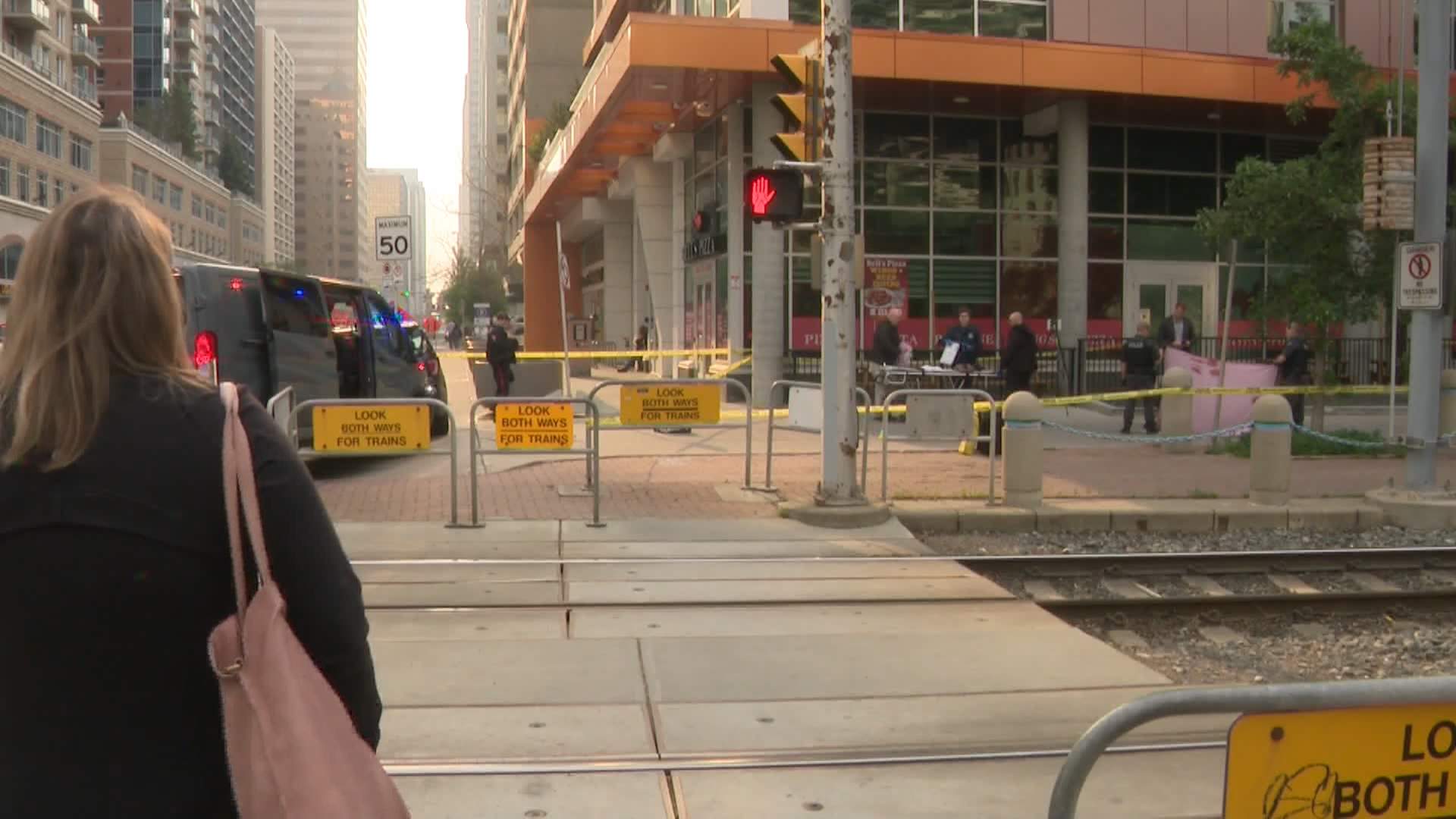
The asphalt on the corner of Ninth Street and Fifth Avenue Southwest does not hold a grudge. It simply holds whatever falls upon it. On a typical Tuesday dawn in the heart of Calgary, that means the heavy dew of an Alberta summer morning, the stray wrappers of corporate lunches from the day before, and the long, sharp shadows cast by glass towers before the sun fully clears the horizon.
But at exactly 5:26 a.m., the concrete held something else.
Sirens in a downtown core at dawn have a distinct, lonely timbre. They cut through the silence before the transit buses begin their regular grumble, before the glass doors of the office towers click open for the early-shift custodians and the high-earning executives. When the Calgary Police Service cruisers arrived at the scene, the flashing blue and red lights bounced off the windows of corporate headquarters, painting the cold stone in frantic, silent pulses.
A body lay outside a downtown building. One person, silent and still, pronounced dead right where they were found.
To the passing commuter an hour later, peering through the window of a CTrain or slowing down a vehicle to look past the yellow tape, the scene is a statistic in the making. It is a paragraph in a local news feed, a push notification quickly swiped away to reveal a weather update or a work email. The official dispatch from the authorities labeled it an "undetermined death."
Undetermined. It is a sterile word. It is a bureaucratic placeholder meant to signify that the homicide unit has taken the lead, not because a crime has definitively occurred, but because a human life cannot be allowed to end on a public sidewalk without an accounting. It means the medical examiner must step in to do the heavy lifting that human eyes cannot manage at dawn. Was it a medical emergency? A sudden catastrophe of the heart? A private tragedy hidden behind a quiet struggle, or a deliberate act of violence whispered in the dark?
Consider the mechanics of an investigation born in the cold light of 5:30 in the morning. When a life ends in the public square, the city becomes a crime scene, but it also becomes a clock. Detectives from the homicide unit don’t just look at the physical form left behind. They look up. They look for the little black domes of security cameras mounted above corporate entryways. They look at the timing of the traffic lights, the scheduled bus routes, the digital footprints left behind by anyone who might have walked past that exact corner when the night was at its deepest.
Every city has two populations. There are those who inhabit it by day, moving through the elevated walkways of the +15 skyway system, looking down at the streets as mere transit corridors between meetings. Then there are those who exist on the pavement itself, navigating the concrete grid when the office workers have gone home to the suburbs. When these two worlds collide at the dawn of a new day, the contrast is jarring.
The mystery of Ninth and Fifth is not just about the cause of death. The real weight lies in the silence that surrounds it. The Calgary Police Service has kept their cards close, offering no details about the individual’s identity, age, or gender. No clues about how they came to be there. In an era where information moves at the speed of a fiber-optic cable, the deliberate, agonizing slowness of a forensic investigation feels like an anomaly. It forces a pause.
But the real problem lies elsewhere. In the absence of facts, the human mind abhors a vacuum. It fills the silence with assumptions. Passersby will assume they know the story based entirely on the geography of the downtown core. They will project their own anxieties about urban safety, social disorder, or economic hardship onto that small patch of cordoned-off sidewalk.
We forget, too easily, that every undetermined death was a determined life. Someone knew the sound of this person’s laugh. Someone, somewhere, might be looking at their phone right now, wondering why a text message remains unread, entirely unaware that the answer is currently guarded by police cruisers in the shadow of a corporate high-rise.
The yellow tape will eventually come down. The cruisers will drive away, their lights turned off. The corporate commuters will spill out onto Ninth Street, carrying their thermal mugs and their laptops, stepping over the exact spot where an investigation began in the dark. The city will wash the sidewalk, and the concrete will go back to being just concrete, holding nothing but the sun.
But for a few hours on a Tuesday morning, the city stood still, forced to look at what it usually walks right past.


