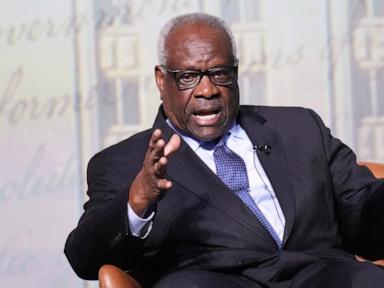
Justice Clarence Thomas recently framed the U.S. Constitution as a "common bedrock" in a divided nation. It is a poetic sentiment. It is also a dangerous delusion.
To call the Constitution a "common bedrock" is to mistake a wrestling mat for a sanctuary. It assumes that if we just read the text closely enough, we will find a magical consensus that satisfies both the urban technocrat and the rural traditionalist. We won't. The Constitution wasn't designed to end our arguments; it was designed to codify them.
The "lazy consensus" of the legal establishment—both left and right—clings to the idea that the founding document is a unifying force. They are wrong. The Constitution is the primary source of our friction. It is the very engine of our division. And until we admit that, we are just shadowboxing with ghosts.
The Originalism Myth and the Ghost of Consensus
Originalism, the judicial philosophy often championed by Justice Thomas, suggests we can solve modern crises by looking at the "original public meaning" of the text. The logic is simple: the founders agreed on X, therefore we should do X.
But the founders didn't agree on much of anything.
The 1787 Philadelphia Convention was not a group hug. It was a desperate, messy compromise between people who fundamentally distrusted each other. Federalists and Anti-Federalists were at each other's throats. Small states feared large states. Slave states leveraged their cruelty for political math. The resulting document is a patchwork of "constructive ambiguity"—vague language inserted specifically because the authors couldn't agree on the specifics.
When you treat the Constitution as a bedrock, you ignore the fact that the bedrock is made of volcanic glass and fault lines. James Madison, the "Father of the Constitution," spent the rest of his life arguing about what he actually meant. If the guy who wrote the notes can’t find the bedrock, why do we think nine people in robes can find it 250 years later?
The Fallacy of the Neutral Arbiter
People ask: "How can we restore faith in the Supreme Court?"
This is the wrong question. It assumes the Court was ever meant to be a neutral, apolitical body of high priests. It never was. From Marbury v. Madison onward, the Court has been a political actor using legal terminology to mask its exercise of power.
We are obsessed with the idea that the Constitution "protects" our rights. It doesn't. People protect rights. Institutions protect rights. The Constitution is just a piece of paper that gives various factions the vocabulary to fight for their interests.
When Justice Thomas speaks of the document as a unifying force, he is engaging in a form of secular religion. He wants us to believe that the law exists outside of human bias. It doesn’t. Every "originalist" interpretation conveniently mirrors the interpreter's modern policy preferences. Every "living constitutionalist" interpretation does the exact same thing.
The Constitution isn't the solution to our polarization; it is the prize.
Stop Trying to "Heal" the Divide
The mainstream media and the judiciary are obsessed with "healing the divide." They want us to return to a time when we all supposedly respected the same rules.
Here is the brutal truth: that time never existed.
The "unity" of the mid-20th century was an anomaly created by World War II and the Cold War. It was a temporary truce maintained by a narrow demographic of men who shared the same schools, the same social clubs, and the same blind spots. That wasn't consensus; it was exclusion.
Now that more voices are at the table, the inherent contradictions of the Constitution are being exposed.
- The Electoral College: A relic of 18th-century compromise that ensures the person with the most votes doesn't always win.
- The Senate: A system that gives a voter in Wyoming 68 times the power of a voter in California.
- Life Tenure: A policy intended to insulate judges from politics that has instead turned every judicial vacancy into a high-stakes bloodbath.
These aren't bugs. They are the features of a system designed to slow things down so much that nothing happens. In a fast-moving, digital world, this built-in friction feels like a death spiral.
The Downside of Disruption
If we stop pretending the Constitution is a bedrock, we lose the comfort of "certainty." It is terrifying to admit that our fundamental rules are up for grabs. It means the law is not a fixed point, but a constant negotiation.
The risk is obvious: if there is no "bedrock," then "might makes right." If the Constitution is just a weapon, then the group with the biggest hammer wins. This is the reality we are currently living in, whether we admit it or not. The difference is that by admitting it, we can actually start talking about how to update the system rather than just worshipping its decay.
How to Actually Navigate a Divided America
Stop looking for "common ground" in a document written for a world of horse-drawn carriages and quill pens. It isn't there.
Instead, we need to lean into the friction.
- De-escalate the Federal Government: The reason we are so divided is that we have centralized too much power in D.C. When every local dispute becomes a national constitutional crisis, the stakes become unbearable. We need to push power back to the states—not because of some "States' Rights" dogma, but because it’s the only way to let people live differently without wanting to kill each other.
- Strip the Court of its Mystique: Stop treating Supreme Court justices like oracles. They are lawyers with lifetime appointments. We should treat judicial decisions as what they are: temporary resolutions of power struggles.
- Amend the Unamendable: The Constitution is nearly impossible to change. This is why we have a "crisis of legitimacy." When a system cannot adapt to the needs of its people, the people will eventually break the system. We need to make the amendment process more accessible, or we will continue to watch the Supreme Court "amend" it through the back door of "interpretation."
The Bedrock is Sinking
Justice Thomas is right about one thing: we are divided. But he is wrong about the remedy.
You don't fix a crumbling house by insisting the foundation is solid while the walls are caving in. You fix it by digging into the dirt, acknowledging the rot, and reinforcing the structure for the weight it actually has to carry today.
The Constitution is not a sacred text. It is a blueprint. And every architect knows that when the environment changes, the blueprint has to change with it.
Stop worshipping the paper. Start looking at the people. The "bedrock" is just a story we tell ourselves to keep from realizing we are standing on air.
If you want unity, stop looking at 1787. Start looking at 2026. The founders are dead. We are the ones who have to live here.
Build something new or watch the old world collapse under the weight of its own mythology.