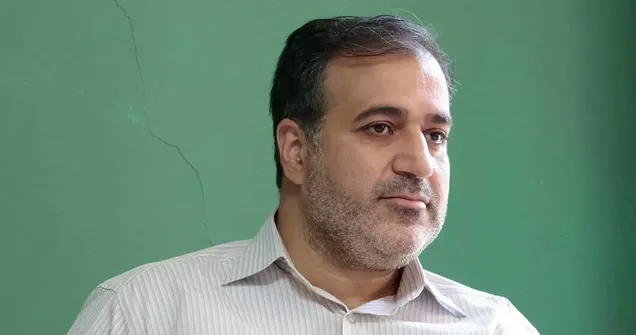
The red carpet is a thin veneer. For the Iranian filmmakers who find themselves standing on it in Cannes, Berlin, or Los Angeles, the velvet serves as a temporary reprieve from a much harsher reality waiting back in Tehran. Mohammad Rasoulof, the Oscar-nominated director who recently fled his homeland on foot to avoid an eight-year prison sentence and flogging, is not just a filmmaker anymore. He is a living manifestation of a cultural schism that the Islamic Republic can no longer bridge with propaganda or intimidation.
When Rasoulof warns against a repeat of the past, he isn't speaking in vague historical metaphors. He is referring to the systematic dismantling of intellectual life that has occurred in waves since 1979. The current crackdown on cinema is not a new policy; it is the desperate intensification of a decades-long struggle to control the Iranian narrative. The regime understands that a film can travel further and strike harder than a street protest. By smuggling his latest work, The Seed of the Sacred Fig, out of the country, Rasoulof did more than debut a movie. He exposed the internal rot of a judicial system that demands family members spy on one another.
The Mechanism of Censorship
To understand why the Iranian state fears a camera, one must look at the Ministry of Culture and Islamic Guidance. This body does not merely "review" scripts. It functions as a gatekeeper that controls every stage of production, from the initial financing to the final edit. Directors who want to work within the system must navigate a labyrinth of red lines that shift without warning.
A filmmaker might receive approval for a script in the morning, only to find their filming permit revoked by the afternoon because a local cleric took issue with a specific location. This creates a culture of self-censorship that is often more effective than the actual laws. However, the "Social Realism" movement in Iranian cinema has spent forty years finding the cracks in this wall. They use symbolism, child protagonists, and rural settings to discuss themes that would be banned if set in a modern Tehran apartment.
The authorities have caught on. The transition from banning films to imprisoning directors marks a significant escalation. It signals that the regime has lost faith in its ability to win the "soft war" of ideas. When you cannot refute the story, you break the storyteller.
The Economics of Exile
There is a brutal financial reality to being a dissident artist. Many assume that international acclaim translates into security. The reality is far more precarious. When a director like Rasoulof or Jafar Panahi is banned from filmmaking, they are stripped of their livelihood. Their bank accounts are often frozen, and their associates are pressured to distance themselves.
The international film community often responds with standing ovations and honorary awards. While these gestures provide essential political cover, they rarely solve the logistical nightmare of making a film in secret. Producing a movie underground in Iran requires a network of trusted technicians who are all risking their own freedom for no guaranteed paycheck.
International co-productions have become the lifeline for this underground industry. European production houses frequently step in to provide post-production services and distribution. Yet, this creates a new set of complications. The "festival film" label can sometimes pigeonhole Iranian stories, forcing them to cater to Western sensibilities of what an "oppressed" culture looks like. The challenge for the modern Iranian dissident is to remain authentic to the domestic struggle while relying on foreign capital to survive.
The Gendered Frontline
The "Woman, Life, Freedom" movement changed the stakes for Iranian cinema. Before 2022, a filmmaker might have negotiated over the placement of a headscarf. Now, the act of showing a woman with her hair uncovered on screen is a revolutionary act that carries mandatory jail time.
The Seed of the Sacred Fig focuses on a judge’s clerk whose own daughters begin to question his role in the state’s machinery. This reflects the actual demographic shift inside Iran. The rebellion is happening inside the homes of the enforcers. The regime’s obsession with controlling the image of women is not just about religious modesty; it is about maintaining a specific social order where the state is the ultimate patriarch.
When female actors like Taraneh Alidoosti or Katayoun Riahi appeared in public without the mandatory hijab, they weren't just making a fashion statement. They were dismantling the visual brand of the Islamic Republic. The state responded with arrests and travel bans because it knows that if the stars of the screen stop complying, the illusion of total control evaporates.
The Digital Underground
The advent of high-quality mobile phone cameras and compact digital rigs has revolutionized the dissident’s toolkit. In the past, 35mm film stock was easy to track and seize. Today, a feature film can be shot on a device that fits in a pocket and uploaded to a cloud server in minutes.
This technological shift has made the "repeat of the past" that Rasoulof fears slightly different. In the 1980s, the state could effectively disappear a work of art by burning the negatives. Now, the data exists in multiple jurisdictions simultaneously. The state can no longer kill the film; it can only punish the person. This has led to a more targeted, personalized form of repression where the families of directors are threatened.
The Iranian intelligence services have increasingly used "confession" videos, where artists are forced to denounce their own work under duress. These videos are then broadcast on state television to demoralize the public. It is a psychological war designed to prove that no one is untouchable.
The Global Responsibility
The Western obsession with Iranian cinema often feels voyeuristic. We celebrate the bravery of the filmmaker from the safety of a cinema in Paris or New York, but the policy response remains sluggish. If the international community wants to support Iranian dissidents, it needs to move beyond symbolic awards.
Practical support means creating "safe harbor" visas for artists at risk. It means establishing legal defense funds that can operate across borders. Most importantly, it means ensuring that these films are seen by the Iranian people themselves. Satellite broadcasts and VPN-enabled streaming services are the modern-day equivalent of the samizdat literature that helped topple the Eastern Bloc.
The Iranian government is betting that the world will eventually get bored. They expect the news cycle to move on, leaving the dissidents to be quietly processed by the revolutionary courts once the cameras are turned off. Rasoulof’s flight was a gamble to keep those cameras rolling.
A Culture in Transition
We are witnessing the birth of a cinema in permanent exile. Directors like Bahman Ghobadi and Zar Amir Ebrahimi have already shown that it is possible to maintain a career outside Iran, but the umbilical cord to the homeland is never truly severed. The stories they tell remain rooted in the dust and the politics of Tehran, even if they are filmed in Istanbul or Amman.
The danger of this exile is the potential for a "bubble" effect. When artists are removed from the daily grit of the society they document, their work can become nostalgic or disconnected. However, the constant flow of information and video from inside Iran through social media is bridging that gap. The diaspora and the domestic resistance are merging into a single, unified cultural front.
The state’s reaction is a barometer of its own insecurity. A confident government does not need to threaten a director with lashes for making a movie about a family argument. The brutality of the sentence is proportional to the fragility of the regime’s narrative.
The historical precedent Rasoulof warns about is the "Cultural Revolution" of the early 1980s, where universities were purged and artists were executed or silenced for years. He sees the same patterns emerging today. The difference now is the level of public defiance. In the 80s, the state had a base of genuine support. Today, it relies almost exclusively on the Revolutionary Guard and the Basij militia.
The filmmaking community has become the informal opposition. Because political parties are banned and labor unions are suppressed, the arts have become the only space where the "how" and "why" of the country’s crisis can be discussed. A film screening in a basement is a political rally. A script passed through encrypted messages is a manifesto.
The "repeat of the past" is not inevitable, but avoiding it requires more than just the bravery of a few directors. It requires a fundamental shift in how the global audience engages with the art of the oppressed. We must stop viewing these films as exotic cultural artifacts and start seeing them as frontline dispatches from a war of attrition.
The next time an Iranian filmmaker stands on a stage and asks the world to look at their country, they aren't asking for applause. They are asking for witnesses. The regime wants darkness; the filmmaker offers light. The struggle is that simple, and that dangerous.
If you want to support the preservation of Iranian dissident art, prioritize platforms that bypass state censors and provide direct aid to the families of imprisoned creators.