Dawn breaks over the asphalt. The air carries the sharp scent of exhaust and cheap vending machine coffee.
You pull your car into a sprawling lot, watching the brake lights of a hundred other souls who made the same reluctant pilgrimage. Inside the fluorescent hum of the state building, the ticket machine spits out a number. Four hundred and twelve. The current display reads one hundred and fifty-eight.
You check your watch. You calculated this meticulously, clearing your schedule, sliding a crucial meeting to the afternoon, hoping against hope that today might be different. It never is.
We accept this ritual as an immutable law of nature, right alongside gravity and the changing of the seasons. Bureaucracy demands patience. The state demands compliance. And every single year, the privilege of keeping four wheels on the road requires a tribute—a vehicle registration fee that quietly drains bank accounts while offering little in return except a small, sticky piece of paper meant for the corner of a windshield.
Then someone stands up and says it can all be erased.
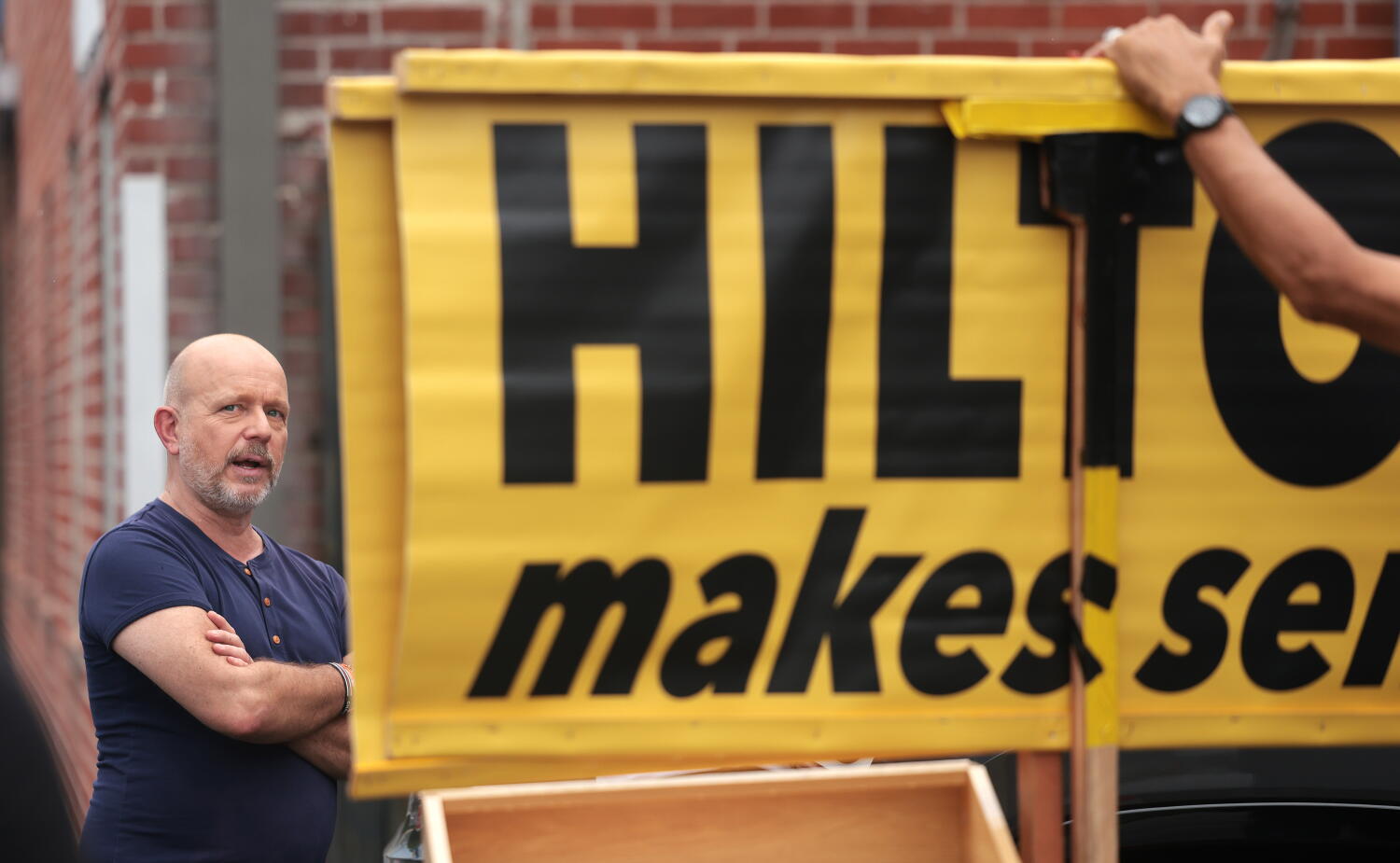
That someone is Hilton, stepping onto a political stage with a proposal sharp enough to slice through decades of institutional inertia: completely eliminate the Department of Motor Vehicles as we know it, and slash the vehicle registration fee down to a nominal flat rate.
It sounds impossible. Almost reckless. Yet, beneath the shock value of the headline lies a fundamental question about how much of our lives we hand over to administrative machinery that stopped serving us a generation ago.
To understand why this idea strikes such a raw nerve, we have to look closely at what the DMV actually represents in the modern American psyche. It is not merely an office where license plates change hands. It is a monument to friction. Every hour spent trapped under humming ceiling tiles is an hour stolen from work, from family, from living. It is a tax paid in time, levied disproportionately on hourly workers who cannot simply flex their schedules or work from a laptop while waiting in a queue.
When a candidate proposes abolishing the system, the knee-jerk reaction from entrenched political circles is panic. How will records be kept? How will safety be ensured? How will the state survive without the revenue stream?
Consider what happens next when we strip away the institutional mystique.
Files do not require filing cabinets anymore. Verification does not require a bored clerk squinting at a faded title document under a plastic desk partition. Most of what happens inside those cavernous brick buildings could easily be handled through decentralized, highly secure digital networks, or contracted out to neighborhood businesses that already inspect our brakes and change our oil.
We have built a sprawling cathedral to data entry, and we pay for it twice: once through our taxes, and again through the sheer aggravation of attendance.
Let us look at the financial mechanics. The vehicle registration fee is often pitched as a necessary contribution to the roads we drive on. But over the decades, these fees have metastasized, morphing into a general fund slush bucket that legislators raid whenever budgets run dry. It is a hidden tax hike, applied flatly to every single person who needs a car to get to a job, buy groceries, or pick up a child from school. Slashing that fee is not just a populist talking point; it is a direct correction to a regressive monetary policy that punishes working families for the simple act of commuting.
Naturally, critics will argue that state governments cannot simply abandon these structures without courting total chaos. They will point to lost revenue and administrative paralysis.
(Note: For the sake of exploring this argument, let us imagine a hypothetical state budget transition where registration fees drop to a flat fifty dollars overnight. The immediate shortfall forces lawmakers to audit legacy programs, trimming bloated administrative overhead that exists solely to justify its own funding.)
When you force a bureaucracy to justify its existence, miracles happen. Waste evaporates. Redundancy is trimmed. The state is forced to treat citizens like customers rather than captives.
We have grown so accustomed to government inefficiency that we treat it as a weather pattern. It rains, traffic crawls, and we wait three hours for a plastic card that allows us to drive to work. We shrug. We scroll through our phones. We tell ourselves it is just part of living in a complex society.
It does not have to be.
Hilton’s proposal taps into a deep, pent-up fatigue among citizens who are tired of paying more for less service. Whether this exact plan survives the legislative meat grinder matters less than the conversation it forces into the open. It challenges the assumption that our current way of doing things is the only possible way.
The parking lot outside the state office is still full tomorrow. The ticket machine is still spitting out numbers. But the spell is broken. Once you realize that the line is entirely optional, waiting in it feels very different indeed.