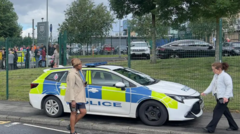
When a knife attack occurs inside a school, your mind immediately goes to local police response, frantic parents outside the gates, and a community in shock. You don't expect the country's top specialist units to take over the crime scene. Yet, when three people were stabbed at the Co-op Academy in Blackley, Manchester, that's exactly what happened. Counter Terrorism Policing North West quickly took primacy over the entire investigation.
It sounds terrifying. The phrase alone spreads panic through a neighborhood. But a specialist unit taking over doesn't mean what most people think it means.
The June 2026 stabbing involved a 14-year-old girl who allegedly attacked two fellow students and a teacher. She has since been charged with three counts of attempted murder and two counts of possessing a bladed article on school premises. Despite the specialist squad running the interviews and digital forensics, the incident hasn't been declared an act of terrorism.
Understanding why these specialized forces step in helps contextualize the modern reality of youth violence and policing.
The Operational Reality Behind the Specialist Handover
Police protocols dictate which department holds the keys to an investigation. It comes down to resources, capabilities, and the specific nature of what detectives find during the initial hours of an inquiry. In the Blackley case, Greater Manchester Police initially handled the arrest and detained the suspect under the Mental Health Act. Once health professionals cleared her back into police custody, local detectives handed the case over to the counter-terrorism unit.
Chief Superintendent David Meeney explicitly noted that "further information" came to light, triggering the shift.
This happens for a few practical reasons.
First, Counter Terrorism Policing possesses the most advanced digital forensics teams in the country. If a suspect has an extensive online footprint, has been participating in extremist chatrooms, or left behind a detailed manifesto or attack plan, local digital forensics units face massive backlogs. A specialist unit can bypass the queue, instantly peeling back layers of encrypted messaging apps and hard drives.
Second, they look at intent and ideology. Local detectives excel at investigating standard criminal grievances, localized disputes, or spontaneous acts of violence. Specialized teams determine if a teenager acted due to systemic online radicalization, whether from far-right networks, incel forums, or international extremist groups.
Keeping an Open Mind on Motivation
Detectives have repeatedly stated they are keeping an open mind regarding the motivation behind the Blackley attack. This phrase isn't just police jargon; it's a legal safeguard.
When a 14-year-old faces three counts of attempted murder in a Westminster Magistrates court, the prosecution must present a clear narrative. If investigators discover the suspect was radicalized online, the charge sheet changes, or the sentencing guidelines shift dramatically.
Just because a specialist unit takes over doesn't mean the incident will ever be formally classified as terrorism. The threshold for a statutory declaration of terrorism under UK law is incredibly high. It requires proof that the violence was designed to influence the government or intimidate the public for a political, religious, racial, or ideological cause.
If a teenager attacks classmates due to a severe mental health crisis mixed with obsessive, non-ideological internet fixation, the specialist team will still finish the investigation because they have the expertise, but it will remain a criminal matter.
The Growing Threat of Online Youth Radicalization
The involvement of specialist units in school-level violence reflects a shift in the security environment over the last few years. Security services have openly warned that tech-savvy children are increasingly exposed to extreme violence and radical ideologies online.
The profile of individuals flagged to specialist deradicalization programs has grown younger. Isolation, heavy internet usage, and algorithms designed to feed vulnerable minds increasingly extreme content create a dangerous mix.
- Algorithmic rabbit holes: Secure communication channels and fringe forums actively target isolated minors.
- The mimicry effect: Vulnerable teenagers read about overseas school attacks, downloading instructional material and manifestos out of a desire for notoriety.
- Resource allocation: Dealing with these complex digital trails requires the exact tools that specialist squads use daily.
When local police uncover an attack plan or an ideological document on a child's phone, they don't have the capacity to track down who sent those files or which online community encouraged the act. The specialist units do.
What Happens Next in the Investigation
The 14-year-old suspect is appearing in court, and the legal process is underway. The immediate danger at the Co-op Academy has passed. All three victims—the two 14-year-old students and the 27-year-old teacher—have been discharged from the hospital with non-serious injuries.
For parents and the wider Manchester community, seeing specialist detectives conducting searches on Plant Hill Road is unsettling. However, it signifies that the investigation is receiving the highest level of scrutiny available in British policing.
The next steps don't involve hiding information from the public. They involve checking every single corner of the suspect's digital and physical life to ensure no one else was involved, no wider network exists, and no lingering threat remains to the student body. Expect the specialist unit to remain in charge until the full evidentiary package is handed over to the Crown Prosecution Service.
The video below explains a similar historical context where specialist units had to step in immediately after a school attack to determine the broader motivations and safety implications for the public.


