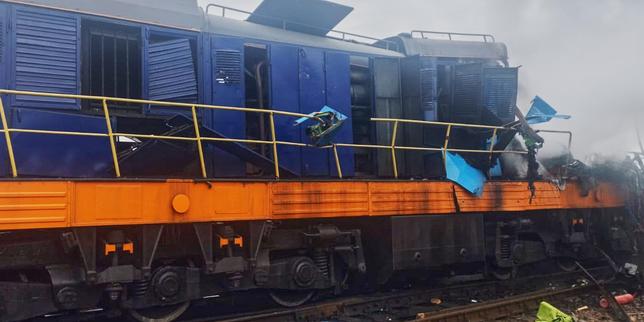
The physical interdiction of civilian rail corridors by precision munitions marks a distinct structural shift in modern logistics vulnerability. When an aerial asset strikes a passenger or freight train operating on an international artery such as the Kyiv to Warsaw route, the operational impact extends far beyond immediate asset destruction and human casualty. It alters the risk calculus of transcontinental transit, forcing a complete recalculation of throughput capacity, insurance underwriting, and scheduling rigidity across Central and Eastern European transport networks.
The Geostrategic Mechanics of Rail Interdiction
Rail networks represent high-density, low-optionality linear infrastructure. Unlike maritime shipping lanes or highway networks, which possess infinite topological routing alternatives, rail transit is bound to fixed geometric pathways, signaling blocks, and choke points such as bridge crossings, marshalling yards, and border transshipment terminals.
When hostile actors introduce loitering munitions or strike drones into an active theater adjacent to civilian transit arteries, the primary mechanism of disruption is not merely physical damage to rolling stock. The systemic friction arises from velocity decay. Operational velocity drops because network controllers must implement mandatory speed restrictions, nighttime darkness blackouts, or extended standstill protocols whenever acoustic or electronic signatures indicate aerial threats.
The Kyiv to Warsaw corridor serves as a primary arterial lifeline connecting Ukraine's interior economy with European Union markets. The physical integration of 1,520 mm broad-gauge tracks shifting to standard 1,435 mm European gauge at the border creates an inherent operational bottleneck at terminals like Medyka or Dorohusk. When a strike occurs along this trajectory, the disruption compounds exponentially due to terminal saturation. Trains backed up behind the impact zone create static inventory queues, tying up motive power and freezing crew scheduling rotations.
[Interior Hubs: Kyiv]
       │
       ▼ (Linear Rail Artery)
[Border Transshipment Choke Point: Medyka/Dorohusk]
       │
       ▼ (Gauge Transition: 1520mm to 1435mm)
[European Destination: Warsaw]
Vulnerability Vectors in Transcontinental Supply Lines
Analyzing the vulnerability profile of cross-border rail requires deconstructing the transport chain into discrete functional layers: motive power, signaling infrastructure, physical track bed, and rolling stock.
Motive Power and Rolling Stock Exposure
Locomotives are capital-intensive, difficult-to-replace assets with long manufacturing lead times. Electric locomotives depend on an overhead catenary grid that acts as both a power source and an acute physical vulnerability. A single kinetic impact on a traction substation or a catenary mast severs power across an entire electrical block, halting all electric traction units instantly. Diesel locomotives offer localized propulsion autonomy, yet their fuel tender cars present high-consequence secondary detonation risks when exposed to fragmentary warheads or incendiary payloads.
Signaling and Communications Dependency
Modern dispatching relies on centralized telemetry and digital block signaling. Electronic jamming, GPS spoofing, and kinetic attacks on fiber-optic trunk lines degrade situational awareness for dispatchers. When automated signaling fails, operators must revert to manual track-warrant control or verbal clearance protocols, slashing line capacity by up to seventy percent. This administrative friction introduces severe safety risks and reduces daily train pair movements across international borders.
Terminal Bottlenecks as Strategic Targets
Transshipment yards are high-concentration nodes where cargo or passengers must pause. Passenger trains require dwell times for passport control, customs clearance, and gauge-change operations. Freight terminals require gantry crane transfers or bogie-changing facilities. Concentrating high-value assets inside fixed perimeter yards during periods of aerial threat elevation transforms these hubs into high-probability targets for targeting systems.
The Cost Function of Transit Disruption
The economic impact of interdicting a major rail link operates through two distinct vectors: direct asset write-downs and indirect systemic friction costs.
Direct costs encompass rolling stock replacement, track repair, catenary reconstruction, and medical compensation liabilities. However, these figures are minor compared to indirect systemic costs. When rail corridors face persistent kinetic threats, maritime and road alternatives absorb displaced volume. Yet highway capacity cannot match rail tonnage density. A single freight train displaces dozens of heavy commercial trucks, meaning the degradation of rail capacity instantly triggers congestion on cross-border highways, inflating fuel consumption, driver wage hours, and customs queue times.
Insurance underwriting provides a quantifiable metric of this risk escalation. War-risk insurance premiums for assets operating within proximity to active conflict zones experience non-linear pricing adjustments. Underwriters calculate expected loss frequency multiplied by asset value severity. When drone attacks transition from theoretical risks to documented kinetic events involving international routes, underwriters either withdraw coverage entirely or impose prohibitive deductible tiers that render scheduled commercial operations financially unviable without sovereign state guarantees or risk-sharing mechanisms.
Systemic Mitigation Strategies for Critical Corridors
Mitigating the vulnerabilities exposed by drone strikes on international rail corridors requires engineering interventions that address both kinetic threats and operational bottlenecks.
Kinetic Defense Integration
Traditional air defense batteries are deployed primarily to protect population centers and strategic military installations. Protecting linear infrastructure stretching hundreds of kilometers requires distributed, mobile counter-unmanned aerial system networks. Equipping key locomotive classes and maintenance vehicles with localized electronic countermeasures and acoustic detection sensors provides an immediate layer of active defense against low-flying loitering munitions.
Network Decentralization and Redundancy
Relying on a single primary transit corridor creates a single point of failure. Operators must develop parallel routing paths, even if they involve secondary tracks with lower load capacities or longer transit times. Establishing secondary transshipment points disperses inventory concentration, preventing single strikes from paralyzing the entire bilateral trade and transit volume.
Hardening and Rapid Repair Protocols
Infrastructure resilience relies on repair velocity rather than absolute invulnerability. Pre-positioning modular track sections, mobile welding units, and standardized catenary replacement masts at strategic intervals along the corridor reduces mean time to repair following a strike. Furthermore, installing physical blast baffles around critical electrical substations protects delicate transformers from shrapnel and blast overpressure.
Operational Deconfliction and Scheduling Agility
Transitioning from fixed, predictable timetables to dynamic, demand-driven dispatching reduces predictability for hostile targeting operators. Implementing rolling departure windows and variable routing algorithms denies adversaries the ability to synchronize drone flight profiles with fixed train transit times.
Operational Execution Protocol
To secure transcontinental rail operations against aerial interdiction, transport authorities and logistics operators must immediately execute the following structural protocol:
- Audit all electrical substations along the primary corridor and install modular blast shields within thirty days.
- Procure and distribute mobile acoustic sensor arrays to all active locomotive crews to provide early warning telemetry during transit through high-risk airspace zones.
- Establish bilateral agreements with neighboring rail authorities to pre-certify secondary and tertiary border-crossing routes, ensuring automated rerouting protocols can absorb displaced traffic within two hours of a primary disruption event.
- Transition all cross-border scheduling to dynamic, non-deterministic departure intervals, eliminating predictable daily transit windows.