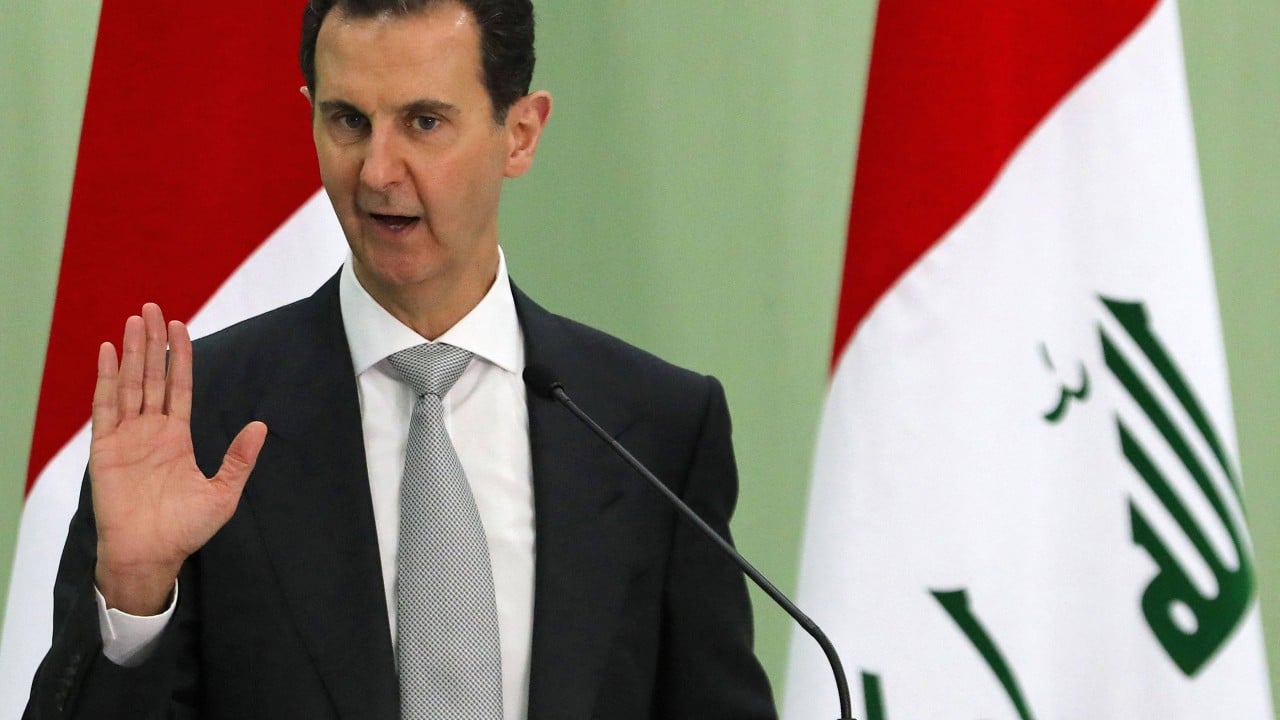
A Syrian court has sentenced ousted president Bashar al-Assad to death in absentia, establishing a historic judicial milestone nearly two years after the collapse of his decades-long regime. The Fourth Criminal Court in Damascus delivered the verdict, convicting the former dictator of war crimes and crimes against humanity tied to the brutal suppression of the 2011 uprising and the subsequent civil war.
Justice from a distance carries an inherent friction. While Syrian state television broadcast the proceedings live, the main defendant remained thousands of miles away inside a secure Moscow residential complex. The sentence marks an extraordinary escalation in accountability, yet it lays bare the bitter limitations of transitional jurisprudence when the primary architect of a nation's destruction sits safely beyond extradition reach.
The Mechanics of the Verdict
Judge Fakhr al-Din al-Aryan systematically outlined the charges during the courtroom session. The tribunal found Assad guilty of premeditated murder, the intentional killing of children under the age of fifteen, widespread torture leading to death, and arbitrary mass detentions. These offenses were formally classified under international and domestic statutes as crimes against humanity and war crimes.
Alongside the former president, the court handed down identical death sentences to several pillars of the old security apparatus. Maher al-Assad, the commander of the notorious Fourth Armored Division and brother to the ousted leader, was similarly convicted in absentia. Former defense ministers and regional intelligence chiefs joined the roster of the condemned.
Yet, physical presence in the dock was the exception rather than the rule for the high command. Only a handful of secondary defendants, such as Atef Najib—former head of political security in Deraa and a cousin to the deposed leader—stood inside a steel cage in the courtroom. Najib’s trial offered a rare physical anchor to proceedings that otherwise possessed the surreal quality of a ghost hunt.
The Catalyst and the Cost
To understand the weight of the Damascus ruling, one must revisit the spark that ignited the fifteen-year catastrophe. In March 2011, security forces under Najib's command in the southern agricultural hub of Deraa detained and tortured a group of schoolchildren who had scrawled anti-regime graffiti on a wall.
The ensuing protests were met not with political accommodation, but with live ammunition. That municipal crackdown metastasized into a nationwide conflict that cost half a million lives, displaced millions more, and hollowed out the economic and social fabric of the Levant.
When insurgent coalitions led by Hay'at Tahrir al-Sham executed a lightning offensive in December 2024, the regime evaporated in less than two weeks. Assad boarded a flight to Moscow, securing political asylum courtesy of the Kremlin. Damascus fell, and the transition committee took the reins of a traumatized state.
The Limits of In Absentia Justice
Legal purists often critique trials conducted in absentia. They lack the adversarial dynamism of a present defendant, and they cannot easily be executed in a literal sense when the convict resides under the protection of a foreign nuclear power that has rejected extradition requests.
Human rights organizations have voiced familiar cautions. International monitors frequently note that while the victims deserve redress, the rush toward capital punishment risks replicating the state-sanctioned finality that defined the authoritarian era. Furthermore, building a durable legal culture requires meticulous adherence to evidentiary standards that can withstand decades of scrutiny, far beyond the immediate catharsis of a courtroom verdict.
Yet, dismissing the trial as mere theater misses the psychological and historical necessity of the moment. For the survivors who crowded outside the Damascus courthouse, the judgment provides an official, codified record of state-sponsored atrocities. It transforms anonymous suffering into legally recognized crimes. The evidentiary dossiers compiled for the tribunal systematically map out the chain of command, ensuring that historical revisionism faces an insurmountable wall of documented facts.
The Geopolitical Impasse
Moscow shows no inclination to return the fugitive family. For the Kremlin, harboring the former Syrian head of state is a matter of strategic continuity and signaling to other regional allies. Consequently, the death sentence remains largely symbolic, a piece of parchment locked inside a rebuilding judicial system.
The gap between the court's gavel and the luxury high-rise apartments in Moscow defines the tragedy of contemporary transitional justice. Real power is messy, uncooperative, and frequently insulated by geopolitical shields. Syria's new administration faces the daunting task of establishing rule of law in a country recovering from systemic devastation, even as its most notorious criminals drink tea in foreign exile.
The courtroom lights in Damascus have dimmed. The crowds have dispersed from the dusty streets outside. Inside the chamber, the bench remains resolute, recording a ledger of blood and ruin that time will not easily erase, waiting for an enforcement mechanism that does not yet exist.


