Donald Trump’s recent claim that the United States can “wipe out” the Islamic Revolutionary Guard Corps (IRGC) just as it did ISIS is a profound misreading of military reality. It is a dangerous illusion. Unlike ISIS—a rogue, non-state caliphate isolated in deserts without air defenses or sovereign backing—the IRGC is a heavily armed, sovereign state apparatus deeply embedded in Iran's political structure, economy, and military network. Dismantling it is not a localized counter-terror operation; it requires a total, highly destabilizing state-on-state war.
In an interview with Fox Business, Trump raised the prospect of treating Iran’s premier military branch as a target for total elimination. He claimed that Iran's military capabilities have been depleted, framing the IRGC as a target that can be physically dismantled through sheer kinetic force. Discover more on a connected subject: this related article.
This rhetoric ignores the hard realities of geography, state integration, and military doctrine. The campaign to defeat ISIS was a painstaking, years-long effort that relied on local partners, vast air superiority, and a clear lack of state defense mechanisms on the part of the enemy. Applying that same logic to the IRGC is a category error of the highest order.
The Flawed Comparison of State and Non-State Actors
The differences are stark. ISIS was an occupying force of radical insurgents that held territory but possessed no international legitimacy, no state air defense systems, and no domestic arms manufacturing capabilities. They were ultimately bottled up in flat desert terrain, surrounded by hostile states, and ground down by a global coalition that included even their regional adversaries. Additional journalism by The Guardian highlights similar perspectives on this issue.
The IRGC is a different beast. It is a state institution. It controls a vast standing army, an independent navy, an aerospace force, and the Basij paramilitary volunteer force.
Furthermore, the IRGC does not rely on black-market oil sales or foreign donations to survive. It controls the Iranian state’s primary defense production lines. It builds its own ballistic missiles, designs its own long-range suicide drones, and maintains an extensive network of underground missile cities carved deep into Iran's mountainous geography.
Trying to wipe out this organization with airstrikes is like trying to destroy the United States Army by bombing military bases. It cannot be done without occupying the country, destroying its civilian infrastructure, and dealing with a massive population of almost ninety million people, many of whom will rally around the flag when foreign bombs begin to fall. Historically, external pressure on Iran has only served to unite rival political factions, making the IRGC’s grip on power tighter rather than weaker.
An Armed Forces and Economic Empire Joined at the Hip
To understand the impossibility of erasing the IRGC, one must understand its financial empire. The IRGC is not merely a military force; it is a conglomerate that dominates the Iranian economy.
Following the Iran-Iraq War, the state tasked the IRGC with national reconstruction. Decades later, they control Khatam al-Anbiya, the country’s largest engineering and construction firm. They hold massive stakes in telecommunications, banking, oil extraction, shipping, and import-export operations.
This economic integration means that every major infrastructure project, from water dams to highway systems, is tied to the Guard. If you seek to obliterate the IRGC, you are targeting the core of Iran's civilian economy. The civilian population depends on these enterprises for basic services, employment, and resource distribution.
Therefore, any attempt to strip the IRGC of its power through military destruction inevitably translates to the destruction of the Iranian state's functional capacity. It is a reality that previous administrations have failed to grasp, believing that economic sanctions would isolate the group. Instead, sanctions have forced the IRGC to dominate the informal economy and smuggling routes, cementing their position as the ultimate gatekeepers of survival inside the country.
The Asymmetric Retaliation Machine
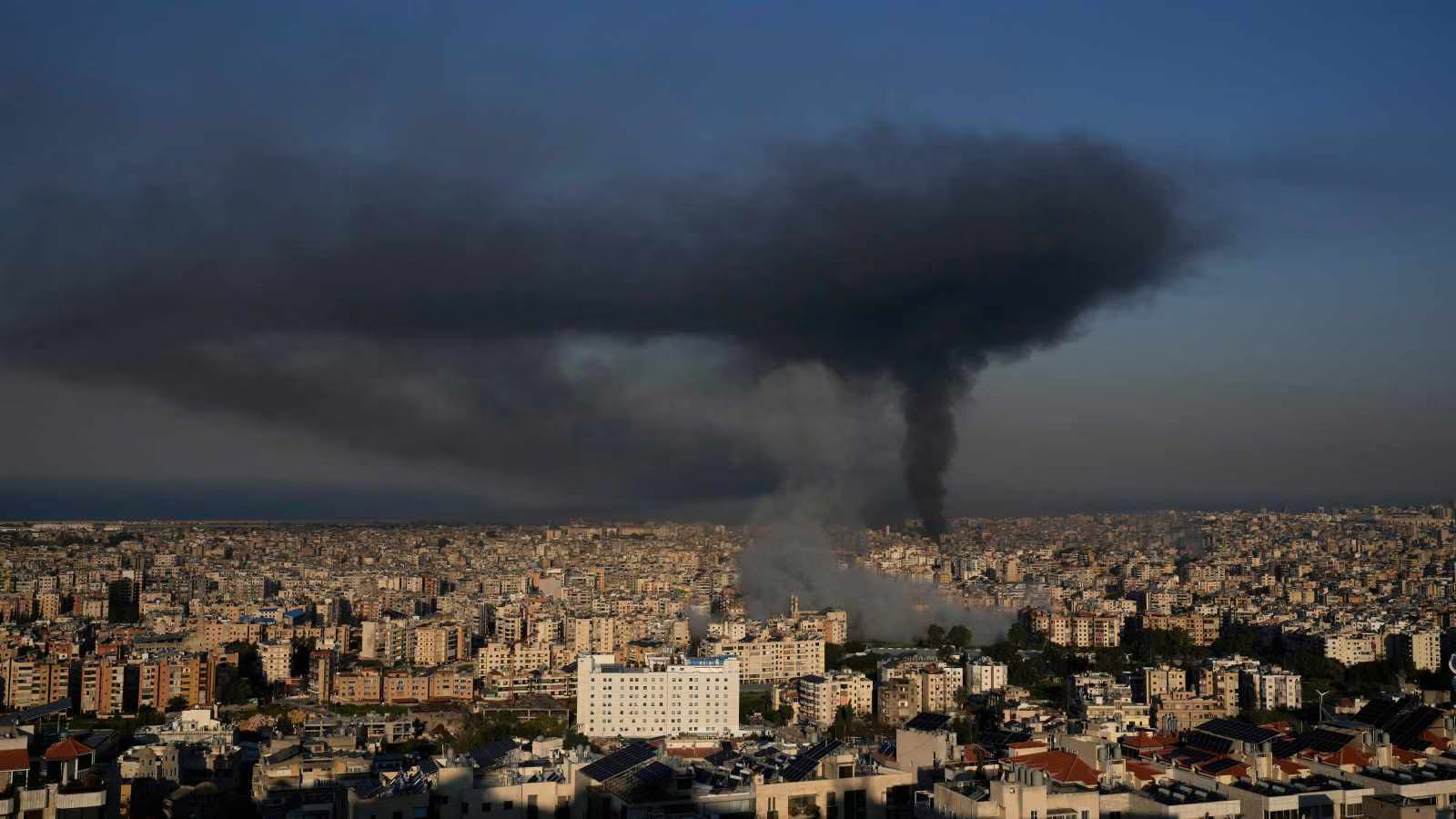
The current crisis in the Middle East illustrates how quickly conflict can expand. Following the failure of diplomatic efforts and the resumption of the U.S. naval blockade on Iran, the IRGC demonstrated its immediate capacity to strike back.
They do not fight conventionally. They do not need to match the U.S. Navy hull-for-hull.
Instead, they rely on swarms of fast-attack craft, anti-ship missiles, and sea mines to threaten the Strait of Hormuz, a narrow waterway that handles a massive portion of the world's daily oil transit. In response to recent American strikes, the IRGC quickly claimed to have struck dozens of installations across Bahrain and Kuwait, utilizing their regional missile and drone networks.
Unlike ISIS, which could only launch sporadic, localized terror attacks abroad, the IRGC possesses a massive proxy network that spans across Lebanon, Syria, Iraq, and Yemen. They can disrupt global supply chains in an afternoon. This gives them a form of deterrence that ISIS could only dream of, making a localized victory virtually impossible.
The Nuclear Option and the Danger of Desperation
Perhaps the most overlooked factor in the threat to "wipe out" the IRGC is the nuclear wildcard.
For the Iranian regime, the IRGC is the ultimate guarantor of survival. If the organization faces an existential threat from foreign forces, the calculations in Tehran will shift instantly.
Iran has already built a highly advanced nuclear infrastructure, keeping a significant stockpile of highly enriched uranium. If the leadership believes that a systematic campaign to destroy the IRGC is underway, they will have every incentive to cross the nuclear threshold. They will view a nuclear deterrent as the only way to prevent total collapse, mirroring the strategy of North Korea.
A military campaign designed to neutralize the IRGC would likely trigger the very outcome the United States has spent decades trying to prevent: a nuclear-armed Iran. The intelligence community has repeatedly warned that kinetic action cannot fully erase the technical knowledge required to build a bomb. It would only drive the program further underground and eliminate any remaining avenue for diplomatic constraints.
The comparison between ISIS and the IRGC is a dangerous rhetorical tool that simplifies a highly complex geopolitical struggle into a soundbite. Decimating a stateless terror group in the desert is one thing; attempting to erase the primary military, economic, and political pillar of a major Middle Eastern power is an entirely different war. Washington must recognize that some actors cannot be bombed into submission without burning down the entire region in the process.
This IRGC television broadcast declaring revenge against Trump illustrates how the group utilizes state media to mobilize domestic support and threaten direct retaliation in response to aggressive U.S. actions.