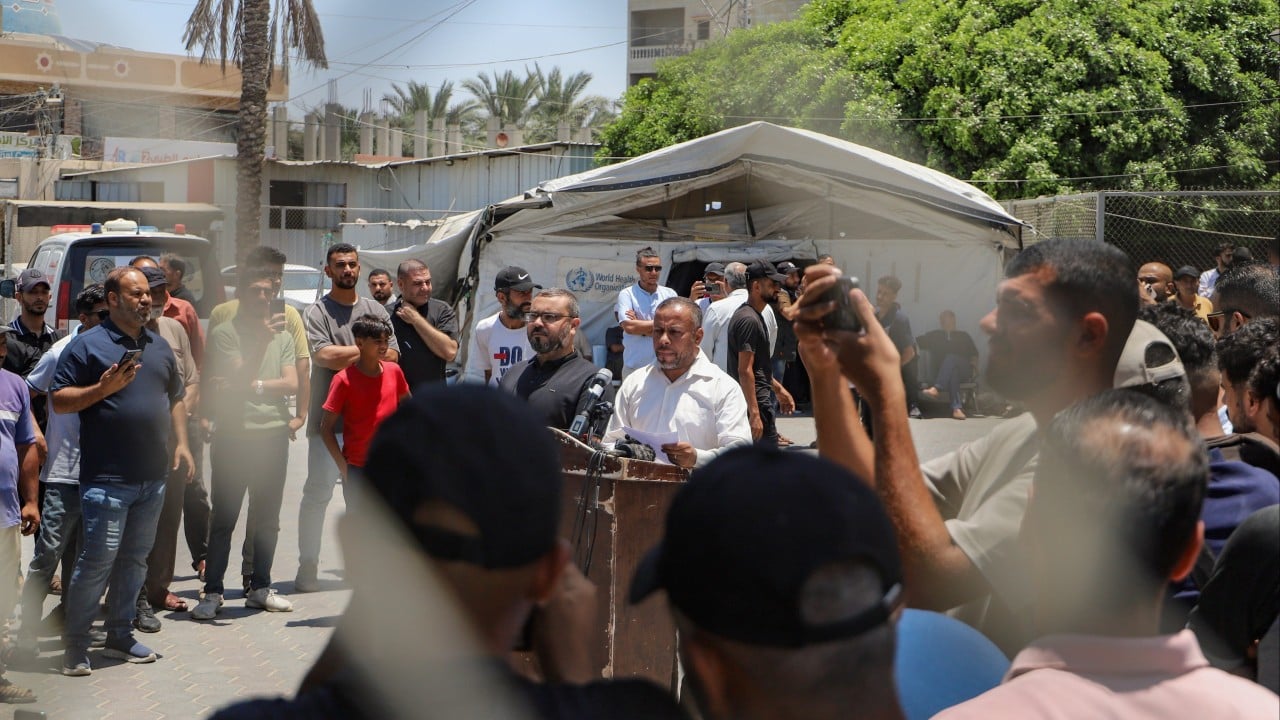
The mainstream media is misreading the room again.
When headlines flashed that Hamas dissolved its administrative committee—the de facto governing body running day-to-day life in the Gaza Strip—foreign policy analysts popped the champagne. They called it a major concession. They framed it as a desperate bid to preserve a fragile ceasefire with Israel. They treated it as a step toward the long-sought holy grail of Middle Eastern diplomacy: the disarmament and normalization of Gaza.
It is a comforting narrative. It is also entirely wrong.
What we are witnessing is not a surrender. It is a corporate restructuring masquerading as political capitulation.
By shedding the formal mechanics of governance, Hamas is pulling off the ultimate asymmetric pivot. They are offloading the miserable, cash-strapped liability of managing municipal infrastructure while doubling down on their true core competency: armed veto power.
If you think a group disarms because it closes its administrative windows, you do not understand how modern asymmetric conflicts work.
The Governance Trap
For nearly two decades, foreign policy think tanks operated under a flawed premise. They believed that the burdens of governance would moderate Hamas. The theory went like this: once a militant group becomes responsible for collecting trash, fixing power lines, managing hospitals, and paying civil servants, they become vulnerable to public pressure. They have something to lose. Governance becomes a leash.
I have spent years analyzing regional security metrics, and I can tell you exactly where that theory fails. It fails because it treats a revolutionary militant movement like a Western municipality.
Governance was never the prize for Hamas; it was a shield. It provided institutional cover, access to international aid funnels, and a captive population to tax. But when a territory is pulverized by prolonged military campaigns, governance ceases to be an asset. It becomes an anchor.
Keeping the lights on in a destroyed enclave is a logistical nightmare and a political death sentence. If the water does not run, the population blames the administrator. By dissolving the governing body, Hamas performs a neat trick of political accountability. They hand the empty, bankrupt shell of civil administration back to the international community and the Palestinian Authority.
They say: Here, you fix the roads. You pay the teachers. You figure out how to rebuild the water treatment plants.
Meanwhile, Hamas retains the tunnels, the rockets, and the command structure. They strip away the administrative fat to protect the military muscle. It is a classic carve-out strategy.
The Disarmament Illusion
Western diplomats love the word disarmament. They treat it as a negotiable line item in a ceasefire agreement, right next to border crossings and maritime corridors. They ask questions like, "What incentives will make Hamas lay down their weapons?"
Let us look at this with cold, analytical realism.
A militant organization does not disarm through a bureaucratic decree. In the history of modern insurgency, non-state actors only surrender their arsenals under two conditions: absolute military annihilation or a political settlement that guarantees their survival and dominance through alternative means.
Neither condition exists here.
To expect Hamas to trade its weapons for a seat at a technocratic table is to misunderstand the foundation of their legitimacy. Their power does not flow from a ministerial portfolio or a seal of office. It flows from the barrel of a gun. The moment they disarm, they cease to exist as a relevant political entity. They become the Palestinian Authority—a toothless administrative subcontractor widely distrusted by its own populace.
Consider the mechanics of the proposed ceasefire models. Every draft mentions the return of civil control to a neutralized, technocratic government. But who enforces the laws? Who secures the borders? If a technocratic government steps into Gaza while the Al-Qassam Brigades remain intact underground, that government is a hostage, not a sovereign power.
Dismantling the Pundit Consensus
Let us tackle the standard questions filling the opinion pages right now. The premises themselves are rotten.
Does the dissolution of the governing body pave the way for Palestinian Authority control?
Only on paper. The Palestinian Authority cannot even secure its own footprint in the West Bank without coordination with external security forces. The idea that a few thousand PA security officers can march into Gaza and assert authority over a deeply entrenched, combat-hardened insurgent force is a fantasy. If the PA returns to Gaza on the back of an Israeli military campaign or an international mandate, they will be viewed as collaborationist occupiers. Hamas knows this. They are setting a trap for Ramallah, inviting them to assume responsibility for a humanitarian catastrophe while retaining the power to pull the plug at any moment.
Can international donors guarantee that aid will bypass a restructured Hamas?
No. It is a mathematical impossibility. You cannot pump billions of dollars of concrete, steel, and fuel into a highly compressed, blockaded territory without a portion of it being diverted by the dominant armed actor on the ground. Whether the aid goes through the United Nations, private contractors, or a technocratic committee, Hamas controls the local terrain. They control the laborers, the warehouses, and the distribution routes. You can change the names on the bank accounts all you want; the physical reality on the ground remains unchanged.
The Cost of the Contrarian Reality
There is a dark side to this perspective. If you accept that governance dissolution is a strategic retreat rather than a defeat, the path forward becomes significantly bleaker.
It means the current ceasefire architecture is built on sand. It means that any peace process predicated on the peaceful transition of Gaza to a moderate, demilitarized authority is dead on arrival.
The international community is terrifyingly complicit in this theater. Western capitals need a diplomatic victory. They need to show their electorates that the bloodshed has yielded a structural change. So, they accept the optical illusion. They celebrate the dissolution of a committee because it allows them to write a press release claiming progress.
We have seen this movie before. In Lebanon, the international community spent decades pouring resources into the Lebanese Armed Forces, hoping to build a counterweight to Hezbollah. The result? Hezbollah built a state-within-a-state, maintained its arsenal, and left the formal Lebanese government to take the blame for the country’s catastrophic economic collapse. Hamas is executing the exact same playbook, adapted for the Mediterranean coast.
Stop looking at the podiums. Stop reading the communiqués issued from luxury hotels in Doha or Cairo. Look at the logistics. If the underground infrastructure is still being dug, if the command structure is still issuing orders, and if the weapons are still cached, the government hasn't dissolved. It has just gone covert.
The administrative committee is dead. Long live the insurgency.