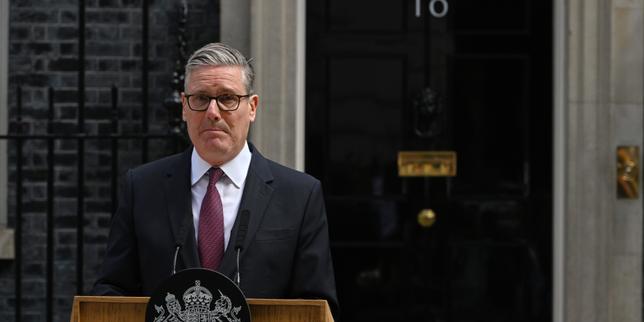
The global diplomatic press core has a bad habit of treating prime ministerial exits like Shakespearean tragedies rather than what they actually are: routine corporate restructurings of state power.
When a leader steps down, the predictable script plays out. Foreign capitals issue sweeping, lofty statements designed to project stability. We saw it instantly when the news broke. Emmanuel Macron rushed to claim that the departure would somehow strengthen Franco-British ties. Volodymyr Zelensky immediately offered high praise for unwavering support.
It is a comforting narrative. It is also entirely wrong.
The lazy consensus dominating the airwaves right now suggests that bilateral relations hang on the personal chemistry or political survival of individual leaders. This view treats foreign policy as an exercise in high-society networking. In reality, modern international relations are driven by deep institutional inertia, structural defense frameworks, and cold economic realities. A change of face at 10 Downing Street changes far less than the pundits want you to believe.
The Illusion of the Macron-Starmer Axis
Macron’s public optimism about a stronger post-exit alliance is pure political posturing. For years, observers have clung to the idea that a shared center-left or technocratic alignment between Paris and London would magically dissolve decades of structural friction.
It never does.
Bilateral relations between the UK and France do not improve because two leaders share a similar outlook or because one departs to clear the deck. They are governed by permanent anxieties over cross-Channel migration, defense integration, and post-Brexit trade mechanics. These issues are managed by career civil servants in Whitehall and the Quai d’Orsay, operating on decades-long timelines.
When a British prime minister resigns, the French presidency faces a predictable set of challenges that no amount of diplomatic rhetoric can smooth over. The French state must now recalibrate its negotiation strategies against a highly unpredictable British domestic political arena. Macron's public praise is not a sign of confidence. It is a preemptive hedge against the instability of whatever coalition or faction takes power next.
Institutional Foreign Policy Outlasts Individuals
The reaction from Kyiv follows a similar, flawed logic. The mainstream commentary insists that personal relationships between wartime leaders dictate the flow of military aid.
This misunderstands how modern military bureaucracies function. British support for Ukraine is not a personal hobby of the Prime Minister. It is a core strategic doctrine deeply embedded within the Ministry of Defence, the Foreign Office, and the intelligence services.
Imagine a scenario where a new leader takes power and suddenly decides to halt intelligence sharing or weapon shipments. They would immediately run into a brick wall of resistance from permanent defense officials and intelligence chiefs who view European stability through a strict, multi-decade geopolitical lens. The institutional machinery of the British state ensures continuity.
- The Defense Industrial Complex: Munitions contracts and manufacturing pipelines are locked into multi-year agreements that transcend parliamentary terms.
- Intelligence Integration: MI6 and GCHQ operate on permanent security protocols within the Five Eyes framework and European partnerships, completely independent of cabinet reshuffles.
- NATO Obligations: British commitments to the eastern flank are structural requirements of alliance membership, not optional policy choices for the occupant of Downing Street.
To suggest that a change in leadership threatens or fundamentally alters this architecture is to mistake the pilot for the airplane. The machinery keeps flying regardless of who is sitting in the captain's seat.
The Brutal Reality of Transactional Alliances
The real danger of the current media narrative is that it masks the structural vulnerabilities facing European security. By focusing on the drama of a resignation, commentators ignore the fact that European alliances are becoming increasingly transactional.
No country provides billions in military hardware or diplomatic cover out of pure altruism or personal affection for a foreign counterpart. They do it because their own national security interests demand it. The UK supports its allies because preventing a collapse of the European security architecture serves British interests. France seeks closer ties with London because managing maritime borders and tracking shared threats requires British cooperation.
When we look past the sanitized press releases, the core friction points remain exactly where they were before the resignation. The domestic pressures forcing British political transitions—ranging from severe fiscal constraints to collapsing public infrastructure—will limit the geopolitical bandwidth of any successor. The UK is facing deep economic realities that will force hard choices about defense spending and foreign commitments, no matter how many supportive statements are issued from foreign capitals.
The Flawed Premise of Diplomatic Reboots
Pundits are already asking how the next administration will fix relations with Europe or redefine its stance on global conflicts. This is the wrong question to ask.
The premise that a new leader can simply press a reset button on international relations ignores the weight of domestic constraints. A leader's foreign policy flexibility is tightly bounded by their domestic parliamentary majority, their country's debt-to-GDP ratio, and the public's tolerance for foreign entanglements.
I have seen political analysts waste countless hours analyzing the personal psychological profiles of incoming leaders, trying to predict their next international moves. It is a useless exercise. If you want to know what a country will do next on the world stage, do not look at the leader's speeches. Look at their national budget, their energy dependency charts, and their defense manufacturing capacity. Those variables tell the real story.
The sudden vacancy at the top of British politics will undoubtedly trigger weeks of domestic political maneuvering and high-stakes media coverage. But on the global stage, the lines have already been drawn. The treaties are signed, the institutional tracks are laid, and the permanent bureaucracies will continue to execute state strategy exactly as they did before. The theater of diplomacy will continue to churn out optimistic headlines, but the hard reality of state power remains entirely unchanged.