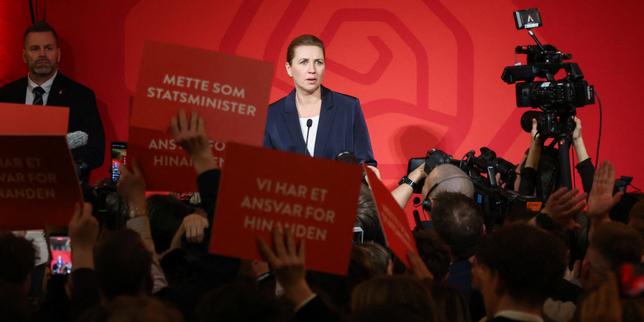
Mette Frederiksen did what most European leaders can't do lately. She won. In a continent where incumbents are getting crushed by inflation and identity politics, the Danish Social Democrats held their ground as the largest party. But if you think this is a simple "victory for the left," you haven't been paying attention to how weird Danish politics just got.
Denmark's red bloc technically secured 87 seats in mainland Denmark. Add the four seats from Greenland and the Faroe Islands, and they hit the magic 90-seat threshold for a majority. On paper, it's a win. In reality, it's a mess. Frederiksen immediately resigned as Prime Minister to try and form a coalition that crosses the center. She's not looking to lead a purely leftist government. She's looking for a way to survive the fractured reality of the Folketing.
Why the Red Bloc Victory is a Mirage
The headline says the left won. The math says otherwise. The most fascinating part of this election wasn't the Social Democrats staying on top—it was the rise of the Moderates. Lars Løkke Rasmussen, a former Prime Minister who basically rose from the political dead, now holds the keys to the kingdom. His new party grabbed 16 seats, positioning itself exactly in the middle of the traditional red and blue blocs.
Frederiksen knows a thin majority relying on the far-left is a recipe for a short-lived government. Denmark faces an energy crisis, skyrocketing living costs, and a healthcare system that's starting to show cracks. You can't fix those things with a radical agenda that half the country hates. She's gambling on a "broad government" across the center-right and center-left. It's a bold move, but it risks alienating her base.
The Collapse of the Traditional Right
While the left is celebrating a shaky victory, the traditional right-wing parties are in a tailspin. The Liberal Party (Venstre) saw its worst result in decades. They lost nearly half their seats. It's a bloodbath.
Why did they fail? They got squeezed. On one side, Rasmussen’s Moderates stole the sensible middle. On the other, the Denmark Democrats—led by the controversial Inger Støjberg—stole the populist vote. Støjberg, who recently served time with an electronic tag after an impeachment trial, proved that her hardline stance on immigration still resonates with a huge chunk of the electorate.
The right isn't dead, but it's completely fragmented. You now have the Liberal Party, the Conservative People's Party, the Liberal Alliance, and two different populist parties all screaming for attention. They can't agree on a leader, let alone a platform.
The Immigration Policy Nobody Wants to Change
If you're looking at Denmark from the US or the UK, the "left-wing" victory might confuse you. Don't expect the Social Democrats to soften their stance on borders. In Denmark, the left has spent years adopting the right's immigration policies to win back working-class voters.
This isn't a secret. It's the "Danish Model" of survival for Social Democracy. Frederiksen has stayed firm on the "zero asylum seekers" goal and the controversial plan to process refugees in Rwanda. Whether you like it or not, this consensus is why the far-right isn't running the country today. They had their clothes stolen by the center-left.
The Climate Factor
Despite the focus on the economy, climate change remains a massive driver for Danish voters. The Green Left and the Red-Green Alliance did well enough to stay relevant. They want aggressive carbon taxes and a faster transition away from fossil fuels.
But here’s the rub. Frederiksen’s pivot to the center means she’ll have to compromise on green speed to keep the business-friendly Moderates happy. The youth vote is furious about this. They see a "broad center government" as a betrayal of the climate targets promised during the campaign.
What Happens Next in the Folketing
Government formation in Denmark isn't a weekend job. It takes weeks of "Queen’s Rounds" (Dronningerunder) where party leaders meet to negotiate. Frederiksen is currently the "royal investigator," leading these talks.
The biggest hurdle is trust. The parties in the center-right don't trust Frederiksen after the "Minkgate" scandal, where she ordered the cull of millions of minks during the pandemic without a legal basis. It’s a stain on her record that her opponents won't let go. They want her to concede power to a neutral commission or at least hand over some heavy-hitting ministry portfolios.
The Economic Reality Check
Denmark’s economy is actually doing better than most of its neighbors, but "better" is a relative term in 2026. Inflation is biting hard. The Danish krone is pegged to the Euro, meaning the Nationalbank has to follow the European Central Bank's interest rate hikes. This is hurting homeowners and small businesses.
The next government has to balance three impossible things:
- Increasing defense spending to meet NATO requirements (2% of GDP).
- Fixing the labor shortage in the healthcare sector.
- Cutting taxes just enough to keep the center-right from walking out of the room.
Why You Should Care About This Result
Denmark is often a bellwether for European politics. What we're seeing here is the end of the two-bloc system. The "Red vs. Blue" era is over. It’s being replaced by a messy, multi-polar reality where small, personality-driven parties hold immense power.
If Frederiksen succeeds in building a center-crossing government, it could provide a blueprint for other European nations struggling with polarization. If she fails, Denmark is headed for a period of instability that will paralyze its ability to lead on the international stage.
Pay close attention to the negotiations over the next few weeks. The real winner of the election won't be known until the coalition contract is signed. For now, keep an eye on the labor market statistics and the Danish central bank's next moves. If the economy dips before a government is formed, the pressure on Frederiksen to make massive concessions will become unbearable. Stay updated on the official results through the Danish Ministry of the Interior. It's the only way to cut through the spin.